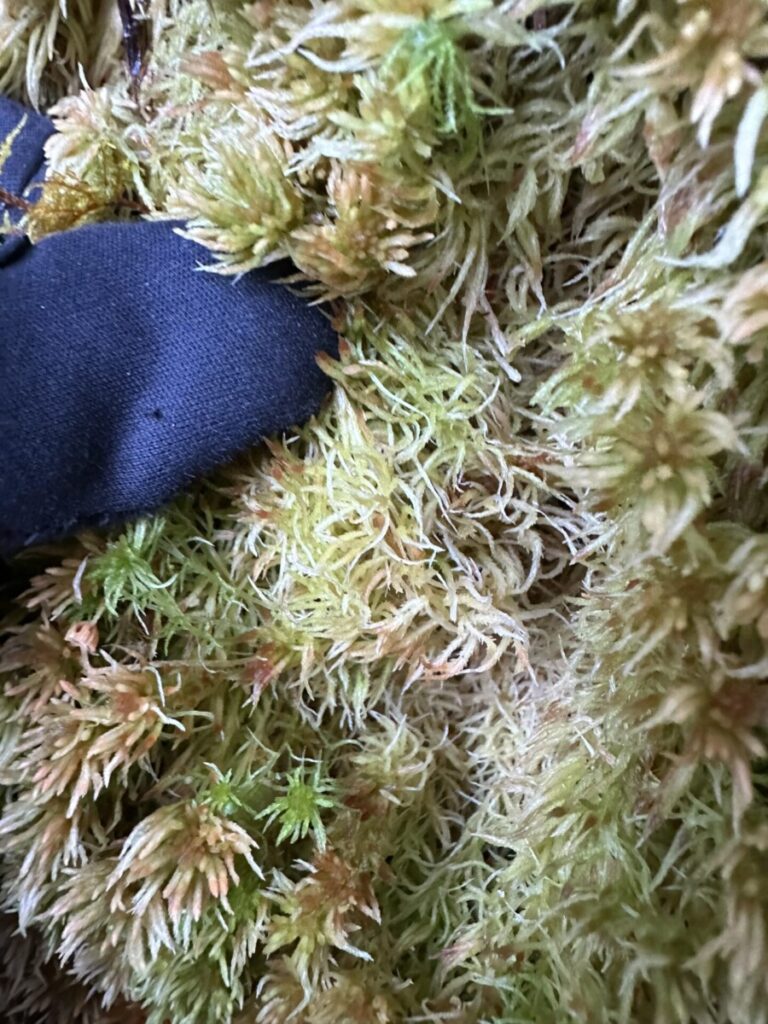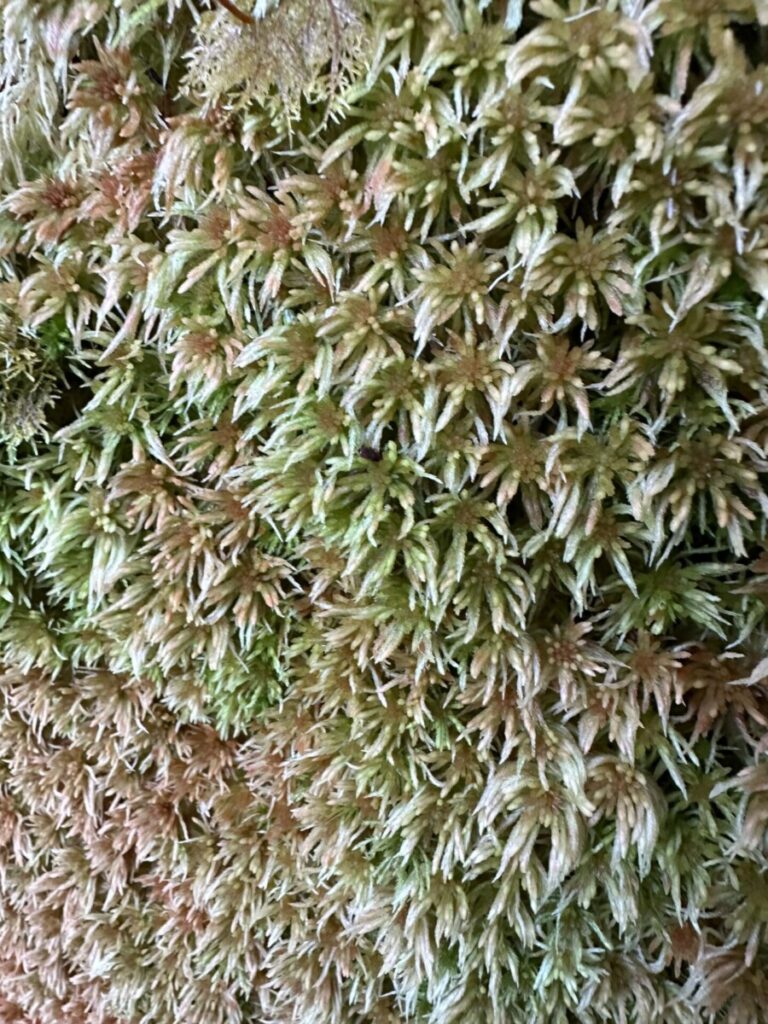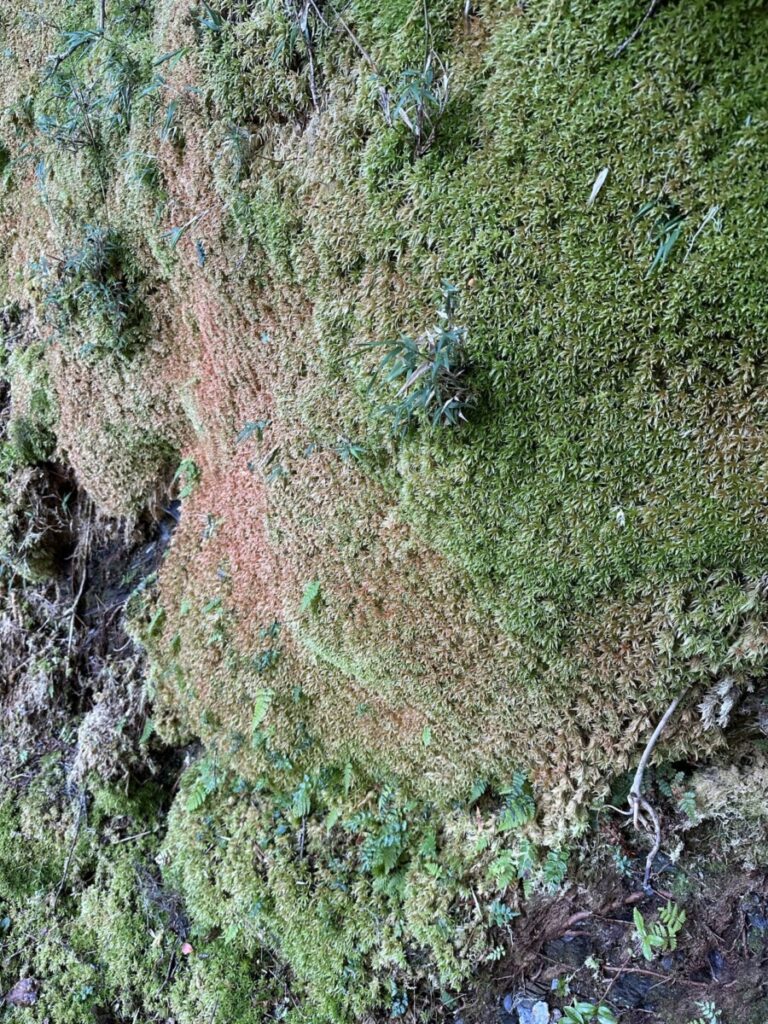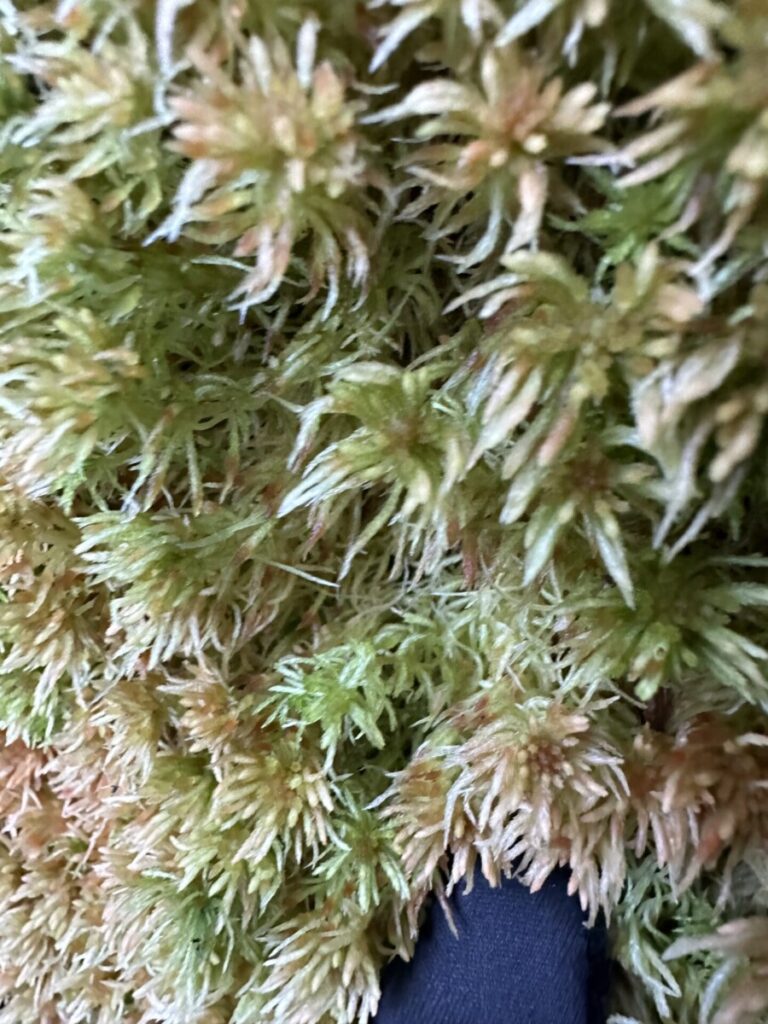
泥炭苔屬 Sphagnum spp.
(俗名:泥炭苔Peat moss)
…Of ancient lineage and lacking even the basic plumbing that more evolved plants used to transport water and nutrients, sphagnum has no use for roots. Only the top is alive; the bedraggled brown part underneath is quite dead.*
泥炭苔的親緣,來自非常古老的植物,連比較進化的植物用來輸送水和養份的管道結構都沒有,所以泥炭苔的根部是沒有什麼作用的,它只有上部是活的,下部枯黃的根部可以說是死的。
…..Sphagnum’s ability to trap and absorb water is prodigious. Its feathery little leaf-like structures hold rainwater like a sponge, and within the body of the plant, special ‘retort cells’ are perforated with pores that enable dry sphagnum rapidly to absorb twenty times its own volume in water.*
泥炭苔保水吸水的能力是非常驚人的。它的羽狀小葉的結構,可以像海棉一樣吸飽雨水,在植株的本體莖上特化的狀似鵝頸燒瓶的細胞(retort cells),有很多孔洞,使得乾燥的泥炭苔可以吸收高達20倍於自己體量的水。
Sphagnum has no blossom. Instead, it reproduces by means of microscopic wind-borne spores…*
泥炭苔不開花,它將細小的孢子噴到空中,透過風媒傳播繁殖。
……The carpet it creates with dangling tangles of dead leaves forms areas of stagnant water starved of dissolved oxygen and, therefore, of life; sphagnum extracts more nutrients than it needs for its own survival and sequesters them, leaving precious little for others; and its cunning chemistry makes bog water very acidic indeed—discouraging to most plants, and to micro-organisms too. Human bog-bodies have been discovered, gruesomely well-preserved even after thousands of years.*
泥炭苔下部死去的根葉密密有若地氈,使其下面成為缺氧的一灘死水。
泥炭苔吸取超過自身所需的養分,對其它植物就所剩無幾。
泥炭苔的特別生化特性,使得沼澤濕地的水變得非常酸,抑制了大部分的植物及微生物的生長。
曾在這樣的地方發現人類的大體,居然過了數千年了,都還保存得很好呢!
…….
泥炭苔抗菌吸溼的特性,在第一次世界大戰中曾被使用來敷治傷口。
泥炭苔所在的沼澤溼地,只佔地球上土地面積的千分之一,但其在生態循環中扮演的重要角色,不容小覷。
人類由於泥炭煤的開挖,或瀝乾溼地以擴張農業,這些短視近利的作為,已經影響到了泥炭苔以及其與沼澤溼地所構成的生態系了。
*:Jonathan Drori, “Around the world in 80 plants,“ 2021,Laurence King Publishing
P.S. 2023/12/9 攝於八通關古道(日治時期警備道路)縱走路線,大水窟山屋與托馬斯駐在所遺址之間,海拔2660公尺。#泥炭苔屬 (在iNaturist 有專家判斷是Sphagnum rubiginosum,在網路上找不到相對的中文名稱)
2025/11/6 泥炭苔屬 Sphagnum spp. Damakey