
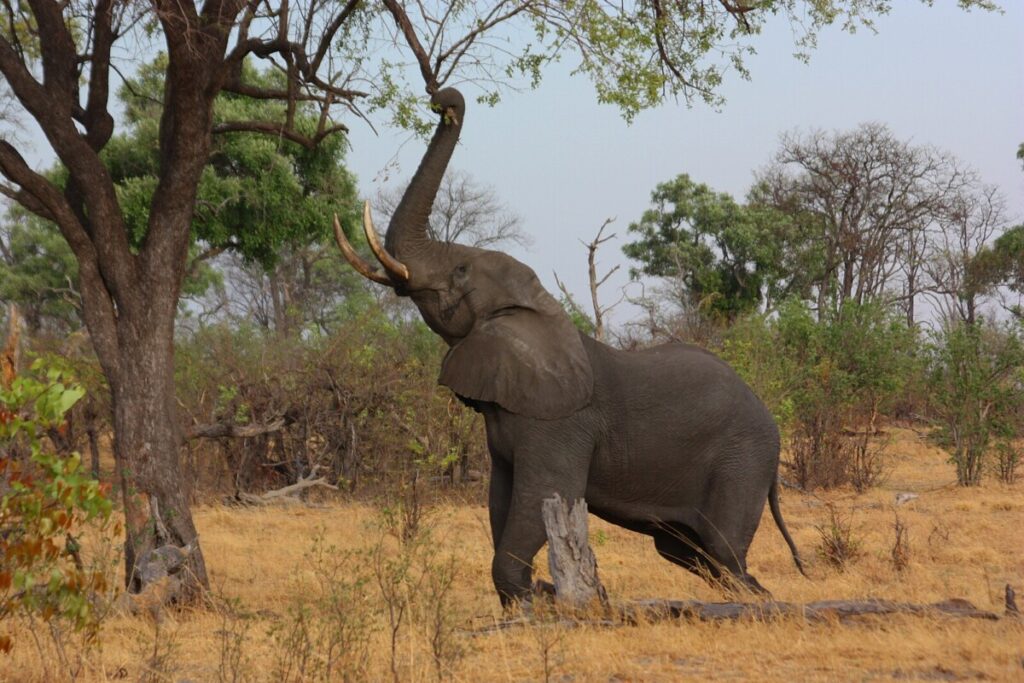
大象在廣漠的非洲,間隔的距離往往遠到令他們相互看不到,那麼他們是用什麼方式溝通,來維持遷徙隊伍的方向呢?
答案是透過發出超低頻的聲音(infrasound)。
約平均每4年,母象才有4天的發情期(estrus),適合受孕。母象是怎麼「通知」平常分開得很遠各自活動的公象們的呢?
也是透過超低頻的聲音。
超低頻的聲音,是頻率每秒震動低於20次的聲音(20赫茲/Hz)。人類一般可以聽到的聲音是20Hz-16000Hz。超低頻的聲音低於20Hz,人類是聽不到的。這也是為什麼在理解大象是透過超低頻來做長距離的溝通之前,大象是顯得如此既神秘又神奇。
發現大象透過超低頻溝通的人,不是純生物學家,而是一位對動物研究有興趣的音樂家Payne。她把原先聽不到大象聲音的錄音帶快轉約12倍以上,然後聽到了「隱藏」在其中的超低頻聲音。
Payne’s recording of the elephants’ conversation through the wall demonstrated the power of infrasound, which differs from the “ordinary” sounds that humans can hear in three ways.
Payne所錄到的大象之間隔牆的對話,展示了超低頻聲音的穿透力,落在這個頻率範圍的聲音和人類可以聽得到的聲音有三種不同的特性。
First, infrasound is too low in frequency for humans to detect, necessitating the use of special technology to observe.
首先,超低頻的聲音,因為頻率很低,以致於人類的耳朵聽不到,必須藉助特殊的科學技術來觀察。
Second, infrasound has very long wavelengths—a highly significant fact for elephants, given how sound waves interact with solid objects. Sounds with short wavelengths— such as the high-pitched sounds that bats use for echolocation-reflect strongly from even small objects and travel only short distances. By contrast, sounds with long wavelengths pass through and around most objects.
其次,超低頻聲音的波長很長——這個因素對大象最重要,這和聲波和固體之間的互動有關。短波長的聲音,譬如蝙幅用來做廻聲定位的刺耳高音,縱使物體很小,聲音也會強力反射回來,但是在短距離內音量就會衰減。相對地,長波長的聲音,則可以穿透或越過幾乎所有的各種物體。
Third, while air absorbs high-frequency sounds very efficiently, low-frequency sounds travel with little loss. Infrasound can thus be used for communication over long distances. It can also penetrate through objects like walls, or vibrate through the earth. Elephants were having powerful conversations across long distances and even through buildings—all without humans hearing a thing.
其三,空氣能很有效率地吸引高頻的聲音,但是低頻的聲音在空氣中傳輸卻只會失去很少的音量。超低頻的聲音因此可以用來做為長距離的溝通。它可穿透像牆壁這種物體,也可以震動的方式傳遞通過土地。大象因此擁有長距離的超強對話能力,甚至穿透過或跨過建築物,但是這些人類則是一點都聽不到的。
……
非洲的大象被大量偷獵(poaching),因為象牙在市場上交易有厚利可圖。人類短視近利大量殘殺大象,持續長達數十年,是一個非常悲哀的故事。
而愈年長的大象,象牙愈大愈值錢,就成為了偷獵者覬覦的對象。
Their findings brought to light the importance of older elephants, particularly matriarchs, as knowledge holders and anchoring personalities for elephant herds. Older females nurtured and taught their elephant calves, who took two decades to mature to adulthood. The elders’ long memories also provided the herd with valuable information during times of need, such as the location of ephemeral watering areas during a drought, the seasonal availability of food, or the existence of little-used migration routes. Poole’s research revealed that poaching-which tended to target older elephants with larger tusks —not only killed individual elephants but also destroyed the social fabric of elephant society. These findings were instrumental in motivating the international community to finally ban the international ivory trade in 1989.
生物學家的研究發現,年長的大象對象群很重要,尤其是最年長的母象,她既是(地理)知識最豐富的大象,也是象群中穩定特質的中流砥柱。年長母親撫育並教導小象,要花上20年來使其長大成年。年長大象的記憶是象群珍貴的資訊,在需要的時候,譬如在旱年如何找到短期有水源的地方,在特定季節於什麼地方會有食物,或者從荒煙漫草中怎麼找到遷徙的路線等等。Poole的硏究顯示,偷獵(經常鎖定有大象牙的年長大象)不止是殺死個別的大象,也摧毀了大象社群嚴密的關係網絡。這些發現,促成國際社會終於在1989年開始,禁止了象牙的國際貿易。
…When the first-ever continent-wide census of savannah elephants was completed in 2016, the results rocked the conservation world… An estimated 27,000 elephants per year were being slaughtered by poachers. Africa’s savannah elephant population had declined by one-third over seven years. In Cameroon, the researchers counted only 148 living elephants but over six hundred carcasses; with a carcass ratio of over 80 percent, the population was in immediate danger of extinction. Even in Tanzania, with its thriving safari tourism businesses, the savannah elephant population had declined by 60 percent in the past five years. Forest elephants, unfortunately, were excluded from the census, leaving scientists in the dark about the extent to which their population decline mirrored that of their cousins. Payne and her colleagues continued to push for a forest elephant census. In early 2021, the International Union for the Conservation of Nature revealed that forest elephants had lost nearly nine-tenths of their population in the past century, updating its “Red List” assessment and reclassifying forest elephants as critically endangered —one step away from extinction in the wild.
首次對非洲草原大象數量跨洲普查,在2016年完成的時候,看到結果的保育界炸鍋了……估計每年有27,000隻大象被偷獵。非洲的草原象總數,在7年內減少了3分之1。在喀麥隆,研究者計算只有148隻活象但有600具屍體,屍體佔比(carcass ratio)高達80%,那個群體有立即滅絕的危機。甚至在坦尚尼亞,一個獵遊觀光業興盛的地方,當地草原象在過去5年已經減少了60%。森林大象很不幸並未包括在該次的普查之中,使得科學家完全不了解相對於草原大象它們族群的狀況。在Payne 和她的同事的努力促成下,the International Union for the Conservation of Nature在2021年公佈了普查的結果,森林大象的總數,在過去一個世紀已經失去了10分之9,進而緊接著把評估結果更新至《瀕危物種紅色名錄》內,把森林大象列為極危(critically endangered)的生物,它們面臨從野地滅絕,就僅僅只剩一步之遙。
…..
Payne本來的雄心大志,是研究大象的各種叫聲,來完成「大象字典」。但是想到每個蒐集到的大象叫聲,在未來滅絕之後將成為絕響,就感覺沒有意義。她因此轉而把大象聲音的監控,當作是對偷獵者的偵測,把研究重點轉向大象的直接保育上面。
但是,在野外聲音很多,怎麼從吵雜的背景聲音中,過濾出偷獵者所發出的人為聲音呢?
這在人類聲音的研究𥚃,就是所謂的”cocktail party problem”。
他們的做法,就是利用神經網絡(neural network)的電腦技術,把大量的大象各種叫聲、偷獵者的槍聲、電鋸聲等等輸入系統,讓電腦進行深度學習,形成一個及時的預警系統。
…By developing a neural network to recognize “acoustic fingerprints” of soundscapes from a variety of ecosystems, the method allows rapid and scalable ecological monitoring that will enable researchers in the future to accurately predict habitat quality and biodiversity and also to automatically identify anomalous sounds, like chainsaws and gunshots…
……開發了一個神經網絡的系統,來分辨各種生態系統聲域中的聲紋,發展出可以迅速偵測而且規模可以擴大的生態監測系統,使得研究者在未來可以正確預測棲地的品質,及生物的多樣性,而且可以自動偵測到異常的聲音,諸如鏈鋸和槍聲等等……
……
除了偷獵,在非洲隨著人口的增長以及耕地的拓展,對大象的威脅也來自於人為侵蝕大象棲息地上,形成所謂人象衝突的問題。
不管是用圍牆、鐵絲網,都無法阻止大象。而用敲鑼打鼓來驚嚇,也只是一時。一旦大象「入侵」耕地的莊稼,不用太多的時間,就會形成巨大的農損。這也是為什麼有些農人對大象的偷獵者,不止睜一隻眼閉一隻眼,甚至會樂見其成呢!人象的衝突,就是對大象生存的另外一個迫切的危機。
很有意思的是,身型如此龐大的大象,卻對小小的蜜蜂(Honey bee)避之猶恐不及。原來,象皮雖厚,蜜蜂也會叮咬腹部皮膚比較薄的部分,以及眼睛及其他比較脆弱的地方。
所以「生物防治」的方法,就是教導農民在農場周圍每隔一段距離裝上蜂窩,既可阻嚇大象,一段時間之後也有蜂蜜可採,可謂一舉兩得。
科學家也研究,模擬大象產生來警告同伴的聲音或蜜蜂的飛行嗡嗡聲,在偵測到大象接近農地時,發聲來驅離它們。
…..
母象在失去小象的時候,會好幾天一直陪伴在小象屍體旁邊悲傷。象群在母象的帶領下,會一輩子生活在一起。大象有超強的記憶力,每當走經過曾經失去親人或同伴的地方,它們總是會在附近徘徊而遲遲不願離去。大象是如此強壯,吃喝的量很多,但是卻對小小的蜜蜂避之為恐不及,甚為可愛。大象在草原走過的地方自然形成路徑,它們踏陷的地方幫助積蓄雨水。大象也對莽原植物種子的散佈貢獻良多……
大象和我們人類之間,相同的地方遠多過相異之處。
大象發出的超低頻,不是我們直覺的沈默,而是我們視而不見的喧囂。
如果這個世界沒有了大象,我們失去的不止是一種生物,而是我們的自我,那大象凝望著我們的大眼睛,自然流露出來的側隱之心。
*:Karen Bakker, “Sounds of Life,” 2022, Princeton University Press
P.S. 相片來自維基百科
2024/5/24 草原大象savannah elephants Damakey
