
… how North America’s bird populations have changed in the past half-century…the paper was published in Science in September 2019, …conclusion*:
有一份2019年關於北美鳥群過去半世紀數量變化的研究。
Since 1970, some 3.2 billion birds—almost 30 percent of the continent’s total breeding population—have disappeared from North America, a reduction that was almost perfectly reflected in a similar decline in nocturnal bird migration captured in the radar archive. The losses were heaviest in the East, where the birdlife is dominated by migrants traveling between the tropics and temperate or boreal forests…
從1970年以來,大約有32億隻鳥已經消失,佔鳥類總數的30%。這和雷達資料中夜行性候鳥的減少趨勢,是一致的。重災區是美洲東部的鳥群,它們主要是每年必須往返於熱帶和溫暖地區或針葉林之間的候鳥。
Globally, things aren’t much better. Similar studies have outlined massive declines in European birds—a loss of more than 400 million individuals between 1980 and 2009, according to one analysis, especially among more common species…
而世界上其他地方鳥類的狀況,也沒有比較好。類似的研究顯示,歐洲的鳥類在1980和2009年之間,共損失了超過4億隻,其中有項分析顯示,主要是發生在常見的鳥種。
In the past four decades, the field of migratory bird conservation has experienced several we-used-to-think epiphanies. For more than a century, ornithology—which as a science had its roots in the northern urban centers of Europe and North America—had a decidedly temperate, breeding-season focus. Birds are easiest to study when they are tied to a nest, and breeding season is when they tend to be most colorful, vocal, and visible. It wasn’t until 1977, when the Smithsonian Institution sponsored a symposium on migratory birds in the tropics, that major attention in the Western Hemisphere shifted for the first time from that blinkered focus on the breeding grounds, and a lot of eyes were opened to the fact that migrants spend the majority of their lives either in transit or on the wintering grounds…
在過去40年,鳥類學家對候鳥的研究,重點一直擺在繁殖地。但是後來的一些研究顯示,候鳥長途的遷移過程以及它們選擇過冬的地點,也都攸關候鳥的保育。
…Hundreds of papers and journal articles appeared over the following decade or so, cataloging the many facets of the fragmentation problem— comparing the nesting success of ovenbirds or thrushes in small fragments versus larger forest tracts; examining how drier, warmer air infiltrates the edges of broken forests, reducing the number and diversity of leaf-litter invertebrates on which some birds feed; showing how even a small intrusion, like a dirt road, can allow cowbirds to penetrate woodland and parasitize nests…
森林砍伐而變成一小塊一小塊的(破碎化)所造成的影響,學者做了各種面向的研究,諸如,築巢成功率;更乾、更溫暖的風的吹入;鳥類賴以為食的落葉層無脊椎動物的多樣性;甚至只是一條小泥路就可以讓入侵的鳥類把自己的蛋更容易寄放在別種鳥的巢𥚃來孵化,等等。
…worldwide, 70 percent of all remaining forest lay within a kilometer of an edge, and habitat fragmentation overall reduces biodiversity by up to three-quarters…
全世界,目前僅剩的森林,其中有70%的範圍離森林邊緣少於1公里,這種森林棲地的破碎化,整體而言使得生物的多樣性減少了超過四分之三……
No one was suggesting that tropical habitat loss wasn’t important in the decline of migratory birds—it just wasn’t the only factor driving it…
這不是說(候鳥過冬的)熱帶森林的消失對候鳥不重要,而是說熱帶森林的消失並不是唯一的因素(熱帶森林的破碎化也造成了問題)。
“If you don’t have a diversity of all forest age classes and structural conditions-whether for a golden-winged warbler, a cerulean warbler, wood thrush, you name it-you’re going to have less than optimal conditions for any of those species. It’s the landscape they evolved with, long before we mucked things up,”…
森林植被的多樣化程度,如果沒有包含森林輪替的各個階段和植被組成的完整結構,那麼森林就不是處於對各種鳥類最適合的狀態,因為鳥類的演化是伴隨森林的地景,從很久很久之前,尚末被人類破壞的時候開始的。
…the Yellow Sea, separating eastern China from North and South Korea. It is the extraordinarily narrow waist of an hourglass-shaped hemispheric migration system known as the East Asian-Australasian Flyway, or EAAF, and its importance is more than a matter of geographic happenstance. The Yellow Sea, especially on the Chinese side and in the northern gulf known as Bohai Bay or the Bohai Sea, is exceptionally shallow; during the past ice age, when global sea levels were hundreds of feet lower, it was largely dry land, with the channel of the Yangtze River running through the middle. The combination of a shallow coastal margin and a tidal range that during certain lunar phases may exceed 25 or 30 feet means that when the tide goes out, it goes out—for miles and miles and miles, exposing the most expansive natural mudflats in the world. They were nourished by the prodigious load of sediments washed into the Yellow Sea—thus giving it its name—by the Yangtze, Huang He (Yellow), and other major rivers flowing out of eastern China. The Huang He carried as much as 57 pounds of silt for every cubic yard of water —although “water” is probably not the right word for such a grit-filled slurry.
黃海位於華東和南北韓之間,是候鳥「東亞-澳洲飛行路線」範圍中,有若滴漏狀的狹窄瓶頸部位,它的重要性並不僅僅只是地理位置剛好在那裡。黃海的區域,尤其是靠近中國大陸端的北邊海灣,叫渤海灣或渤海,海水是很淺的。在前一次的冰河期,當時的海平面比現在低了好幾百英尺,灣𥚃的土地大部分是乾的,河渠從中間流過。海邊的淺地和在近滿月的日子有高達25或25英尺的潮差,使得退潮之後露出數浬世界上最大的泥灘地。注入黃海中的河水中含有大量驚人的沈積物(黃河和其他的河川都是,黃河的「黃」就是因其水色為名),為泥灘帶來營養。黃河每立方碼(約0.76立方米)含有57磅(約26公斤)的淤泥,這樣充滿砂的泥漿實在不應該稱之為「水」。
Historically, mudflats covered some 2.7 million acres of the Yellow Sea coast, providing the ritziest of all five-star accommodations for migratory shorebirds. But in the past 50 years, and with accelerated speed in the last decade, more than two-thirds of those coastal wetlands have been destroyed, mostly through the euphemistically named process of “reclamation”- dredging up enormous walls of mud to seal out the tide, then pumping millions of tons of seabed sediment into the artificial impoundment to create dry land for industry, agriculture, or other purposes. The flow of fresh mud down the rivers was also choked off. The Yangtze alone now has some 50,000 dams along its main stem and tributaries, which had already reduced the movement of sediment into the sea by about 90 percent even before the controversial Three Gorges Dam began operation in 2003, cutting what was left of the silt flow by a further 70 percent.
在以前,泥灘地在黃海海岸有2千7百萬英畝,為海濱候鳥提供最豐盛的五星級食物。但在過去50年,超過三分之二的海邊濕地已經被破壞,而且以最近幾十年為甚,美其名為向海爭地,築起土堤來抵擋海浪,從海床抽砂填海造陸,作為工業、農業或其他功能的用地。原來會由河水補充的泥漿也被擋住了。單單是揚子江一條河在主河道及支流就共蓋了大約5萬個壩,攔截了90%的沈積物,而這是在三峽大壩2003年完工啓用之前,而那之後又進一步減少了水中70%的淤泥。
What scraps remain of the Yellow Sea’s tidal flats are, to the weary birds that seek them out, precious beyond expression, and probably the single most threatened linchpin among the world’s many tangled migratory paths.
在黃海潮間帶上所剩無幾的營養,疲憊的候鳥只好努力尋找,食物變得十分珍稀,這兒大概是全世界上候鳥遷徙諸多交纒路徑之中,對候鳥的保育造成最大威脅的地方。
Climate change is reshaping every single thing about migration. It is tearing up the calendar, altering the timetable on which birds must travel in order to find the food they need along their pathways, or accelerating the seasons in ways that increasingly leave them farther and farther behind during crucial periods like the nesting season. It is modifying the weather; not only are storms growing stronger, but continental winds are strengthening at some times and places and weakening at others, with unknown consequences for the many birds that depend on reliable tailwinds at critical steps in their migration— never mind the rising temperatures that alter when insects emerge, or simply make it too hot for a baby bird to survive. Climate change is reshaping the landscape— in dramatic ways, like the inundation of coastal wetlands during extreme tides, but also in more subtle but pervasive ways, as regions dry out or become seasonally sodden, as shorter winters and longer, hotter summers (or changing wet/dry seasons in the tropics) mangle once-stable plant and animal communities. Climate change, we now know, is even altering the physical size and shape of many migratory birds, as their bodies shrink in response to the rising warmth.
氣候變遷正在改變著候鳥的遷徙。時令亂了,候鳥為了在沿路找到食物補充,必須開始遷徙的時間表改變了。季節轉換提早,使得候鳥愈來愈晚抵達,最嚴重的是晚到棲地築巢生蛋。氣候改變了,不只風暴變得更強,洲際的風有些增強有些減弱,對在關鍵時刻會利用順風飛行的候鳥的影響尚未可知,更不用說氣溫升高會改變候鳥賴以維生的昆蟲出現的時機,而且往往只因為氣溫太高就會讓雛鳥難以生存。氣候變遷正劇烈地改變地景,譬如沿海濕地被巨大的潮浪淹沒,而影響更廣泛而不被發現的則是,地區性的乾旱或季節性泡在水裏,當冬季愈來愈短,更炎熱的夏季變得更長(或改變熱帶的濕/乾季),破壞了原本豐足的植物及動物群體。現在我們知道,氣候變遷甚至開始改變有些候鳥的大小和體型,它們的身體為了適應升高的溫度而變瘦小了。
A large analysis combining the results of almost 90 studies and more than 1,000 datasets from across the Southern Hemisphere found that there, too, austral spring was advancing far more rapidly than were bird movements. In Australia (where changes in seasonal rainfall, rather than temperature, seemed to be the driving force), plants had advanced the time of flowering and fruiting by almost 10 days per decade, while bird migration had changed by only two and a half days. Conversely, a meta-analysis of multiple long-term datasets in China showed a strong spring advance for trees and shrubs, but actually found a slight delay in springtime bird arrivals-though the study’s own authors cautioned that the number of bird species involved, and avian datasets in general from China, were too limited to draw firm conclusions.
基於90項研究和1000組南半球的資料所做的大型分析結果顯示,南方的春天提早的速度快於候鳥能做的調整。在澳洲(季節的變化是依季節的雨量而非溫度),植物提早開花和結果,大約每10年提早10天,但是候鳥只能提早2天半。相反地,中國針對多重長期資料的大數據分析顯示,在中國的樹木和灌木有提早回春的現象,春天的候鳥抵達的時間只稍微晚一點,但是作者特別捉醒讀者,研究中相關的鳥類種數有限,加上在中國鳥類資料的限制,要做成結論尚言之過早。
The ability of an organism to change in the face of different environmental conditions is one aspect of a grab bag of possible modifications to a plant’s or animal’s physical form, physiology, or behavior that biologists call phenotypic plasticity. This differs from evolutionary change, which is wholly genetic and passed down through genera-tions; an organism’s phenotype is a combination of its genetic background (its genotype) and how the expression of that genotype is affected by its environment. So far, evidence for true climate-driven evolutionary change among migratory birds is sparse, and differentiating between evolution and phenotypic plasticity has been difficult— though the difference is important.
有機體在面對不同的環境條件而改變的能力,在植物和動物而言,就是改變型體、生理功能或行為,生物學家稱之為「表型可塑性」。這和演化是不同的,演化是基因遺傳的改變可以傳到後代。「表型可塑性」和基因有關,某些原本隱性的基因受環境的影響而顯現了出來(按:表觀遺傳學的理論)。至今為止,氣候所導致的基因改變的演化的證據比較少,然而基因改變的演化和「表型可塑性」的分別不容易,但是它們之間的差異是很重要的。
Ornithologists assume that birds will evolve in response to climate change, but will they be able to do so quickly enough to ward off its worst impacts? Or will phenotypic changes stretch only so far, eventually snapping as climatic change accelerates? When scientists in Sweden observed great reed warblers recurning from Africa six days earlier than they had two decades previously, was that evolution or plasticity? After a great many calculations, they concluded it was the latter —but admitted they could not be certain…
鳥類專家認為鳥類會隨著氣候改變而演化,但是它們演化的速度可以讓它們及時避開噩運嗎?或者「表型可塑性」最大可以達到的就只有這樣,最終在氣候加速改變之下應聲而斷嗎?當瑞典科學家研究發現大葦鶯(great reed warblers)從非洲返回,比20年前提早了6天,那是演化還是「表型可塑性」所促成的呢?經過繁複的計算,他們認為那是「表型可塑性」,但是科學家們承認他們不確定……
For some migratory birds, the biggest effects from climate change aren’t on body weight or wing length, but the food they need. A warming climate in the Arctic is already altering food webs, including those on which one of the world’s most dramatic migrants depends.
對某些候鳥而言,氣候變遷對它們的影響,既不在於體重,也不在於翅膀的長度,而在於賴以生存的食物。變暖的氣候已經改變了北極圈的食物鏈網絡,也因此影響到了賴之生存的候鳥,那些在地球上每年最善於長途遷徒者。
*:Scott Weidensaul, “A World on the wind,” 2021, W. W. Norton & Company, Inc.
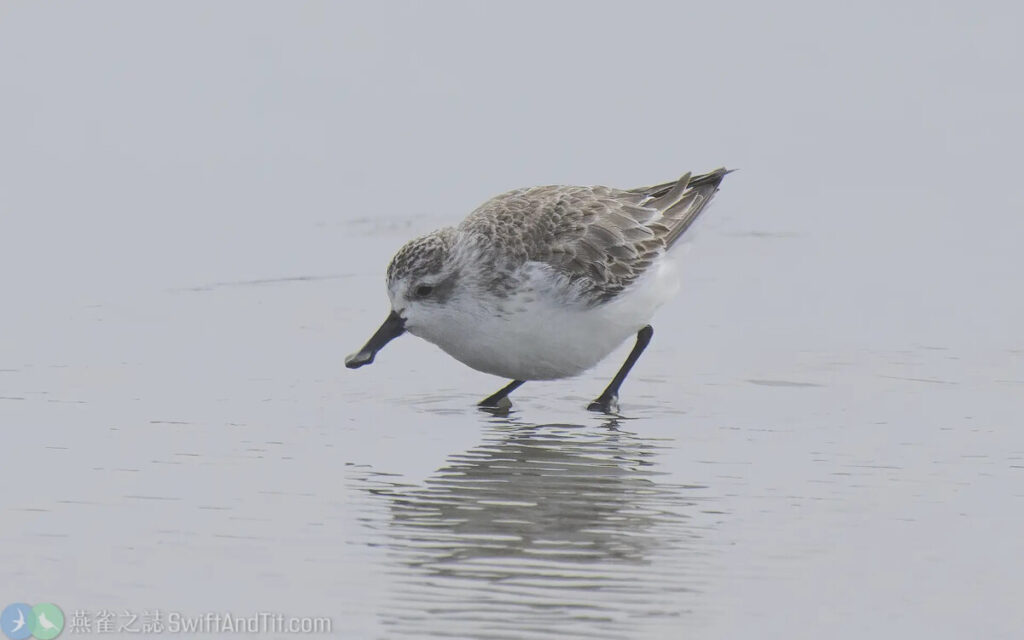
P.S. 相片:琵嘴鷸 Spoon-billed Sandpiper,來自〈琵嘴鷸 Spoon-billed Sandpiper〉,by 小雨燕,1 月 30, 2024,燕雀之誌。
琵嘴鷸飛到東南亞過冬,在台灣有零星發現,北返時會在黃海海岸停留,而隨著中停點生態的激烈變化,對於瀕危的琵嘴鷸的保育(現在應該只剩幾百隻),就是極大的挑戰。
2024/2/4 A World on the wind Damakey
