
…That winter(1993), Brian and two of his former field assistants traveled down there, expecting to conduct some basic life-history research—nothing earthshaking, just some ground-floor biology, since almost no one had ever studied Swainsons hawks in their nonbreeding range. The trio followed the transmitter coordinates deep into the pampas, and were jubilant to find the hawks coming in to roost in the montes at dusk in flocks numbering in the thousands.
1993年冬天,布萊恩和兩位前野外研究助理到了那兒,原來只是進行基本生活史研究,並非什麼石破天驚的突破,僅是一些基礎的生物學研究,因為在過去,幾乎沒有人研究過斯溫氏鵟(音ㄎㄨㄤˊ)在非繁殖區的狀況。他們三個人追蹤了綁在鳥身上發報器所傳來的座標位置,一直深入到彭巴斯大草原。他們很開心發現,在昏黃的夜色中數千隻成群的鵟鷹,飛到了蒙地斯(montes)附近棲息。
But jubilation was quickly replaced by shock and horror when they discovered equally large numbers of dead Swainson’s hawks littering the fields and woodlots. Frantically questioning local farmers, Brian and his friends soon learned that the birds, which feed on large insects during their time in Argentina, were likely being killed by a powerful pesticide, an organophosphate called monocrotophos, which landowners-who were converting grazing land to row crops like sunflowers and soybeans-were spraying to control a grasshopper outbreak. Quickly shifting their focus to forensics, the Americans began to make methodical surveys of the devastation, finding dead hawks with poisoned grasshoppers still in their mouths. Sifting among the fetid carcasses and insect-stripped skeletons, trying to tabulate the losses, they also found leg bands, including one that Woodbridge himself had placed on a nestling in the Butte Valley years earlier, and whose breeding success as an adult he’d documented.
但是,快樂的心情馬上被震驚和恐懼所取代,他們發現有大量死亡的斯溫氏鵟散落在空地上和植林區。快快向當地的農民詢問,布萊恩一行人發現,那些鳥類在停留阿根庭的期間,以大型昆蟲為食,而那些昆蟲可能死於一種超強的殺蟲劑,一種稱為亞素靈的有機磷。當地主把草地改為種植向日葵或黃豆時,為了防止蝗害,噴的就是這種殺蟲劑。接著研究重心改為了解鳥的死因,那些美國科學家開始用正規的方法調查災情,發現死掉的鵟鷹嘴巴都還含著中毒的蝗蟲。從發臭的鳥屍和昆蟲撕裂而露出來的骨架,進一步估計損害,由鳥腳上的繫帶發現,有一隻是他幾年前在Butte Valley(美國加州)繫放的雛鳥,之後記錄為成功長大為成鳥者。
Returning the next winter with a larger team comprised of both American scientists and Argentinian researchers and government officials, they found even greater numbers of dead and dying hawks, as many as 3,000 lying in a single field. The team estimated that up to 20,000 Swainson’s hawks, mostly breeding-age adults, had died in this one relatively small area of the vast pampas-and there was every indication that the carnage extended across most, perhaps all, of the hawks’ wintering range in Argentina. The true numbers were impossible to gauge, but it was clear that just a few more years like these would quickly plunge the entire species—long among the most common and widespread raptors in North America—toward extinction.
隔年,他跟著一個更大的團隊回來,包括美國的科學家、阿根廷的研究者和政府官員。他們發現更大量已經死亡的和在垂死邊緣掙扎的鵟鷹,光在同一個地方就有3000隻躺在那裡。那個團隊估計約高達20,000隻斯溫氏鵟,大部分是屆繁殖年齡的成鳥,集中死亡在若大彭巴斯大草原中很小的區塊,從各種跡象顯示,大屠殺應該發生在鵟鹰於阿根廷的大部分或所有的冬天棲地。精確的數字無法估算,但很清楚的是,這種情形不消幾年就會大量消滅整個族群,以致於這種北美洲長期最常見而且分佈廣泛的猛禽,將被迫走向絕路。
That did not happen. By January 1997, in the middle of the austral summer when I joined Brian and his team back on the pampas for their third season, things were moving in a positive direction. Bird conservation groups, led by the American Bird Conservancy, had negotiated a deal with the manufacturer to pull monocrotophos off the market. The Argentine government had moved quickly to ban the chemical for use against grasshoppers and to buy back existing stocks from farmers, and had launched a major education campaign about the danger to the raptors. Everyone was holding their breath, waiting to see if the destruction might at last abate.
還好滅絕沒有發生。在1997年元月之前,作者在那個南半球的夏天加入布萊恩的團隊回到了彭巴斯大草原,事情往好的方向發展。在由美國鳥類保護協會領軍的鳥類保育團體,和農藥製造商談判,把亞素靈從市場上下架。阿根廷庭政府迅速禁止再使用這種藥來控制蝗蟲,政府並出錢從農民手上把庫存買了下來,並且發動教育宣導讓大家知道那種藥物對飛行猛禽的危害。大家摒息以待,希望所造成的損害終於可以暫緩。
…Best of all…the Butte Valley’s hawks had continued their slow recovery from that pesticide-induced nadir, effectively doubling their numbers….
最棒的是,Butte Valley的鵟鷹,由農藥殺害以致變少的災情中,逐漸緩慢恢復過來,而且數量已經倍增……
Twenty years ago the world saved Swainson’s hawks from a single, sharply defined threat and celebrated a well-earned conservation victory. Today, the hawk’s most ardent advocates admire the bird’s adaptability, and take comfort from its ability to thrive in many human-altered landscapes. But also I heard concerns about new issues-some immense and diffuse, like climate change and a drying landscape, some much more specific and near at hand, weirdly unexpected. I mean, honestly-what raptor biologist ever expected to lose sleep over America’s hunger for year-round strawberries?
20年前,這個世界挽救了斯溫氏鵟,從一個單一的、明確定義的威脅下,贏得了值得慶祝的保育勝利。今天,鵟鷹保育的熱心推動者推崇那類鳥的高超適應能力,能在人類改造的地景中繼續繁衍而感到寬心。但是,我還是聽到了一些令人憂慮的事情,有些是極深遠和大範圍的,譬如氣候變遷和奄奄一息的地景;有些是比較明確具體、最接近的但怪異且出乎預料之外的。我的意思是說,憑心而論,研究猛禽的生物學家怎會料到,單單因為美國人想要一年到頭都可以吃到草莓,就會讓他們感到不安而失眠呢?
讀後
斯溫氏鵟在阿根廷的遭遇,讓我想到台灣也有類似的故事,名稱叫做「老鷹紅豆」。
紅豆以屏東萬丹種植的最有名。
以前農民為了增加紅豆的產量,對食用紅豆的「害鳥」、「害鼠」加以毒害。
沒想到掠食鳥雀和老鼠的老鷹,也因為直接或間接攝入了毒藥而大量死亡。
老鼠對老鼠藥的抵抗力愈來愈強,和鳥雀一樣,在缺乏掠食性鷹類的制衡之下,繼續大量繁殖,吃掉更多田裏的紅豆,農民不得不再加大毒藥的劑量,如此惡性循環。
據屏科大的研究,老鷹之中的鳶,在2015年估計只剩下426隻,是瀕臨絕種的邊緣了。
萬丹的農民後來終於了解到了這個道理,老鷹、老鼠、小鳥、紅豆自成一個十分巧妙的生態圈,因此開始減用農藥,保育鷹類,以期自然抑制鳥雀和老鼠的數量。
紅豆在收成前,會施打落葉劑,以節省採收的人工。現在比較講究的農家就捨棄了落葉劑,改採用人工採收。越戰落葉劑對人體危害的殷鑑不遠,雖然現在用在紅豆上的毒性可能較低,但是畢竟也是毒農藥。
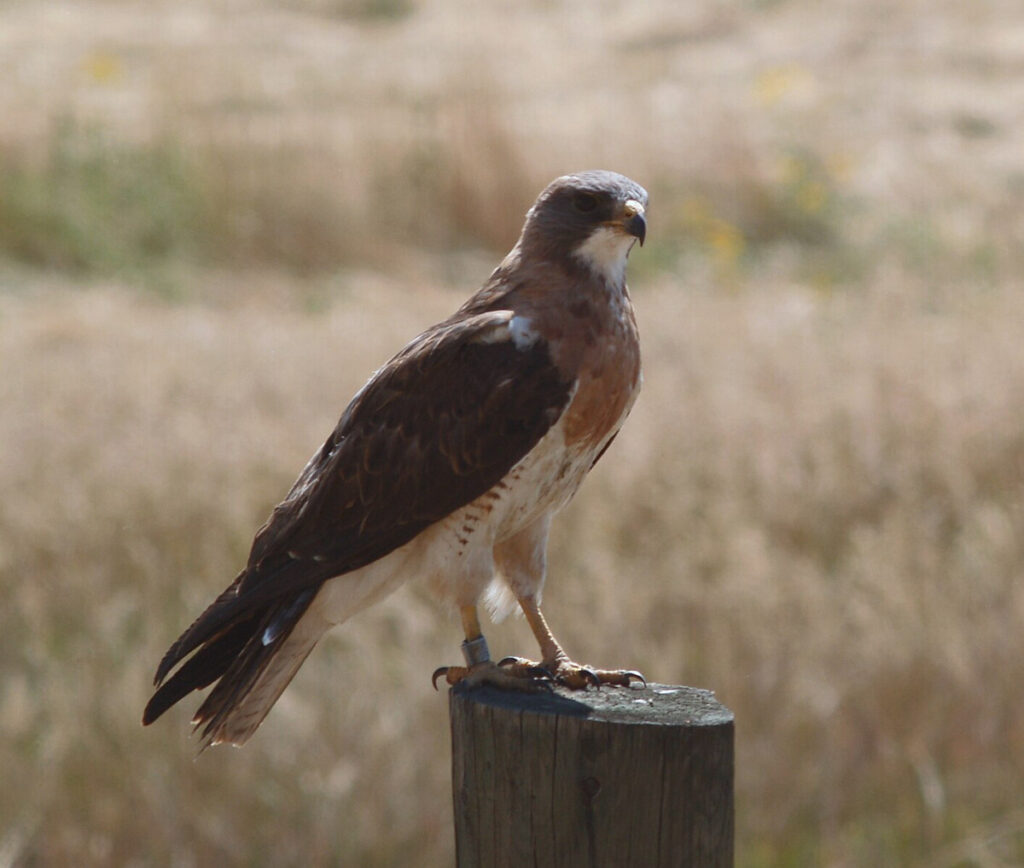
台灣的老鷹叫做「黑鳶」Milvus migrans,鷹科、鷹屬。美洲的斯溫氏鵟Buteo swainsoni則為鷹科、鵟屬。都是掠食性的猛禽(raptor),猛歸猛卻需要人類的保護呢!
*:Scott Weidensaul, “A World on the wind,” 2021, W. W. Norton & Company, Inc.
**:相片來自維基百科,A Swainson’s Hawk (Buteo swainsoni) near Barr Lake State Park, Colorado, September 3, 2005. Edit performed on February 6, 2007
2024/1/
…That winter(1993), Brian and two of his former field assistants traveled down there, expecting to conduct some basic life-history research—nothing earthshaking, just some ground-floor biology, since almost no one had ever studied Swainsons hawks in their nonbreeding range. The trio followed the transmitter coordinates deep into the pampas, and were jubilant to find the hawks coming in to roost in the montes at dusk in flocks numbering in the thousands.
1993年冬天,布萊恩和兩位前野外研究助理到了那兒,原來只是進行基本生活史研究,並非什麼石破天驚的突破,僅是一些基礎的生物學研究,因為在過去,幾乎沒有人研究過斯溫氏鵟(音ㄎㄨㄤˊ)在非繁殖區的狀況。他們三個人追蹤了綁在鳥身上發報器所傳來的座標位置,一直深入到彭巴斯大草原。他們很開心發現,在昏黃的夜色中數千隻成群的鵟鷹,飛到了蒙地斯(montes)附近棲息。
But jubilation was quickly replaced by shock and horror when they discovered equally large numbers of dead Swainson’s hawks littering the fields and woodlots. Frantically questioning local farmers, Brian and his friends soon learned that the birds, which feed on large insects during their time in Argentina, were likely being killed by a powerful pesticide, an organophosphate called monocrotophos, which landowners-who were converting grazing land to row crops like sunflowers and soybeans-were spraying to control a grasshopper outbreak. Quickly shifting their focus to forensics, the Americans began to make methodical surveys of the devastation, finding dead hawks with poisoned grasshoppers still in their mouths. Sifting among the fetid carcasses and insect-stripped skeletons, trying to tabulate the losses, they also found leg bands, including one that Woodbridge himself had placed on a nestling in the Butte Valley years earlier, and whose breeding success as an adult he’d documented.
但是,快樂的心情馬上被震驚和恐懼所取代,他們發現有大量死亡的斯溫氏鵟散落在空地上和植林區。快快向當地的農民詢問,布萊恩一行人發現,那些鳥類在停留阿根庭的期間,以大型昆蟲為食,而那些昆蟲可能死於一種超強的殺蟲劑,一種稱為亞素靈的有機磷。當地主把草地改為種植向日葵或黃豆時,為了防止蝗害,噴的就是這種殺蟲劑。接著研究重心改為了解鳥的死因,那些美國科學家開始用正規的方法調查災情,發現死掉的鵟鷹嘴巴都還含著中毒的蝗蟲。從發臭的鳥屍和昆蟲撕裂而露出來的骨架,進一步估計損害,由鳥腳上的繫帶發現,有一隻是他幾年前在Butte Valley(美國加州)繫放的雛鳥,之後記錄為成功長大為成鳥者。
Returning the next winter with a larger team comprised of both American scientists and Argentinian researchers and government officials, they found even greater numbers of dead and dying hawks, as many as 3,000 lying in a single field. The team estimated that up to 20,000 Swainson’s hawks, mostly breeding-age adults, had died in this one relatively small area of the vast pampas-and there was every indication that the carnage extended across most, perhaps all, of the hawks’ wintering range in Argentina. The true numbers were impossible to gauge, but it was clear that just a few more years like these would quickly plunge the entire species—long among the most common and widespread raptors in North America—toward extinction.
隔年,他跟著一個更大的團隊回來,包括美國的科學家、阿根廷的研究者和政府官員。他們發現更大量已經死亡的和在垂死邊緣掙扎的鵟鷹,光在同一個地方就有3000隻躺在那裡。那個團隊估計約高達20,000隻斯溫氏鵟,大部分是屆繁殖年齡的成鳥,集中死亡在若大彭巴斯大草原中很小的區塊,從各種跡象顯示,大屠殺應該發生在鵟鹰於阿根廷的大部分或所有的冬天棲地。精確的數字無法估算,但很清楚的是,這種情形不消幾年就會大量消滅整個族群,以致於這種北美洲長期最常見而且分佈廣泛的猛禽,將被迫走向絕路。
That did not happen. By January 1997, in the middle of the austral summer when I joined Brian and his team back on the pampas for their third season, things were moving in a positive direction. Bird conservation groups, led by the American Bird Conservancy, had negotiated a deal with the manufacturer to pull monocrotophos off the market. The Argentine government had moved quickly to ban the chemical for use against grasshoppers and to buy back existing stocks from farmers, and had launched a major education campaign about the danger to the raptors. Everyone was holding their breath, waiting to see if the destruction might at last abate.
還好滅絕沒有發生。在1997年元月之前,作者在那個南半球的夏天加入布萊恩的團隊回到了彭巴斯大草原,事情往好的方向發展。在由美國鳥類保護協會領軍的鳥類保育團體,和農藥製造商談判,把亞素靈從市場上下架。阿根廷庭政府迅速禁止再使用這種藥來控制蝗蟲,政府並出錢從農民手上把庫存買了下來,並且發動教育宣導讓大家知道那種藥物對飛行猛禽的危害。大家摒息以待,希望所造成的損害終於可以暫緩。
…Best of all…the Butte Valley’s hawks had continued their slow recovery from that pesticide-induced nadir, effectively doubling their numbers….
最棒的是,Butte Valley的鵟鷹,由農藥殺害以致變少的災情中,逐漸緩慢恢復過來,而且數量已經倍增……
Twenty years ago the world saved Swainson’s hawks from a single, sharply defined threat and celebrated a well-earned conservation victory. Today, the hawk’s most ardent advocates admire the bird’s adaptability, and take comfort from its ability to thrive in many human-altered landscapes. But also I heard concerns about new issues-some immense and diffuse, like climate change and a drying landscape, some much more specific and near at hand, weirdly unexpected. I mean, honestly-what raptor biologist ever expected to lose sleep over America’s hunger for year-round strawberries?
20年前,這個世界挽救了斯溫氏鵟,從一個單一的、明確定義的威脅下,贏得了值得慶祝的保育勝利。今天,鵟鷹保育的熱心推動者推崇那類鳥的高超適應能力,能在人類改造的地景中繼續繁衍而感到寬心。但是,我還是聽到了一些令人憂慮的事情,有些是極深遠和大範圍的,譬如氣候變遷和奄奄一息的地景;有些是比較明確具體、最接近的但怪異且出乎預料之外的。我的意思是說,憑心而論,研究猛禽的生物學家怎會料到,單單因為美國人想要一年到頭都可以吃到草莓,就會讓他們感到不安而失眠呢?
讀後
斯溫氏鵟在阿根廷的遭遇,讓我想到台灣也有類似的故事,名稱叫做「老鷹紅豆」。
紅豆以屏東萬丹種植的最有名。
以前農民為了增加紅豆的產量,對食用紅豆的「害鳥」、「害鼠」加以毒害。
沒想到掠食鳥雀和老鼠的老鷹,也因為直接或間接攝入了毒藥而大量死亡。
老鼠對老鼠藥的抵抗力愈來愈強,和鳥雀一樣,在缺乏掠食性鷹類的制衡之下,繼續大量繁殖,吃掉更多田裏的紅豆,農民不得不再加大毒藥的劑量,如此惡性循環。
據屏科大的研究,老鷹之中的鳶,在2015年估計只剩下426隻,是瀕臨絕種的邊緣了。
萬丹的農民後來終於了解到了這個道理,老鷹、老鼠、小鳥、紅豆自成一個十分巧妙的生態圈,因此開始減用農藥,保育鷹類,以期自然抑制鳥雀和老鼠的數量。
紅豆在收成前,會施打落葉劑,以節省採收的人工。現在比較講究的農家就捨棄了落葉劑,改採用人工採收。越戰落葉劑對人體危害的殷鑑不遠,雖然現在用在紅豆上的毒性可能較低,但是畢竟也是毒農藥。
台灣的老鷹叫做「黑鳶」Milvus migrans,鷹科、鷹屬。美洲的斯溫氏鵟Buteo swainsoni則為鷹科、鵟屬。都是掠食性的猛禽(raptor),猛歸猛卻需要人類的保護呢!
*:Scott Weidensaul, “A World on the wind,” 2021, W. W. Norton & Company, Inc.
**:相片來自維基百科,A Swainson’s Hawk (Buteo swainsoni) near Barr Lake State Park, Colorado, September 3, 2005. Edit performed on February 6, 2007
2024/2/5 斯溫氏鵟Buteo swainsoni Damakey
斯溫氏鵟Buteo swainsoni Damakey
