
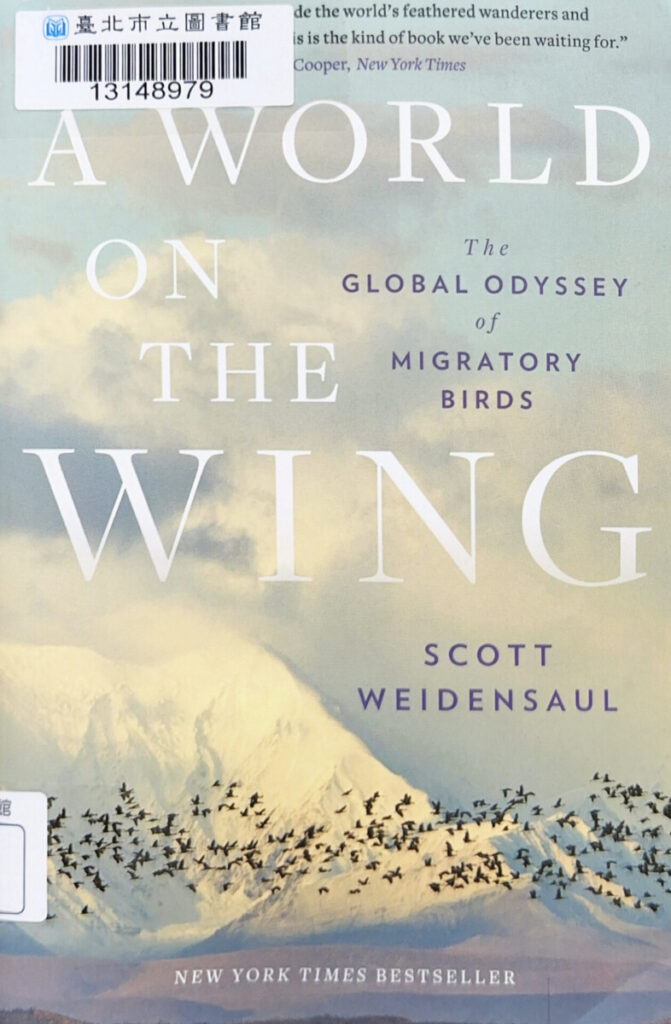
候鳥為什麼可以知道該往哪個方向飛呢?除了太陽的位置、星光、大地的味道之外,最神奇的是透過偵側到地球微弱的磁力線而找到方向。
這是屬於愛因斯坦不喜歡的量子物理的範疇。
In 1975, Schulten was a young postdoc physicist at the Max Planck Institute for Biophysical Chemistry in Göttingen, Germany, working with chemical reactions that were influenced by magnetic fields. He realized the reaction he was seeing in his test tubes-one in which so-called radical pairs, two molecules linked at a quantum level, were influenced by a common bar magnet—could play a role in the still-mysterious ability of birds to orient magnetically. The right molecule, in the right place in a bird’s body and activated by either light or dark (he wasn’t sure which), could create a chemical compass that would be sensitive to the earth’s very weak magnetic field. So along with two colleagues, Schulten wrote a mathematically dense paper explaining the hypothesis and, in 1978, submitted it to the prestigious journal Science.
1978年,年輕的生物物理學家Schulten在Science雜誌上發表了相關的論文,大意是說:
在光子的刺激之下,鳥類的視覺網膜中的分子在量子物理的層次,會產生自由基對,成為一種生化的羅盤,對(微弱的地球)磁力非常敏感,鳥類因此能夠透過磁力而找到方向。
It’s a pretty weird grail, but then, so are most things in the quantum realm. Here is the framework, as it’s currently understood. A migrating bird, flapping through the night sky, glances up at the stars. A photon, having left one of those stars millions or even billions of years earlier, enters the bird’s eye and strikes a molecule of a form of cryptochrome, almost certainly a specific variant known as cryptochrome la. or Cryla. This encounter takes place in the retina, probably within a set of specialized vision cells known as double-cones, whose function had heretofore been a mystery. The photon knocks free one of the Cryla’s electrons, kicking that electron into a neighboring Cryla; because they now each have an odd number of electrons, the two molecules are known as a radical pair, and are linked— entangled, in the jargon of quantum mechanics. They are also magnetic, because the electrons have a property known as spin (which isn’t really spin, in the way you’d picture a top; it’s actually a state known as spin angular momentum, but never mind—let’s not go down too many quantum rabbit holes right now). Such entangled particles are joined regardless of distance, defying classical physics and common sense. They have become, in effect, one thing; if you measure the properties of one— even were they separated by millions of light-years—you could infer the properties of the other.
量子物理往往令人不可思議。鳥類透過地磁找到飛行方向的理論架構是:
候鳥在晚上飛行的時候,眼睛收到微弱的星光,視網膜上的隱花色素被激發形成自由基對,它們對地球的磁力線敏感,鳥類因此能找到飛行的方向。
It now seems all but certain that radical pairs, Cryla, and quantum entanglement provide a flying bird with its magnetic compass sense.
But birds possess a second magnetic ability, a map sense that allows them to navigate as well as orient, and radical pair theory doesn’t explain that. What about those little deposits of magnetite in a bird’s beak, the structures that I, daydreaming over my ornithology text, once pictured as a nasal compass? One team of researchers concluded that they weren’t even magnetite at all-they contend the structures are iron-rich macrophages, a type of white blood cell that is part of the avian immune system, masquerading as magnetite because of the staining process used to prepare specimen slides. Macrophages play no known role in orientation. Other scientists reject that conclusion, and note that running through the upper beak is the trigeminal nerve, which seems to somehow provide the map sense that birds use…
鳥類的腦子中好像有一個地圖,它能飛行導航,不是量子物理的自由基對理論可以完全解釋。
有鳥類學家認為那和在鳥喙中的磁性物質有關,進一步分析,有研究小組發現,那只是含鐵質較多的巨噬細胞而已,也不能拿來完全解釋鳥類的方向感。
有鳥類學家認為,是位於上喙的三叉神經的作用,因為有實驗將之去除,鳥類就變得找不到方向了。(這個實驗有點殘忍)
不管是怎樣,鳥類,尤其是候鳥,每年能循著一定的路線飛到溫暖的地方過冬然後再飛回去,是真的非常神奇的。
*:Scott Weidensaul, “A World on the wind,” 2021, W. W. Norton & Company, Inc.
2024/2/1 A World on the wind Damakey
