
“…this war, like the fiery breath of an enraged dragon, has burned away all that was artificial and superficial in our lives. Through intense pain and sacrifice, it has brought back our understanding of our own value, made us see the good that we can create from unwavering unity and courage and from caring for one another. We have seen the immense power that we derive from learning to work together as a people and a nation.”*
這場戰爭,像憤怒惡龍的噴火,焚毀了我們生活中的東西及膚淺的表象。雖然是十分痛苦而且是極為沈重的犧牲,但戰爭為我們尋回了我們對自我價值的體認,讓我們明瞭從精誠團結、勇於𠄘擔和互動扶持之中,可以產生的是什麼。整個民族和國家,透過團結合作,已經形成沛然莫之能禦的力量。
“We are facing the greatest test and are determined to show our strength. If some of us die in this struggle, others will be born with the same honor and the will to defend. We are always at the point of beginning. We Ukrainians will never give up-not to Russia, not to terror or any other evil. The spirit of freedom cannot be conquered by centuries of slavery, or by decades of abuse, or by murder, or by cynicism. I have always believed in Ukraine. And I always will.”
面對最大的挑戰,我們下定決心,要展示力量。縱使我們有些人會因此而犧牲生命,相信有更多其他人會繼起光榮的鬥志來保衛國家。我們將永遠站在共赴國難的前線上。我們烏克蘭人將永不放棄對俄羅斯、恐怖或任何其他惡魔的戰鬥。自由的精神不可以被取代,不可以被數百年的奴役制度、數十年的殘虐、謀殺、或玩世不恭的犬儒主義等等所取代。我一向對烏克蘭有信心。在未來,我也將深具信心。
……
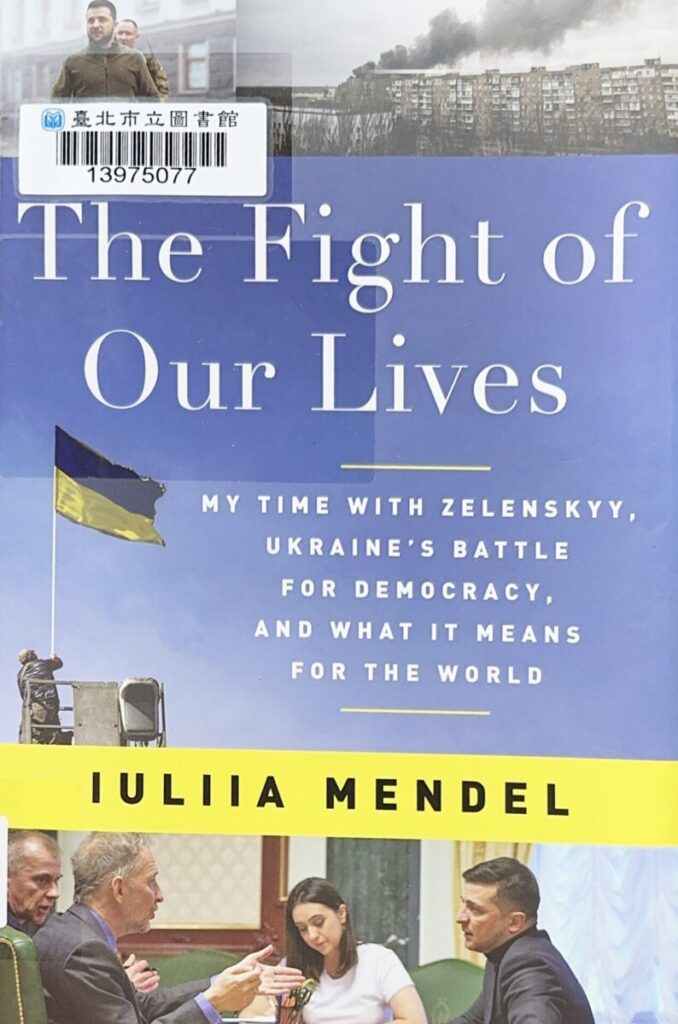
“The Fight of our lives” 這本書,寫於2022年俄羅斯入侵烏克蘭之際。作者Iuliia Mendel 曾於2019-2021年間擔任過烏克蘭總統Volodymyr Zenlenskyy的發言人,第一手近身觀察Zenlenskyy新成立的治國團隊,在內在政敵、巨頭的傾軋,及外在俄羅斯的侵略、談判過程,如何一路跌跌撞撞辛苦走來。
Zenlenskyy在2019年贏得烏克蘭大選,面對的幾個主要挑戰是:
1. 足堪信任的人才不足。Zenlenskyy不得不雇用一個人力公司,公開向國內徵才。
2. 貪污嚴重。連在大學,學生都得賄賂老師才能取得學分或學位。
3. 經濟的寡頭巨亨左右政治、民主,貧富差距極為懸殊。
4. 俄羅斯和烏克蘭內親俄的媒體,常利用水軍散佈假消息,往往造成三人成虎。
5. 俄羅斯侵佔了克里米亞,佔領了烏克蘭東部的部分地區,然後在2022年發起全面的侵略。
當俄羅斯的先遣部隊進攻基輔的時候,據說美國政府提供Zenlenskyy搭機離國的機會,Zenlenskyy說,I need ammunition, not a ride. (我需要的是武器,不是逃走的便車)。他堅決留下來抗戰。而也正是俄羅斯在2022年的全面入侵,激起了烏克蘭全國的團結。
“The story of Ukrainian society can teach others a great deal. Our identity is complicated, multifaceted, multiethnic, multireligious, and tolerant, and it melds both ancient wisdom and romantic ideals. We have endured so much: slavery under the tsars, discrimination, and poverty. We have suffered extreme hardship, surviving both the Holodomor, a Soviet state-sponsored famine in the 1930s that killed millions, and the Holocaust and World War II, which together killed several million more. For these past three decades, it has not been easy to live in constant crisis, to lose territories, to be subject to security guarantees, and at the same time to speak about a country of possibilities and opportunities, of our rich history, our national heroes, and the culture of our ancestors. But that’s the way it is. We know who we are, and we will not let others define us.”
烏克蘭社會的歴史,可以做為世界的借鏡。烏克蘭的自我認同是複雜的、多面向、多種族、多宗教、包容的,融合了古老的智慧和浪漫的理想。烏克蘭曾經𠄘受過沙皇時代的奴役,歧視和貧窮。曾經度過最艱辛的日子而倖存下來,譬如在1930年代蘇聯不當統治下死了好幾百萬人的大饑荒、二次大戰中針對猶太人的大屠殺又死了幾百萬人。於過去30年,在不斷的危機中過得也挺不容易,失去了部分的領土,自動捐棄核子武器而變得需要別國𠄘諾的保護。至於講到一個國家的可能性和機會,烏克蘭有的則是豐富的歷史、民族的英雄、先民的文化。這就是烏克蘭,我們知道我們是誰,不需由別人越俎代庖來定義。
“Ukraine was suffering. Conflict in Donbas, delayed reforms, and deep-rooted corruption all had become part of the country’s mental outlook over the past thirty years, since the breakup of the Soviet Union and the founding of our independent state. Our society was fragmenting into two groups: those who were inclined toward a Western mindset, and those who were more pro-Russian. This process had been going on year after year. Generations changed, but Ukraine still had not succeeded in assembling the “package” of values from which it could construct a really strong state. It was a few weeks before New Year 2020.”
在2020年新年的前夕(Zenlenskyy剛贏得大選)看來,烏克蘭承受著的苦難包括:在Donbas的衝突、停滯的改革、嚴重的貪腐。烏克蘭做為自蘇聯解體之後成立的獨立國家,這些都成為在過去30年來對國家展望的想像。我們的社會分裂成兩大群體,一個是傾向西方歐美國家思維的,另一個則是親俄羅斯的團體。互相傾軋,年復一年。世代在交替,但是烏克蘭並未凝聚價值共識,以成為真正強盛的國家。
“Zelenskyy drove himself hard, and he was no less demanding of his staff. Not surprisingly, only the most steadfast, hardy, and dynamic ones were able to endure the pressure. Many ministers in Zelenskyy’s government were noticeably younger, part of the millennial generation. Thanks to technological progress-computers, smartphones, and the internet -they were accustomed to communicating and interacting with the world 24/7 and enjoyed their work in government, rather than considering it a domain of bureaucracy and political wars.
One Zelenskyy-inspired innovation was the creation of the Ministry of Digital Transformation, and another was starting a department of digitalization in each ministry and governmental institution…”
Zelenskyy不但嚴以律己,對部屬也很要求。只有堅定、強悍、靈活的人才能承受得起那種壓力。Zelenskyy的政府閣員明顯年輕,是2000年左右出生的天禧年世代。由於科技的進步,電腦、智慧型手機及網際網路等等的興起,他們習於隨時和外在的世界溝通和互動,而非屬於傳統的官僚和精於內鬥的那些人。
Zelenskyy熱衷於創新,成立了數位轉型部,並在每個部會,都開始成立了數位化的單位……
It is difficult to understand from afar how potent the issue of language is in the ex-Soviet republics. Because of its history, Ukraine has a mixture of many ethnicities and many languages. But Ukrainian and Russian prevail as the two main languages in our country (about 76 percent of citizens speak Ukrainian as their first language and about 18 percent speak Russian as theirs, as well as a small percentage of regional languages) and have existed, for the most part, in some kind of equilibrium. In fact, many people speak both interchangeably…
Since the invasion in 2022, the Ukrainian language has received new attention around the world…
Many influential intellectuals, writers, and bloggers who had been producing texts in Russian all their lives decided to switch to Ukrainian even during Russia’s preparation for war, sometime before the invasion.”
外界的人,對於蘇聯崩解後的邦國中,語言是多麼重要的課題,可能難以理解。因為歴史的因素,烏克蘭是多種族多語言的。但是,其中烏克蘭語和俄語是兩種主要的語言(大約76%的烏克蘭人民以烏克蘭語為母語,大約18%的人以俄語為母語,剩下少數人則講附近區域的其他語言),共存已久,形成一種均衡。其實,很多人都會交互同時使用兩種語言……
自從2022年俄羅斯入侵烏克蘭之後,烏克蘭語在全球受到更多的矚目……
很多有影響力的知識份子、作家和博主,原來以俄語書寫,紛紛改用烏克蘭語,這種現象甚至在俄羅斯準備發動戰爭,真正入侵之前的時候,就已經開始發生了。
“…Merkel was quite upset by some stories that had come to her attention, and she wanted to ask Zelenskyy about them.
This was at a time when Kolomoyskyy was unusually visible in the media. But although none of us had anticipated Merkel’s question, Zelenskyy found his bearings quickly and responded to Merkel with complete candor. He said that Kolomoyskyy had no role in the government and that not a single government official had had any dealings with Kolomoyskyy about anything, nor had anyone negotiated with him in the name of the government of Ukraine. On hearing this, Merkel’s face visibly relaxed….
Merkel was right to be concerned: oligarchs were like an invasive species, spreading their weblike influence into every area of life and suffocating everything. Even though oligarchs were not official representatives of the government, they nevertheless had accumulated a huge amount of power in their hands, owning Ukrainian resources and enterprises, influencing politicians and the financial system. Merkel understood this and condemned those who built their wealth and power through unfair, unchecked, and greedy competition. Although she commanded more power than any Ukrainian oligarch could ever dream of, she devoted it to strengthening one of the mightiest states in the world. Meanwhile, the oligarchs continued to undermine the state of Ukraine….”
Merkel 直接問Zelenskyy烏克蘭的經濟寡頭大亨對他是否構成影響,Zelenskyy馬上給了否定的答案,讓Merkel鬆了一口氣。
Merkel的質疑是有道理的:經濟寡頭大亨是掠奪性的族類,他們的影響網絡深入生活的每一個層面,窒息性壟斷每件事物。雖然經濟寡頭大亨不是政府的正式代表,但憑藉他累積在手中的權力,擁有烏克蘭的資源和企業,影響著政客和財經系統。Merkel了解而且公開譴責那些利用不公平、不受制、貪婪競爭來累積財富和權力者。雖然她自己擁有比烏克蘭任何一位經濟寡頭大亨更大的權力,但是她把這個權力完全奉獻於強化已經儕身世界最強行列的國家。在當下,經濟寡頭大亨持續在做顛覆烏克蘭的事……
“On February 2, 2021, Zelenskyy imposed sanctions against three television channels and their nominal owner, Taras Kozak, a close associate of the oligarch Viktor Medvedchuk, who was in turn a friend and close associate of Vladimir Putin. These television channels-112 Ukraine, NewsOne, and ZIK-were immediately taken off the air. Filled with propaganda, their programming had deviated by light-years from real journalism. They used fake news to attack every anti-oligarch reform, every effort to move toward creating a solid market economy. They peddled incendiary topics, stirring up conflicts over language and religion, and distorted every possible fact. The fingerprints of various political and financial groups were clearly visible in the content they pushed. Their messages dovetailed with those disseminated by pro-Russian bloggers, pro-Russian newspapers, and the pro-Russian party Opposition Platform–For Life (OPZZh). All this was further amplified by bots pushing the same disinformation.”
在2021年2月2日,Zelenskyy針對3個電視頻道及它們名下的業主實施制裁。這位業主Taras Kozak,,是和Vladimir Putin 關係密切的經濟寡頭大亨Viktor Medvedchuk的好朋友。這3個電視頻道,112 Ukraine、NewsOne、ZIK馬上從空中消失。它們之前的節目,充斥的宣傳,內容完全背離事實。他們用假消來攻擊,政府對經濟寡頭大亨的改革,和政府任何創造實體經濟的努力。它們煽風點火,鼓動語言和宗教的衝突,盡其可能扭曲事實。它們推播的內容,明顯可以看得出不同政治和經濟勢力的痕跡。它們的訊息的內容和那些親俄博主、親俄報紙和親俄的政黨Opposition Platform–For Life (OPZZh)等等所散佈的內容是一致的。不實的假訊息,透過網路機器人水軍大量推播,又進一步擴大了扭曲的效果。
“Bot farms were used to supplement and reinforce the methods used on the oligarch-owned television networks. They helped amplify the message of pro-Russian puppets brought to power by Moscow in different countries, influencing their politics and media. For Russia, the internet has been an important source of contemporary propaganda, and its use of the internet is analogous to the methods the Nazi propagandist Joseph Goebbels developed in the 1930s on the radio and in newspapers. As he once said, “If you tell a lie big enough and keep repeating it, people will eventually come to believe it.” Nonsense remains nonsense in the singular. But when someone sends hundreds and thousands of nonsensical posts and commentaries to people’s phones and computer screens, people begin to believe what they see.”
網路機器人水軍,被用來協助加強經濟寡頭大亨的電視網所散布的訊息。它們加強了各國被莫斯科掌握的親俄份子的訊息,影響著政治和媒體。對俄羅斯而言,網際網路是當今政治宣傳的重要來源,他們運用網路好比納粹宣傳家Joseph Goebbels 在1930年代是用廣擴和報紙一樣。就正如Joseph Goebbels所聲稱的,如果你鄭重其事把一個謊言多說幾次,人們終將會相信它是真的。荒謬一次就只是荒謬。但是當有些人送出了成百上千的貼文和評論到人們的手機和電腦螢幕,人們就會慢慢認為他們看到的是真的了。
“By inventing the myth of Nazi groups in Ukraine, Putin was trying to justify a military invasion of the country. For years, his propaganda fed people lies about Ukrainian Nazis raping, robbing, and murdering people in Donbas and about the threat they posed to Crimea. The propaganda spread stories about the drugs these supposed Nazis relied on in combat, about secret biolabs financed by the NATO countries and specifically by the United States to create dangerous viruses, and even about birds trained by Ukrainians to spread these viruses over Russia. Russian media made up countless absurd stories to prove to ordinary Russians who could not easily access information about Ukraine’s democratically elected government that Nazis were in fact in control in that country…”
Putin揑造烏克蘭有納粹集團的神話,來做為武力入侵烏克蘭的正當性。在幾年間,他的宣傳充斥了俄羅斯人民的視聽,聲稱烏克蘭的納粹強暴、劫掠、謀殺Donbas地區的人民,並會對Crimea地區的安全產生威脅。宣傳中還散布不實的故事,說烏克蘭的納粹靠吸食毒品來戰鬥,說在NATO金援下烏克蘭有秘密的生化研究室,而更直接指出的是,美國協助研發出危險的病毒,甚至說烏克蘭訓練了鳥類到俄羅斯散播病毒。俄羅斯媒體揑造了數不清的荒謬故事,去欺騙一般的俄羅斯大眾,而這些俄羅斯大眾並無法輕易收到關於烏克蘭的正確訊息,他們既不知道烏克蘭已經有民主選舉產生的政府,而所謂的納粹,其實正控制著他們自己的國家呢!
……
『……烏克蘭地處東歐大平原,地勢平坦,農業用地約4256萬公頃,占國土面積的70%左右,並且分佈在平均海拔為175米的平原上。全世界23%的黑土地分佈在烏克蘭境內,土壤肥沃,生產條件極其優越。據世界銀行1998年的資料,烏克蘭的耕地為3340.3萬公頃,利用率占99.5%;草場面積為216萬公頃,利用率占93.7%;牧場為476.2萬公頃,利用率占93.2%。總之,烏克蘭在發展農牧漁業方面具有獨特的條件和優勢。』(~實用查詢WIKI)
但是,烏克蘭卻是歐洲最貧窮的國家。
在2022年的國民所得資料中,烏克蘭每人每年3,727美元。(~世界人口評論world population review),根據維基百科,2021年的人均國民所得是4,850美元。但是不管是哪一個數字,都很低,若取維基百科的數字,平均每人每天的國民所得才不到6美元呢!相信在俄羅斯入侵之後,人民應該又更苦了吧!
2022年台灣人均GDP為32,811美元,平均一天約90美元。台灣之於烏克蘭,在經濟的幸福指數上,可以說是有天壤之別。
*:Iuliia Mendel, “The fight of our lives,” 2021, Simon & Schuster, Inc.
2023/11/15 The fight of our lives Damakey
