
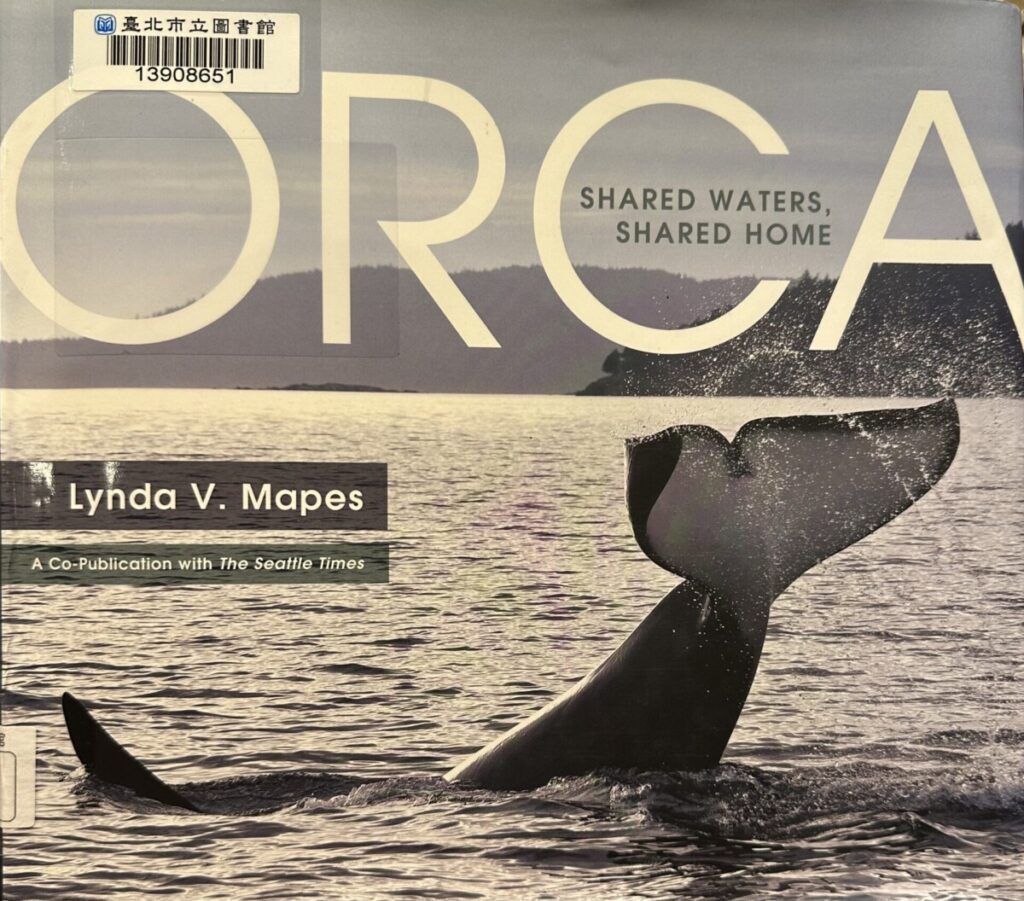
Orca 虎鯨。
“The extinction crisis endangering the orcas that frequent Puget Sound in Washington State is well known, at least in the Pacific Northwest, where these orca coevolved thousands of years ago with the salmon they rely on…
Thahlequah changed the conversation about these orcas. Her journey of grief, as she carried her dead calf for 17 days and more than 1,000 miles, told us about the state of not only her world but our own..”
西北太平洋美國華盛頓州普吉特海灣附近出沒的虎鯨,從很古早以前就跟它主要獵食的鮭魚一起演化,而至今已面臨減絕的危機。
(科學家喜歡把觀察到的虎鯨取名字。)有一隻叫做Thahlequah的母虎鯨,帶著她已經死去的孩子,前後共17天,歷經超過1000英浬哀傷的旅程,成為虎鯨迷們的新話題。這個事件向我們訴說的,不只是母虎鯨Thahlequah面對的世界,更是提醒著我們,我們也面對著同一個世界。
“The baby could be seen when Tahlequah balanced the calf on her head but was harder to spot when she gripped it in her teeth by one pectoral fin, being ever so careful not to damage the tiny calf she had carried within her for seventeen months. A female, the baby lived for only about a half hour.”
Tahlequah小心把小鯨犢頂在頭上,但當她用牙齒和前鰭在水底抓著的時候,就很不容易發現。她小心翼翼地以免傷害了小鯨犢,如是帶在身邊,凡17個月。小鯨犢是女嬰,在出生才半個小時就離開這個世界了。
“Tahlequah had been doing this around the clock for days, with a 7-feet-long carcass weighing 400 pounds, relentless in her unceasing focus…”
那隻2.1公尺長重達181公斤的小鯨犢遺體,就一直是母鯨 Tahlequah持續不留餘力的焦點。
“By August 2018, there were only seventy-five orcas in this group left; as 2020 drew to close, there were just seventy-four southern residents left…
In so small a population of endangered orcas, every baby matters…”
在2018年8月之時,Tahlequah 所屬的南方定居性虎鯨群只剩75頭,到了2020年底,減1頭到了74頭。
總數量那麼少的瀕危虎鯨,每一隻小鯨犢都是希望之所繫。
“At the same time Tahlequah was carrying her dead calf, another orca was slowly—and very publicly—starving to dead…But veterinarians struggled even to find out what was wrong with her. All of these orcas lack regularly available, quality chinook salmon; it is one of the primary threats to their survival…”
“It is easy to blame these orcas’ extinction crisis on the dark time in our history when a generation of their young was taken from their families to do tricks for money in captive live-animal show around the world. But the capture era ended more than forty years ago—at least in Washington State waters.
What is harder to face is our everyday destruction and pollution of habitat that supports the orcas—and the salmon they eat—that is the major cause of the orcas’ decline…”
就在Tahlequah母鯨帶著死去的、載浮載沈的小鯨犢的同一個時候,有另外一頭虎鯨則餓到快死了(後來沈入大海,再也沒有出現了)。
海裏沒有及時補充、足夠食用的帝王鮭魚,是對以其為主食的虎鯨的生存,最大的威脅。
撈捕虎鯨作為娛樂用途,在40年前,至少於太平洋西北地區,就已經停止這種做法了。現在,人類每天對虎鯨及帝王鮭魚棲地的破壞和污染,才正是虎鯨數量減少的主要原因。
“…They are big animals: males are typically up to 26 feet long and weigh as much as 12,000 pounds; females are smaller at about 23 feet long and 6,000 pounds…”
虎鯨是身軀龐大的動物。雄鯨一般長約7.8公尺,重約5.4噸;母鯨小一點,長約6.9公尺,重約2.7噸。
“Orcas in each southern resident pod spend their time within their own family groups, which are led by multiple matrilines(female orcas and their descendants). Resident orca families in each of the southern and northern populations stay together for life—the youth of both genders never disperse, making resident orca societies probably the most enduring among all mammals…”
虎鯨是母系社會,所有的家庭成員會在母系的族長母鯨的帶領之下,共同生活一輩子。
“…Orcas are among only five species of mammals on Earth, including humans, in which the female has a long post menopausal life stage…The older generations can increase survival of younger generations. Their landscape is a social one; they are taking the opportunity to increase the survival of their relatives.”
地球上的哺乳動物,有五種的雌性在更年期之後還活得很久的,虎鯨和人類一樣都是其中之一。(原因可能是)活得久(可活超過80歲)經驗豐富的雌鯨,能夠增加照顧年輕一代的時間,確保族內親屬的存活率。
“Behavior ecologist Michael Weiss…did his field research that revealed the so-called grandmother effect at the Center for Whale Research on the west side of San Juan Island…”
這就是說行為生態學家研究發現,所謂的「祖母效應」。
“Scientists are continuing to investigate the threats to orca survival, from inbreeding and disease to lack of prey. Pollution also poisons their bodies—especially baby orcas, which get the biggest does in their mother’s milk. Vessel noise and disturbance even by small nonmortorized boats, such as kayaks, interrupt orca foraging and mask sounds they need to hear in order to hunt. These threats are interrelated. When the orcas go hungry, they burn their fat, where toxic pollutants accumulate, thus adding to the toxics circulating in their blood. Noise is a problem because it compounds the problem of the scarcity of chinook: noise and disturbance make scare fish even harder to find.”
科學家持續研究威脅虎鯨生存的各種因素:近親繁殖、疾病、獵物缺乏、污染、噪音等等。
其中,污染所帶來的毒素,透過母乳,對幼鯨的影響最大。
而因為獵物主食的缺乏,尤其是帝王鮭魚,虎鯨被迫不時燃燒脂肪,以致脂肪中累積的毒素,加速進入血液而影響了健康。
噪音會干擾虎鯨的獵食,在海中帝王鮭魚已經很少了,再加上噪音的干擾,要順利找到獵物就真的是大海撈針了。
“…an orca uses phonic lips on either side of its blowhole as deftly as a horn player, shaping air flow with those lips to make sounds.
Orcas also can search for fish, or good fish habitat, using echolocation clicks: bursts of sound focused through fat in a reservoir call the melon, located at the front of the head…
Another fat-filled reservoir in the orcas’ lower jaw receives the echo and conducts it to middle ear, inner ear, and then hearing centers in brain via the orca’s auditory nerve. In this way, an orca uses echolocation to actually see inside its prey, to the swim bladder if a fish…”
虎鯨透過身上的廻音定位系統,探知獵物的種類和所在的位置。
“Changing ocean conditions, and marine heat waves in particular, are bad news for endangered orcas the rely on salmon for food. The cold upwelling of nutrient-rich waters sustains salmon while they are at sea, enabling them to grow and fatten. But warm water conditions mean poorer nutrition for salmon.”
富有營養物質的上湧冷水,肥育了鮭魚。當全球暖化,海水温度的上昇,對鮭魚是不利的,當然也就會影響到以它們為主食的瀕危虎鯨了。
“…Across the Pacific Northwest, 40 percent of chinook runs already are locally extinct, and a large proportion of the rest that remain are threatened or endangered…”
在西北太平洋地區,有40%的帝王鮭魚已經從地方上消失了,而僅存的則大多掙扎在危險、瀕臨滅絕的邊緣。
“Of 396 populations of chinook that used to be available to southern residents all over Northwest and California, 159 today are gone. That leaves gaps in the calendar year in which the southern residents orcas’ preferred prey no longer available…”
在西北太平洋及加州,396個帝王鮭魚的群體已經有159個已經消失,這使得在一年之中,南方定居性的虎鯨,時不時會沒有足夠的、喜歡食用的獵物,必須忍受饑餓。
“…the northern population are still classified as a threatened population…It’s still a small population, and it increases slowly…the best population estimate for 2019 was 310 northern resident orcas, the highest since year 1973.”
雖然依舊是瀕危的物種,但是北方定居性的虎鯨的數量,從1973年的100多頭,到了2019年逐步恢復至310頭的新高。
“The reserve was created especially for these orcas and includes, in addition to the rubbing beaches, more than 3,000 acres of marine waters and 1,247 acres of upland forest, including rocky shoreline, headlands, and one significant bay, the Robson Bight….
為北方定居性虎鯨而設立的生態保護區Robson Bight Ecological Reserve(位於加拿大溫哥華島北側),除了虎鯨用來按摩身體的圓石海灘之外,還包括附近3000英畝(1214公頃)的海域,1,247公畝的森林,也包括岩岸、岬角及Robson Bight海灣等等。
What works there is needed here too.
北方定居性虎鯨保護區,得到初步保育成果的作法,對在溫哥華島南方定居性的虎鯨,也是需要的。
“The southern residents also contend with more polluted water—toxic that seep into food chain and then into orca mother’s milk. A September 2018 paper found that PCB effects on reproduction and immune function threatened the long-term viability of more than 50 percent of the world’s orca populations, especially those near urban area.”
南方定居性的虎鯨,承受更多污水的影響,有毒的物質經過食物鏈而進入了母鯨哺乳的奶水裏了。
根據2018年的一份研究,多氯聯苯(PCB)會影響到生殖和免疫系統,已經威脅到全世界一半以上的虎鯨群體的生存,潛在受害最大尤其是那些定居在城市附近的虎鯨。
“The Elwha Dam removal and river restoration project is a $325 million grand experiment…Tearing down the dams reopen 70 miles of spawning habitat to all five species of Pacific salmon….”
拆除Elwha大壩,是3億2千五百萬美元(大約91億新台幣)的實驗性專案,將可往上游打通70英浬(112公里)長的水道,供五種太平洋鮭魚溯溪去繁殖。
“The population of chinook prior to dam removal average 2,900 returning adults each year. Since dam removal was completed on the lower dam in 2912, the number of returning adults has ranged from estimated low of 2,628 in 2016 to an estimated 7,600 in 2019. Coho smolts have boomed, and steelhead are making a comeback—even wild summer steelhead have been above the site of former agile Canyon Dam.”
帝王鮭魚的廻游量,從大壩拆除前的每年2,900尾,到了2019年已經成長到了7,600尾了。銀鮭魚數量大爆發,硬頭鱒魚也回來了。
“…The home of the southern resident orcas and salmon is our home too. And when they thrive, so will,we. Perhaps, then, there is a very simple test to determine—if we do the work of restoring and protecting the waters and lands needed by orcas and salmon—whether we are getting somewhere…”
南方定居性虎鯨和鮭魚的家也是我們的家。他們好,我們也會好。最簡單的實驗就是:讓我們致力於恢復並保護虎鯨和鮭魚所需要的海域和陸地,看看我們可以獲得怎麼什樣的進展。
*:Lynda V. Mapes, “ORCA, shared waters, shared home,” Braided River, a Co-publication with The Seattle Times
2023/8/16 ORCA, shared waters, shared home Damakey
