
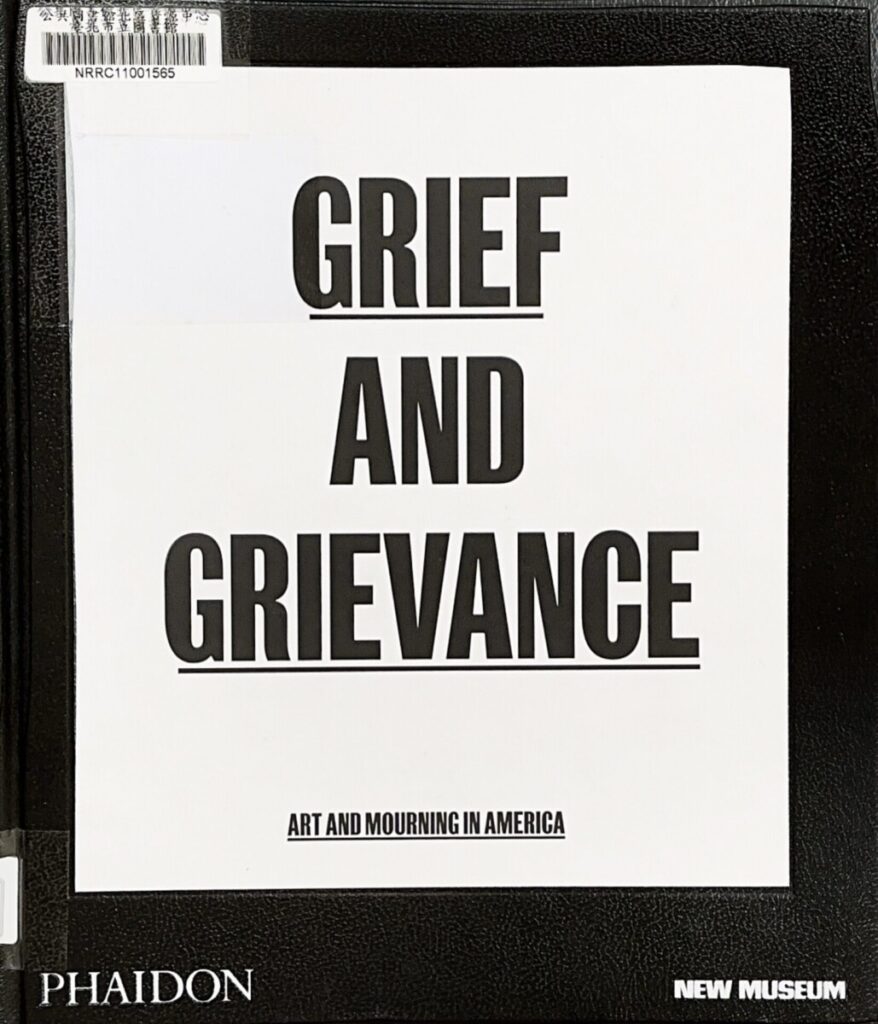
“‘Grief and Grievance: Art and Mourning in America’ is an intergenerational exhibition that bring together thirty-seven artists working in a variety of medium to consider the intertwined phenomena of black grief and white grievance and they structure and define contemporary American social and political life. In the exhibition, mourning can be seen as a politics: refusing a singular melancholy in favor of multifaceted forms of critiques, resistance, survival, and care, the exhibition understands mourning as a practice embedded in living, and vice versa — and the radically difficult effects of this state when it comes to the ways in which race, class, and gender identities intersect…”
‘Grief and Grievance: Art and Mourning in America’ 是一個跨世代的展覽,聚集了37位藝術家用各種不同的媒材做成的作品,充分考量到黑人的悲哀和白人的怨懟交相影響的現象以及當今美國社會的結構和政治現實。在展場中,哀傷的表現充分展現政治智慧,不是一味地表現悲傷的程度,而是從多個角度來展現哀傷的日常,譬如批評、抗爭、生存、關愛等等。同樣的努力,也在種族、階級、性別認同等等因素的交互影響之下,展現出極為難表現出來的效果。
台灣有藍綠之爭,而美國有黑白之爭。
美國的黑人,常感到受白人的壓迫和殺害,而感到悲哀(Grief)。
美國抱持著白種人至上想法的白人,因為再也無法位於絕對主宰的地位,而對黑人充滿了怨懟(Grievance)。
直至今日,台灣的藍綠之爭,很幸運地,只會在媒體上或於選舉之時,形成口水戰。但是,在美國的黑白之爭,則除了口水戰,還會產生人命關天的生死問題。
台灣的藍綠之爭淹不死人,而美國的黑白之爭則似乎是永遠無解的悲哀(Grief)和怨懟(Grievance)之間擺盪的惡性循環。
2016年的美國總統大選,正當川普和希拉蕊兩個陣營最後決戰的時候,川普陣營特意宣布要在賓州的Gettysburg造勢。
“…The rally was pitched against the backdrop of the historical Gettysburg memorial grounds, where thousands of Union soldiers fell in battle while defeating the army of the Confederacy, and in so doing turned the tide of the war and helped to liberate African Americans from slavery…”
美國南北戰爭中Gettysburg 一役,白人奴役黑人在社會地位居於絕對優勢地位的南方邦聯,敗給思想比較自由派、主張人人生而平等、要解放黑奴的北方聯軍。
川普刻意要在充滿歷史深沈意義的Gettysburg 造勢,就是要激起美國國內的黑白對立。根據調查,川普的鐵粉支持者的樣貌,是共和黨人,而且集中在鄉下地區,把生活不如意歸咎於全球化或外來移民搶走工作者,是對少數民族尤其是黑人充滿怨懟的人。到Gettysburg 造勢,就是要把那些票催出來。
蘇俄利用FB客戶資料分析的結果,協助推送催票的訊息,在勢鈞力敵的選戰中,產生了臨門一腳的效果。
結果大家都知道了,美國人選出了一位不止全世界都感到驚訝,美國人也不滿意的(偏向白人的)總統。
川普充分利用分裂的社會,黑人的悲哀(Grief)和白人的怨懟(Grievance)的矛盾之間,得到了勝選的利益。
在Gettysburg 大戰之後,有部分的區域就作為死難將士長眠之地,林肯總統旋即在1863的11月到現場的紀念儀式中,發表了有名的Gettysburg Address。
“Lincoln laid out in terse and succinct words the principle surrounding the war of secession and the question of slavery. From then on, a narrative of white grievance about the Confederacy has reminded as part of the mythology of the South’s disinheritance. It gave birth to while supremacy and led to the creation of the Ku Klux Klan, which remains a threat in the lives of African Americans today…”
Gettysburg Address的演講之中揭著櫫南北戰爭反奴隸的性質,這樣的敍事,使得聯邦敗退所埋下的怨懟,成為南方神話中反美國傳統的一部份,它催生了3 K黨,直至今日還威脅著美國黑人的生命安全。
在Gettysburg中為解放黑奴而戰死的北方聯軍而言那是悲哀(Grief),而對戰敗的南方邦聯(的白人),則是怨懟(Grievance)。
林肯Gettysburg Address有兩大重點:
1. All men are created equal.
2. Theses dead should not died in vain—that this nation, under God, shall have a new birth of freedom—and that government of the people, by the people, for the people, shall not perish from the earth.
1. 人生而平等;
2. 建立民有、民治、民享萬壽無疆的國家。
“…With the media’s normalization of white nationalism, recent years have made clear that there is a new urgency to access the role of the artists, through works of art, have played to illuminate the searing contours of American body politic. Included in ‘Grief and Grievance’ are woks encompassing video, painting, sculpture, installation, photography, sound, and choreography all made, with a handful of key exceptions, during the past decade…”
當下媒體對白人國家主義,視之為正常的情形之下,在‘Grief and Grievance’ 的策展中,以各種形式展現美國深沈傷感(Mourning in America)的藝術品,就是藝術家對媒體姑息白人至上主義的做法,最急切需要的反應和抗議。
“…In Old French, the verb grever is to burden, a transitive verb. One burdens another. One is burdened by something or someone. One carries a load of some kind. The English derivation is to grieve, suggestion that loss is one of the most basic burdens human bear. Grief is thus the burden of loss, a heavy load one carries on the body and, so, a labor; grief is the labor of carrying and the weight(gravis) that is carried, one that is more or less bearable…To grieve is also to launch a petition, a complaint, a grievance, to pursue and administrative or legal pathway for recognition and repair for the injury by which on is aggrieved…
在古法文中,grever是及物動詞,是「造成負擔」的意思,「造成別人的負擔」或「𠄘受他人加諸的負擔」。演變到英文,就是grieve 這個字,則有「𠄘受損失」的意思。而grief 就是「𠄘受損失的負擔」。to grieve (𠄘受損失)也代表提起訴願、抱怨、表達怨懟、尋求行政或法律管道的救濟以彌補所承受的損失等等的意思。
Grevance in French and grievance in English document the turning of the burden of loss into an appeal; the burden comes to assume a voice, an appeal for intervention, adjudication, judgment, perhaps no more than amelioration but perhaps no less than emancipation…”
在法文中的grevance,在英文中相對就是grievance,意思是把損失的負擔轉化為呼籲,呼籲介入、仲裁、審判,最好能獲得合理解決,但是至少要得到改善。
“…white grievance takes aim at the petition for racial justice, which is figured as a legally potent mode of inflicting harm on white people or, rather, their whiteness. We should say that white people ‘lose’ their supremacy, and so have something socially to grieve…”
白人的grievance(怨懟),主要訴求種族的正義,因為他們覺得白人的優越地位受到減損。
“Black grief,…, This life, living now, could at any moment, and for no apparent reason, be expunged…”
黑人的grief(悲哀),則主要是感受到,隨時都有可能會被(白人)隨意殺害的恐懼。
“…The struggle against racial justice harms those for whom whiteness is capital and power, including lethal legal power: the police, the prison, the death penalty. Yet the unbearability of the burden of loss emerges in appeal to justice, one voice becomes linked to another, and the petition for justice strikes at the powers assembled under the banner of white supremacy. No justice can return the dead, but only justice can mark and mourn their loss….
對種族司法不公的抗爭會對某些人造成負面影響,諸如,對黑人犯下重罪的白人,及對黑人致命不公的公權力,譬如警察、監獄、死刑的判決等等相關的人。但是黑人面對無法𠄘受到的傷害的訴願,接二連三地出現,碰到的是聚集在白人至上大纛之下的力量。司法無令死者回生,但是司法可以記錄並哀悼受害者𠄘受的傷亡的損害。
“…It is not only that losses must be mourned, must be given the dignity of open mourning, but that open mourning must assert the value of life, of collective existence outside the terms of law and the frame, moving toward a new visual field and new ideal of justice.”
對於造成的傷亡的損害,不只要舉行悼念,儀式必須公開而且有尊嚴,也必須強調每一個人的存在的基本價值,超過法律規定的最低的規範和固定的框架,𠄘認集體共同存在的意義,邁向未來新的政治視野和運作完美的司法體系。
美國族群之間撕裂的鴻溝,尤其是白人和黑人之間,造成社會和政治上難解的問題。我們在台灣,要引為殷鑑,不要重蹈美國的覆轍才好。
*:Okwui Enwezor, Grief and Grievance, art and mourning in America, 2020, New Museum
2023/7/31 Grief and Grievance, art and mourning in America Damakey
