
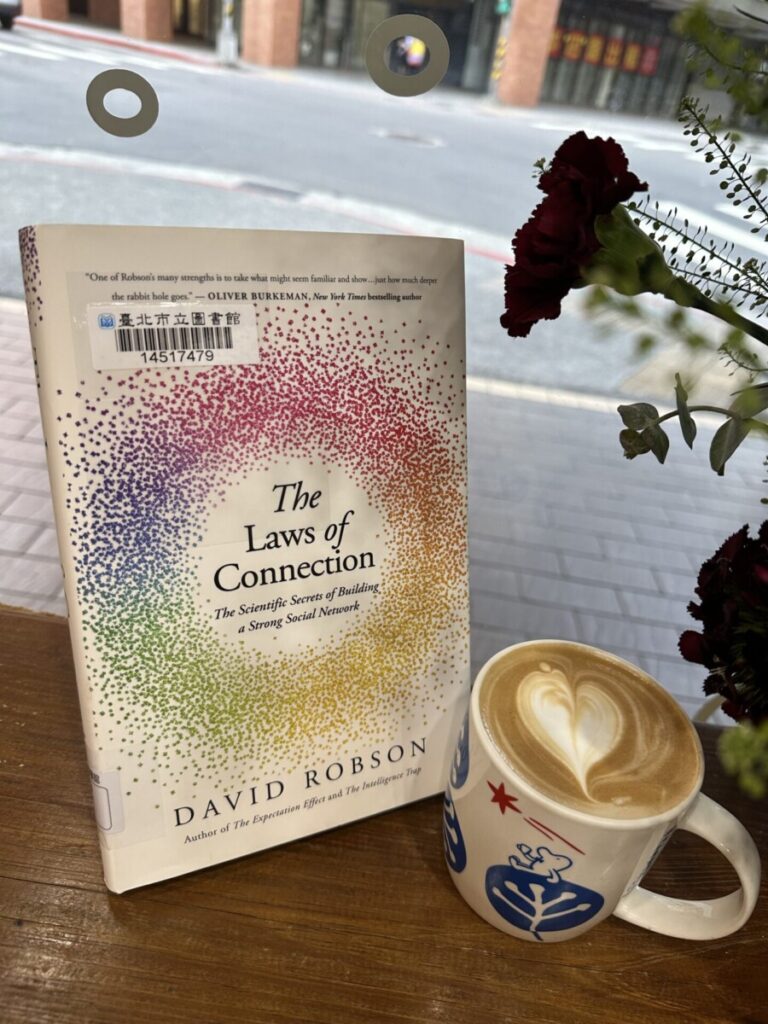
The laws of connection 能加強和他人之間連結的13個鐵律:*
- Be consistent in your treatment of others. Avoid becoming a stressful frenemy.
對待他人的態度要保持一致,而不是忽冷忽熱、模稜兩可(忽敵忽友)。
- Create a mutual understanding with the people you meet. Ignore superficial similarities and instead focus on your internal world, and the peculiar ways that your thoughts and feelings coincide.
和別人是否相互理解,不是看相互之間是否在表面上相似,而是端賴內心和感覺是否能夠相合。
- Trust that others, on average, will like you as much as you like them, and be prepared to practice your social skills to build your social confidence.
大部分的人,相互喜歡對方的程度是差不多的。用自己的社交技巧來交朋友,會愈來愈增加建立人際關係的信心的。
- Check your assumptions; engage in ‘perspective-getting’ rather than ‘perspective-taking’ to avoid egocentric thinking and misunderstanding.
不要陷於先入為主的武斷,而是要多方探詢、蒐集資訊,避免自以為是而誤解了對方。
- In conversation, demonstrate active concentration, engaged in self-disclosure, and avoid novelty penalty, to build mutual understanding and contribute to the merging of our minds.
在對話溝通的過程中,要全神貫注,要願意與對方分享,也要避免標新立異。那麼就能促進相互的理解,達到心心相印的境地。
- Praise people generously, but be highly specific in your words of appreciation.
樂於讚美別人,但字句之中要明確指出讚揚為何物,而非只是空泛的客套話。
- Be open about your vulnerability, and value honesty over kindness(but practise both, if possible).
不隱藏自己的脆弱。誠實比善良重要(當然,如果能夠既誠實又善良,那樣最好)。
- Do not fear envy. Disclosure your successes but be accurate in your statements and avoid comparing yourself to others. Enjoy ‘confelicity’.
不要怕別人嫉妒。但是對別人展現自的成功,表達要明確,而且要避免比較。那麼就能享受與他人分享成功的快樂。
- Ask for help when you need it, in the expectation that your plea for support can build a strong long-term bond.
不恥於在需要時向他人求助,因為多得別人的幫助,有助於建立相互之間堅強的長期連結。
- Offer emotional support to those in need, but do not force it upon them. Validate their feelings while providing an alternative perspective on their problems.
對困難的人在精神上予以支持,但不要强迫人家一定得接受。對別人的問題提出不同的看法時,要特別注意對方的情緒反應。
- Be civil and curious in disagreements; show interest in the other side’s viewpoint; share personal experiences; and translate your opinions into their moral language.
意見不同時,要保持文明理性和開放的態度;願意聽對方的觀點;分享自己的個人經驗;把自己的意見用符合對方價值觀的語言來表達。
- For your wellbeing, choose forgiveness over spite. Look at the big picture in arguments. Ensure your apologies define the offence, take responsibility for your actions, and express regret. Have faith that people can change for the better.
為了你好,追求寛恕諒解,不要倫為惡意攻詰。爭議要從大處著眼。如果有任何冒犯要快快道歉,對自己的作為要勇於負責,並對對方無法接受的部分表達遺憾。心中要永遠相信,為了更好,大家會是願意改變的。
- Reach out to the people who are missing in your life. Let them know that they are still a part of your thoughts.
對那些不會出現在我們日常生活周遭的人,要主動伸出友誼之手。讓他們知道,你和他們是心意相通的。
讀後
人際溝通的技巧,最有名的莫過於卡內基的理論與實務。
孟子告齊宣王曰:「君之視臣如手足,則臣視君如腹心;君之視臣如犬馬,則臣視君如國人;君之視臣如土芥,則臣視君如寇讎。」(孟子•離婁下)
君臣之間權力不對稱的關係猶然如此,那又何況是一般人之間呢?
*:David Robson, The Laws of Connection, 2024, Pegasus Books
2026/1/14 The Laws of Connection Damakey
