
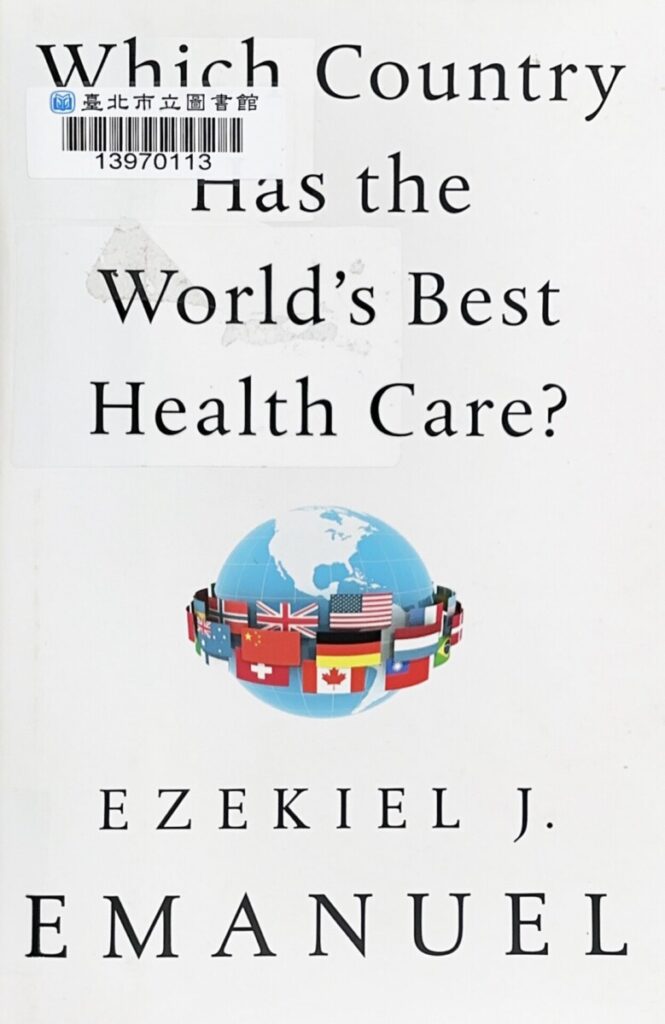
Which country has the best health care system? 哪個國家有最棒的健保系統?
答案是:沒有。
作者依以下幾個構面來𧗽量健保系統的優缺:
History 歷史延革
Coverage 涵蓋人口範圍
Financing 財源及財務的穩健程度
Payment 醫療費用支付
Delivery 醫療服務的便利性
Pharmaceutical Regulation 藥品及價格管制
Workforce 醫護量能
結論是,每個國家的健保系統,都有它的缺點。
雖然沒有最好的健保系統存在,但是依照作者的評量,以下的幾個國家被評為第一等級的:
Netherland 荷蘭
Germany 德國
Norway 挪威
Taiwan 台灣
The top tier would include Germany, the Netherlands, Norway, and Taiwan. The top achiever among them would depend upon which set of criteria is being prioritized. For instance, the Netherlands excels at choice of primary care physician and hospital as well as chronic care coordination, and it is one of only 2 countries not muddling through the financing of long-term care—it has explicitly tackled the issue. Importantly, the Netherlands does not perform poorly on any specific dimension. Similarly, Germany offers free choice of sickness fund, any physician, and any hospital in the country; affordable care; no waiting times; and, like the Netherlands, a dedicated funding mechanism for long-term care. Its deficiencies are a significant overuse of hospital care, no system for chronic care coordination, and no real data and incentive to systematically improve the quality of care. In addition, Germany has over 100 sickness funds (insurance companies) that do not seem to really compete and strive to improve quality, thus consuming money with no clear added benefit to patients. Norway is another top-performing country, with good affordability of physi-cians, hospitals, and pharmaceuticals. It also has a wide choice of physicians and hospitals, although choices narrow for patients once they are admitted to a hospital. The deficits are a heavy financial burden for long-term care on patients and families; suboptimal care coordination, especially for chronic illnesses; and persistent waiting times for certain procedures. Taiwan has excellent choice of physicians and affordability of care, including pharmaceuticals; an outstanding electronic health care system; and nonexistent waiting times. The flip side is that Taiwanese patients have very limited interaction with doctors, who see way too many patients very quickly, Spartan hospitals, no chronic care coordination, and no coherent system for long-term care.
大意是:
荷蘭:病患可自由選擇主治大夫及醫院;慢性病的協調優異;並且荷蘭直接面對了問題,並未陷入長照的財務泥淖之中。荷蘭健保系統的主要優點,就是兼顧到了各個構面,並沒有任何一項的表現是差的。
德國:病患可自由選擇參加哪一個醫療基金、哪位主治大夫、入住什麼醫院;醫療費用是患者負擔得起的;醫療不用長時間等待;和荷蘭一樣,長照有特定基金來支應。德國的缺點是醫療資源的濫用,慢性病沒有協調的機制,而且沒有數據也未提供醫療系統激勵措施來促進醫療品質的改善。而且,共有超過100個醫療基金,其間缺乏競爭,往往耗費醫療鉅資,但並不確定對患者是否真的有益。
挪威:患者負擔得起主治大夫、醫療院所及藥品的費用。患者可以自由選擇主治大夫和醫療院所,只是一旦入院之後就有所限制了。然而在長照上,對病患和家屬就是沈重的費用負擔。醫療資源的協調不佳,尤其在慢性病上。某些手術,長期存在的問題是,必須經過漫長的等待才得以進行。
台灣:病患可自由選擇主治大夫,醫療費用低廉,包括藥品的費用。健保系統數位化。就醫毋需等待。台灣的問題是醫病之間的互動太少,醫生看太多病人,而在每位病患身上花的時間太短。慢性病沒有協調機制,也沒有長照的相關系統。
……
而在作者評估中,健保制度最差的是美國和中國。至於原因,在此先略去。我比較有興趣的是,到底人家怎麼評價台灣的健保制度。
在健保的涵蓋範圍部分(Coverage),基本的原則是要包括所有的人民,費用要是負擔得起的,而在取捨之下有些疾病就無法納入給付。所以有些國家,不保牙科及眼科。但是隨著醫學的進步,現在發現口腔的疾病攸關身體的健康,所以不保牙科就有待商榷了。
台灣的情形呢?
Taiwan’s National Health Insurance (NHI) is also truly universal, simple, comprehensive, and affordable. The benefit package includes just about everything-inpatient and outpatient services, Western medicine, traditional Chinese treatments, and dental and vision care for both children and adults. The excluded benefits in Taiwan are idiosyncratic, including birth control, abortion, smoking cessation therapy, and drug addiction therapy. Although there is significant cost sharing for some, Taiwan, like many countries, reduces or eliminates out-of-pocket spending for people with certain serious conditions or low incomes.
大意:台灣的全民健保,基本上是真的涵蓋了所有的人民,制度簡單、完整,醫療費用患者負擔得起。醫療給付範圍包括門診、住院、西藥、中藥,也包括成人及兒童的牙科及眼科。未包括的則是一些特定的醫療,諸如避孕、墮胎、戒煙、戒毒。有些項目的自付額也蠻高的,但對一些重大疾病或者是低收入戶的自付額,也有減輕或減免的措施。
……
健保是昂貴的,決定健保的財源,需要政治的勇氣,而且往往代表價值的判斷。主要的原則是:收入比較高的人要負擔比較多;保護弱勢的群體(低收入戶、慢性病人、兒童);確保長期健保財源的穩健;健保的費用,要有所控制。
台灣全民健保的狀況呢?
…Taiwan subsidizes low-income residents and has some other plans to help them, including interest-free loans for people who have outstanding medical debt…
…Taiwan waives out-of-pocket expenses for its poorest residents, veterans, children under 3, and patients with catastrophic illnesses like cancer. Additionally, Taiwan’s NHI waives prescription co-pays for roughly 100 chronic conditions-including diabetes and high blood pressure-as well as co-pays for certain intense physical therapies; it also reduces co-pays for people living in remote areas…
大意:台灣全民健保會補貼低收入戶,醫藥費也提供無息貸款。減免低收入戶、榮民及3歲以下小孩的自付費用。免除了大約100種慢性病的處方自付額,包括糖尿病、高血壓,以及一些重大的物理治療。也減少住在偏遠地區人民的自付額。
…..
台灣的健保費用,和薪資所得相關,大致符合較高收入者付較高費用的原則,但是有調整的空間。台灣潛在問題是長照的基金財源不穩而且長期基金總額不足的問題。
依照衞福部網站的資料,『…..長照財源包含遺贈稅、菸稅、菸品健康福利捐、捐贈收入、基金孳息收入、其他收入(房地合一稅)及政府預算撥充。…』
每年長照財源收入約新台幣380億元,隨著老年人口的增長,很快就會枯竭。衞福部強調「以支定收」,認為不會不足,這是很奇怪的說法。因為一旦未來發現不足,那時候保證能馬上收到足夠的錢嗎?
長照財源最穩健的德國和荷蘭,他們是怎麼做的呢?
The Netherlands and Germany stand out because both have dedicated taxes to finance long-term care. In the Netherlands payroll taxes, patient co-pays for services, and government subsidies from income taxes finance long-term care. Coverage historically focused on institutional care, but it has since evolved to include care at home. Germany’s long-term care insurance parallels its health insurance, functioning partly through statutory sickness funds and partly through private health insurance. Most of the 3.3 million beneficiaries receive cash payments for care at home. The payments can compensate family caregivers or be used for the hiring of professional care providers.
大意:荷蘭的長照財務制度,收入是課自薪資所得稅,患者的長照服務有自付額,長照費用也由政府編列預算補助,而這也和所得稅收有關。支付涵蓋範圍,也從長照機構擴大至居家照顧。德國則有長照的保險制度,大部分是提供現金補助做居家照顧,可以用來請陪伴者或專業的照顧人員。
……
Taiwan did not have a national health budget, but shortly after introducing the national health insurance scheme it added one to control spending. Taiwan adjusts payment levels to physicians quarterly to remain within its budget.
大意:台灣每季會調整對醫生的給付標準,來確保健保支出在預算之內。
Taiwan’s system is relatively simple. Patients face modest out-of-pocket expenses at the point of service, with certain vulnerable populations facing no out-of-pocket payments. However, the back-end system—the payment to physicians and hospitals—is more complex. The primary method of reimbursement is fee-for-service, with payments that the government adjusts each quarter based on use patterns to stay within the national budget. But there is also a DRG system that covers about one-quarter of inpatient care.
大意:台灣健保在看病時病患付得少。健保支付醫師及醫療院所,基本上以服務量決定付費多少,並每季調整標準以控制預算。在住院支付上,也有以診斷關聯群(DRG , Diagnosis Related Groups)來決定支付總額的。
(診斷關聯群(DRG;Diagnosis Related Groups)支付制度是以住院病患的診斷、手術或處置、年齡、性別、有無合併症或併發症及出院狀況等條件,分成不同的群組,同時依各群組醫療資源使用的情形,於事前訂定各群組的包裹支付點數。~衞福部網站)
Swiss patients with the regular, basic insurance can go to any doctor (insurers are required to cover any willing provider) and can go to any hospital in any canton. Similarly, the Taiwanese have unlimited choice of both physician and hospital without a referral; the only incentive for obtaining a primary care referral is a relatively modest discount in out-of-pocket costs. Patients can even show up at ambulatory centers and hospitals and ask for tests on their own, without physician orders.
大意:台灣人可以隨意找任何醫師、醫療院所就醫,完全沒有限制。如果先到小診所看病再轉診者,費用則會有些許的優惠。
On waiting times, Taiwan is an outlier. It is a single-payer system with relatively low spending, free choice of provider, and not a particularly high number of physicians. In short, it is the type of system that would seem prone to long queues. Yet waiting times appear nonex-istent, even for specialty care. The dominant explanation is that physicians churn through patients quickly so that the Taiwanese see the doctor frequently and easily, but they do not get a lot of time or attention when they do. So although patients may have high access to physicians and no waiting times, the burden is loaded on overworked physicians. This has Taiwanese officials concerned about burnout and quality.
大意:看病不需長時間等待,是台灣健保的亮點,但問題是醫生看太多病患而且看得非常匆忙,醫療品質堪憂。
Taiwan’s major innovation is a well-functioning, advanced electronic medical record-something many other health systems have failed to accomplish. Taiwanese patients’ records are available to any practitioner in any part of the health care system. This successful innovation may have something to do with Taiwan’s booming tech sector and how it created a universal coverage system-virtually from scratch-relatively recently. There were no legacy electronic health records or payment systems to eliminate, as is the case in other countries.
大意:台灣健保的主要創新,是將醫療記錄數位化,每位醫生都可以透過健保系統,查到患者在過去的所有就醫記錄。
In reference pricing, a country assesses prices by looking at costs for the same or similar drugs. In external reference pricing, the country assesses the prices charged for the same drug in other countries (external) and uses the median, average, or average of the lowest prices to establish its price. The Netherlands, Canada, France, Norway, and Taiwan use international reference pricing in setting prices, with the exact process varying among countries….
大意:對藥品價格的管制,一般都會比較國際間同一種或學名藥的價格之後制定。台灣也是。
讀後結論:
台灣健保制度的優異,是世界性的,備受矚目,我們應該引以為榮。
就醫方便、費用低廉、健保費用控制得好、醫療記錄電子化,是我們的強項。
而我們應該注意的是,醫病互動少、醫療品質的潛在問題;容易就醫,可能產生的醫療資源浪費;健保的財務薄弱尤其是長照的財源,這是需要政治勇氣來加以改善的。
台灣優異的全民健保,得來不易,要守護好它。天下沒有白吃的午餐,要健保可長可久,我們就得多付出,尤其是社會中所得較高的人。
*:Ezekiel J. Emanuel, Which Country Has the World’s Best Health Care, 2020, Hachette Book Group, Inc.
2024/10/31 Which Country Has the World’s Best Health Care Damakey
