
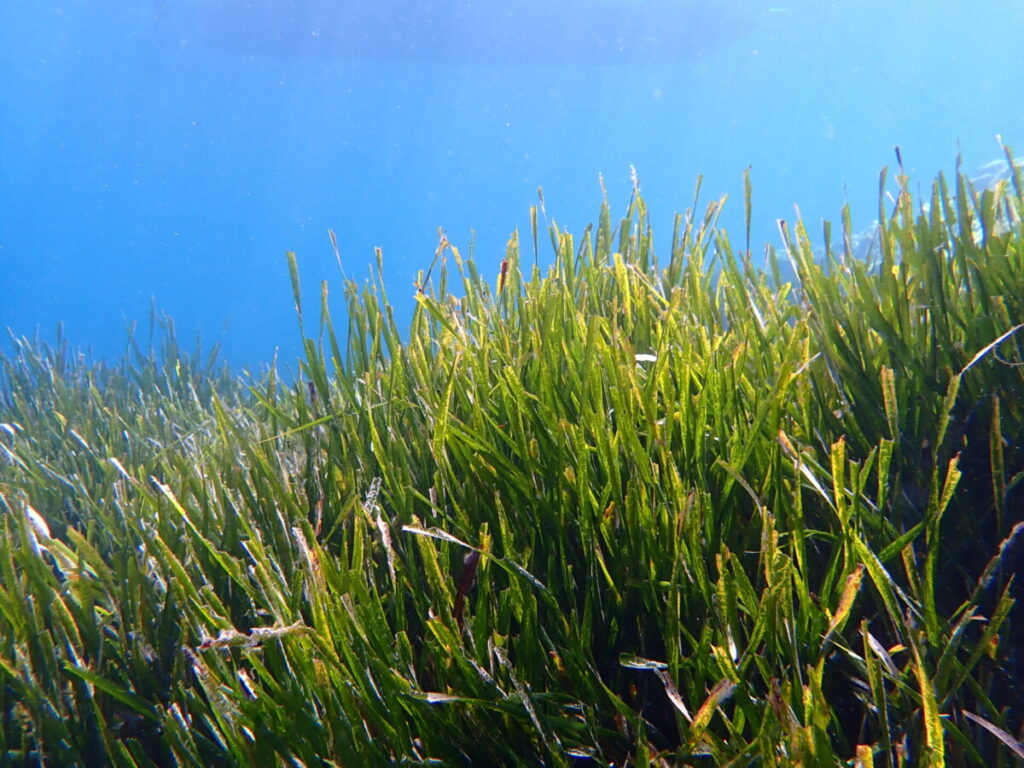
噪音不只對海中的動物造成傷害,對海中的植物也是一樣。
Sole’s earlier research had shown that cephalopods hear sound through small sensory organs called statocysts. When exposed to noise frequencies similar to marine seismic testing and boat noise, damage to statocysts is stark: they swell, explode, and die-much like a human eardrum might be damaged by loud noise. Embryos were equally harmed, with extensive epidermal lesions and damaged cilia.*
Solé先前的研究顯示,頭足類(按:觸鬚與頭部直接相連的生物,如魷魚、章魚等等)的聽覺是透過叫做「平衡囊」(statocysts)的感覺器官。當曝露在海上震測或船所發出的噪音頻率時,對「平衡囊」產生的破壞是很明顯的:它們腫脹、爆開然後壞死,就像巨大的聲響對人類的耳膜可以造成的傷害一樣。胚胎也一樣會受到傷害,表面大面積病變,纖毛也會損傷。
Could marine plants be similarly affected by marine noise pollution, wondered Solé? Seagrass, like other marine plants, has an analogue to statocysts: organelles called amyloplasts that help the plant orient to gravity, direct its roots, and also detect sound through particle motion in water. The researchers knew that amyloplasts were found in high concentrations in certain cells in the root caps and thizomes of P. oceanica. Would loud sounds harm seagrass the way they harmed the octopuses?
Solé也很好奇,那麼海中的植物是否也會受到噪音污染的影響呢?海草,和其他海中的植物一樣,有類似「平衡囊」的組織:一種稱為澱粉體(amyloplasts) 的細胞器,幫助植物體導向重力的方向,引導根的生長,而且透過水中粒子的移動來偵測聲音。研究者發現海神草(P. oceanica) 的澱粉體集中在根尖和根莖的特定的細胞之中。巨大的聲響對頭足類的傷害也會發生在海草上嗎?
Just as she had done with marine animals, Solé assembled a sample of seagrass plants in tanks in the lab. The control group was left untouched, but the test group was blasted with loud, low-frequency noise similar to the sounds generated by industrial activity, such as shipping and underwater seismic testing. She then examined cells in the roots and rhizomes, as well as the fungal symbionts attached to the roots. In the control group, the amyloplasts were undamaged. But in the group of plants subjected to loud noise, the amyloplasts were severely deformed, and their numbers decreased dramatically. Under the scanning electron microscope, the researchers observed eerie similarities with the octopus statocysts: lesions and blasted-open cells leaking their contents through gaping holes. Just like the octopuses, the seagrass had severe, permanent damage to their sensory organs. This damage, the researchers surmised, could affect the ability of the plants to sense gravity and store energy—two functions basic to their survival. Even more worrisome: the symbiotic fungi attached to the roots were also damaged. Their degradation meant that the plants might find it harder to gather nutrients from the ocean.
一如她針對海生動物的研究,Solé 在實驗室的水族缸中佈置了一個海草的樣本。控制組不做任何改變,但測試組則用大聲的低頻噪音轟炸,類似工業活動發出的聲音,譬如行船或海上震測所產生的。之後她檢查根及根狀莖的細胞,以及附著在根上面共生的真菌。在控制組,澱粉體完好如初。但是在巨大噪音下的海草,澱粉體嚴重變形,而且數量劇減。在電子顯微鏡的掃瞄下,研究者觀察到和章魚平衡囊詭異相似的現象:產生病變而且被(聲音)炸開的細胞,內容物從裂開的洞隙洩了出來。就像章魚一樣,海草的感覺器官也受到嚴重而且永久性的損害。研究者猜測,這些損害,會影響到海草偵測重力方向和儲存能量的能力,這兩者對海草的生存根本上很重要。更令人擔心的是:附在根上面共生的真菌也受到損害。真菌功能的衰退代表海草將更難以從海洋中蒐集到足夠的養料。
P.S. 海神草(P. oceanica)的相片,來自維基百科,為Frédéric Ducarme所拍攝。
*: Karen Baker, 《Sounds of Life》,2022,Princeton University Press
2024/6/21 海神草(P. oceanica) 也怕噪音 Damakey
