
水是最好的溶劑,幾乎什麼東西都能溶於水。這個特性,使得溶於水的化學物質,容易進出細胞,水因此成為生物生化反應中不可或缺的東西。
而水的另外一面,正也是因為幾乎什麼東西都能溶於水,所以也包括了有害的化學物質。這些有害的物質可能是早就存在於大自然𥚃,也可能是人類排放的廢棄物質,因此現代人要有安全的水喝,除了水源要夠乾淨,往往就必須先過濾消毒後才能飲用。
飲用水的就源管理,是要找到沒有污染的水源地,加以保護,那麼水只要經過相對簡單的處理,就可以送到用戶的家中了。
水源如果不能排除所有的污染,那麼淨水廠的處理壓力就比較大,淨水的程序要加藥水(譬如氯)消毐,或中和水的酸鹼質,甚至要用到離子交換或逆滲透膜等技術,但那些成本就很高了。
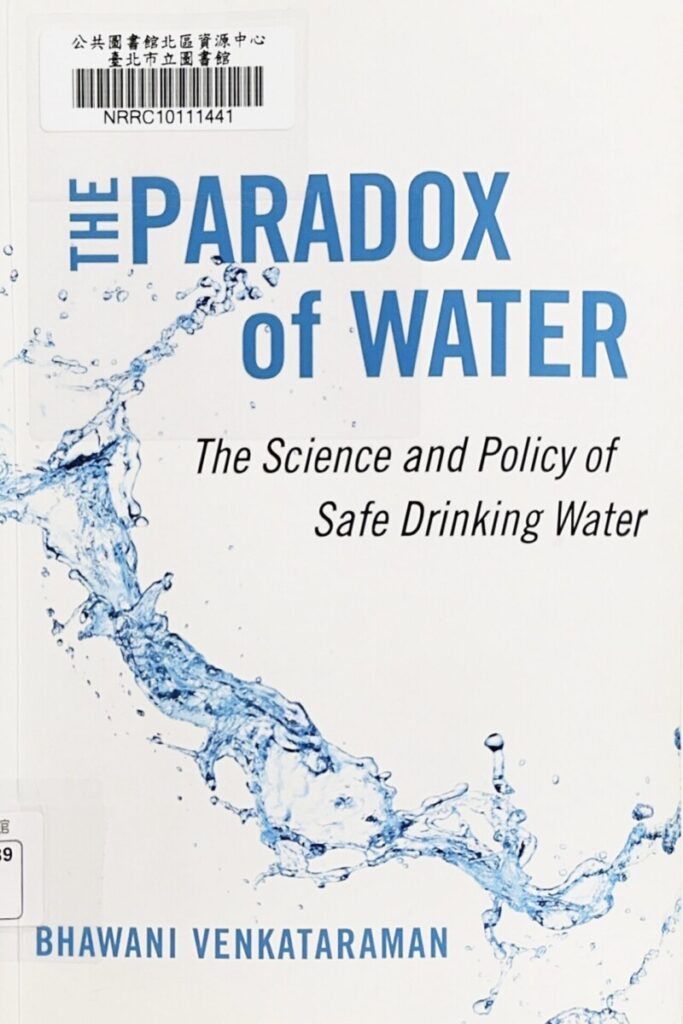
“The paradox of water”這本書,講的是美國飲用水的法規、相關的水質規定,及一般各地水質的問題。
令我驚訝的是,富裕的超級強權,到處去發動戰爭的美國,居然在美國本土很多地方,都沒有辦法保證自來水的安全。而且在美國比較鄉下、少數民族(主要就是黑人)、窮苦人們居住的地方,更是如此。在美國,飲用水的安全,也就成了對貧苦大眾及黑人的歧視問題。
以美國的紐約市為例,他們花錢補助原來住在水源區的人們,因此可以取得非常乾淨的原水,不需要太過度的處理,就可以供給90%的市民飲用。但是,在美國的西南地區,則是完全另外一種狀況。基本上,在美國於水資源的處理上的投資,往往是不足的,所以作者也認為這是一個基本人權的問題。
不安全的飲用水,代表國民的健康沒有保障。加上水中可能有很多各種有害的工業化學物質,對孕婦、嬰兒產生影響,一般人也易於罹患癌症。
這讓我想到我們台灣的水質。
台灣的飲用水,大部分是取自水庫或河川的水,加以淨化處理之後而成。
看過台灣所有水庫水質監測報告的人就能明瞭,台灣的水庫中水質最好的是翡翠水庫,而那是供應給台北市民(及據說極小部分的新北市民)的水。
天龍國,不是浪得虛名。
新北市主要是新店溪的直潭堰和後來在大漢溪河床上的鳶山堰,是位於水流的中下流,源流水質如何,就不言可喻了。
高雄市主要是取高屏溪的水,也是中下游。唯一可以安慰的是,取水點大樹,在排放豬糞水的武洛溪北邊上游一點點的地方。
花蓮比較沒有工業,而宜蘭是一個從來不缺水的地方。然而,蘭陽溪床濫墾種滿西瓜和高麗菜,大量使用的化學肥料及農藥的殘留,都會流向蘭陽平原,對水質的影響會是如何呢?
講到肥料和農藥,那就不得不提大甲溪上游的的梨山/環山部落,濁水溪和大肚溪/北港溪上游的清境農場,在下游是誰會喝了那些流下來的水呢?
新竹市主要向頭前溪下游的隆恩堰取水,可是上游的工廠及住家排放的廢水呢?我甚至還曾看到竹東垃圾堆放而溢出來的廢水呢!
然後是工業廢水……台灣有多少工業區,有多少外海流放管,就可以知道我們環境承受的壓力。科技業的護國神山不是沒有代價的。當我看到台中某位醫生公佈流行病學的某個研究,以及他自己執業上的觀察,某些癌症就集中在台灣西側河川下游和海岸邊,我居然完全不感到驚訝呢!
台灣得天獨厚,每年颱風帶來豐沛的雨水。但台灣的溪流短促,水資源並不穩定。根據國際水協會(IWA)調查,2021年台灣平均家戶水價為每度9.24元(台水每度9.84元、北水每度8.64元),排名世界第三低。(資料來自網路)
一度水就是1000公升,才不到1個10元銅板,水價那麼便宜,容易造成大家不珍惜水資源,也就不免造成浪費,令人覺得不可思議。2019年到2023年(四年?),台灣的颱風過門而不入造成的長期旱象,大家應記憶猶新。台灣的水資源,看天吃飯,並不是沒有限制地豐沛,也是要好好珍惜的,大家要了解。
節錄一些書中內容於后,供大家參考:
… As defined by the World Health Organization (WHO), safe drinking water “does not represent any significant risk to health over a lifetime of consumption, including different sensitivities that may occur between life stages.”…
世界衞生組織定義何謂「安全的飲用水」:長期飲用不會產生任何對健康的危害,不管在任何的生命階段,身體(對水)會俱有的各種不同程度的敏感性。
Over two billion people worldwide (about one in four people) consume water that can potentially cause them to become sick; over 800,000 people die from waterborne diseases every year.
全球,有20億人喝的水,可能會因而致病(每4個人中有1人)。每年有80萬人的死亡,是因為透過水而感染的疾病。
Water is a molecular marvel. Its seemingly simple molecular formula-H2O—contradicts its complex behavior. The fact that water molecules are made up of two hydrogen atoms and one oxygen atom, that is, H,O, allows life to thrive under the conditions that exist on Earth. Every living organism is connected through this reliance on liquid water, from an amoeba to a plant to a blue whale. It is, however, also because water is H2O that water is easily contaminated. We cannot live without water, and at the same time, water being easily contaminated can therefore potentially threaten life- this is the paradox of water….
水是奇妙的分子,它的分子式是簡單的H2O形式,但它的化學特性則是複雜的。水分子由2個氫原子和1個氧原子組成,H2O,使得地球俱備的條件令生命得以繁盛。每個生命有機體都和液態水息息相關,小至阿米巴原蟲,大至植物甚至巨大的藍鯨,都是一樣的。而正是由於水是H2O,它就非常容易被污染。我們不能沒有水,而水又容易被污染而威脅到我們的生命,這就是水的兩難……
…In the case of the water molecule, the O atom has a high electronegativity, in fact, the second-highest of all atoms. As a result, the electrons that form the chemical bond between each H and the O experience a stronger attraction from the O atom than the H atom. Consequentially, the H2O molecule’s electron distribution is skewed such that the O end of the H2O molecule has a higher electron density than the two H ends…The asymmetric electron distribution and its bent structure make H2O a polar molecule…
就水分子而言,氧原子有很高的電負度(離子性),是所有原子中次高的。化學𨫡結合氧原子和氫原子的電子,從氧原子端來的力量比氫原子端大。水分子中電子的分佈偏向氧的那一端,氧原子端的電子密度比氫原子端高……電子不對稱的分佈,加上H2O分子向中間的氧原子凹折的結構,使得水分子成為有極性的分子……
The temperature at which a liquid boils is related to the energy required for molecules to overcome the attraction between other molecules and escape into the gas state. The stronger the interactions between molecules, the higher the boiling point. The more polar the molecule (comparing molecules of similar size), the more energy is required to overcome the attraction between molecules, and the higher the boiling point.
液體沸騰的溫度,是指提供脫離液態分子之間吸引力的能量。分子之間的吸引力愈強,沸點愈高。比較有極性的分子(比起其他約當一樣大小的分子),極性愈強,分子要克服它們之間吸引力所需的能量愈高,沸點也就愈高。
Water is also distinctive in that water molecules interact with each other through a particular type of polar interaction called hydrogen bonding.
水分子之間特別的互動,是透過氫鍵的特別極性。
In addition to its high boiling point, water also has a relatively high melting point because it is a bent, polar molecule that hydrogen bonds. The polar water molecules in ice-solid phase-interact with neighboring water molecules. As with water molecules in the liquid phase, in the solid phase, the water molecules are, on average, oriented to maximize attractive interactions. For ice to melt, energy must be absorbed to separate the water molecules from each other to overcome the strong hydrogen-bonding networked interactions between water molecules…
除了沸點高,水的溶點也相對較高,因為它凹折的結構、極性以及氫鍵的吸引力。和液態水一樣,帶極性的固態水分子之間相互緊緊吸引住,再加上氫𨫡的力量,需要更多的能量才能將它們分開(融化)。
Another anomalous property is that water’s solid form, ice, is less dense than liquid water…
水還有一個與眾不同的特性,就是固態時的密度比液態時低。
It is highly unusual for a compound’s solid phase to have a lower density than the liquid phase. Why does this matter? Well, imagine if the opposite was the case, that the solid state of water had a higher density than the liquid state—if ice did not float on liquid water. Every winter, when temperatures drop below freezing, lakes and rivers would freeze from the bottom up, and life that happened to live in these bodies of water would struggle to survive.
化學物質在固態時的密度比液態時較低是很少見的。為什麼這個物理現象重要,想想如果是相反呢?如果水在固態的密度比液態高,那麼冰就不會浮在水上,湖水會從湖底開始結冰,那麼生活在水中的生物將無以為繼。
The polarity of the solvent influences the kinds of compounds that dissolve in it. Because water is a highly polar molecule, it dissolves a wide range of molecules and is considered a “universal solvent.” This ability to dissolve a wide range of molecules is key to why liquid water is an essential ingredient of life. Once molecules are dissolved in liquid, being in a fluid permits mobility to interact and react…
溶劑的極性使得物質得以溶解。水是高度極性的分子,被視為幾乎可以溶解各種物質的泛用溶劑。這種可能溶解很多種物質的特性,使得液態水成為生命的要素之一。當分子溶解在液態溶液中,將變得易於移動而且容易促進化學反應……
The polarity of water also influences the chemistry of life. For example, the three-dimensional shapes of proteins are influenced by the aqueous environment of cells. The three-dimensional shapes of proteins support highly specialized chemical processes that have made life on Earth so complex and diverse…
水的極性也影響生化循環。譬如,立體的蛋白質,深受細胞水性環境的影響。立體的蛋白質特化的化學反應過程,使得地球上複雜而且多樣化的生命形態變為可能……
While water’s universal solvent property makes it essential for life, solubility in water is not always helpful. For example, cell membranes-that define the boundary of a cell—are made up of phospholipid molecules… Phospholipid molecules have both a polar end and a nonpolar chain. In an aqueous environment, the phospholipid molecules organize-self-assemble-into closed bilayer structures…In this structure, the polar ends interact with the polar water molecules, both interior and exterior of the cell. The membrane-the cell wall-is established through interactions between the nonpolar chains lining up-like spaghetti in a box-away from the polar water and not dissolving in the water, providing structural integrity and defining the boundary of the cell. The result is a well-defined cell membrane with an aqueous interior to support the chemistry of life. Simultaneously, since the cell membrane’s exterior is polar, the cell can remain suspended in an aqueous environment to survive.
水幾乎可以溶解各種物質的特性對生命很重要,但也有相對的挑戰。以細胞膜為例,是由磷脂所組成的。磷脂分子的一端有極性,另外一端沒有。細胞膜由兩層的磷脂緊密排列而成封閉的膜,一對磷脂分子沒有極性的那端背對背排列,有極性的那一端,一邊朝向有水的細胞內,另外一邊則朝向有水的細胞外。朝向細胞內的極性促進化學反應,朝向細胞外的極性,使細胞活在有水的環境中而細胞膜不被溶解。
Since life thrives in water, an aqueous environment will host living organisms of all sizes-from mammals, birds, fish, and plants down to microorganisms, including pathogens…The primary source of these pathogens is fecal matter from humans and animals, often due to poor sanitation practices. Runoff from livestock farms and untreated sewage are other sources of pathogens. The most common manifestation of diseases caused by these pathogens is diarrhea. Globally, about 800,000 people die from diarrheal diseases due to unsafe water and sanitation every year.
因為生命在水中繁殖迅速,所以在有水的環境充滿了各種生機盎然的有機體,從哺乳類、鳥類、植物,一直到細小的微生物體,包含病原體都一樣。病原體的來源主要是人類和動物的排遺,不良的衞生習慣,農埸禽畜的排洩物和未經處理的地下水。這些病原體最常造成的疾病症狀是腹瀉。每年約有80萬人,死於不安全的水和衞生不良所導致的腹瀉疾病。
The level of dissolved oxygen is a measure of the health of lakes, rivers, ponds, and oceans in sustaining aerobic aquatic organisms. Bodies of water with low oxygen levels may not support aquatic life, resulting in “dead zones.” A common cause of these dead zones is nutrient runoff, like nitrate and phosphate fertilizers, into rivers, lakes, and oceans. Excessive nutrients in water trigger algal blooms, which, when they decay, deplete oxygen levels in the water and asphyxiate other aquatic life…
水溶氧量是對湖泊、河流、水塘及海洋健康程度的衡量,是需氧的水中有機體的有利程度。含氧量低的水體,將無法支持水中的生命,會形成所謂的「死區」。「死區」形成的原因,經常是外洩過多的營養物質如氮、磷等肥料,流至河流、湖泊和海洋之中。過度的營養物質,促進海藻增生,而當海藻死亡進行呼吸作用時耗掉水中的氧氣,以致令了水中的生命窒息死亡……
…As a universal solvent, water may also dissolve compounds toxic for life. Take, for example, dioxin, 2,3,7,8-tetrachlorod-ibenzo-p-dioxin (TCDD). This compound has very low solubility in water. At room temperature, the maximum amount of TCDD that dissolves in one liter of water is 0.2 micrograms. To put this in context, the average mass of a grain of sugar is 0.0006 grams, or 600 micrograms. So, a solubility of 0.2 micrograms (mcg) per liter (L) for dioxin translates to a fraction of a grain of sugar invisible to the naked eye dissolved in a liter of water. Compared to TCDD, sugar is millions of times more soluble in water. If TCDD has such a low solubility in water, why is this chemical discussed here?
水幾乎可以溶解各種物資,也包含有毒的化學物質,譬如:戴奧辛,2,3,7,8-四氯雙苯環戴奧辛。這種物質不太溶於水。在室溫,每公升的水才溶0.2微克。打個比方,一粒糖沙粒的重量約0.0006公克,或者說是600微克。所以每公升溶解0.2微克的戴奧辛就有如一粒糖沙粒很小的一部分肉眼無法辨識地溶解在1公升的水𥚃一樣。比較戴奧辛,糖的溶解度是百萬倍於戴奧辛。如戴奧辛的水溶解度那麼低,我們為什麼還要在這兒討論這種化學物質呢?
Burning carbon-based fuels like wood, coal, and oil and incinerating municipal and industrial waste can release TCDD. The health effects of TCDD, even at low concentrations, include an increased risk of cancers and reproductive difficulties.
燃燒含碳的燃料,如木材、煤、石油,或者焚化垃圾及工業廢棄物,都可能釋出戴奧辛。戴奧辛之危害,就算是很低的劑量,都會增加健康的風險,包括罹患癌症和影響生育的能力。
TCDD has been detected in drinking water sources. Even though it is not very soluble in water, its solubility is not zero. TCDD levels exceeding 0.00003 mcg/L in water are considered unsafe for humans. TCDD can dissolve to a concentration that exceeds its safe level by 6,700 times. As we will see in chapter 5, TCDD is just one on a long list of chemicals detected in drinking water sources that are potential health risks for humans. The list is long because water is the universal solvent and dissolves compounds it comes into contact with. The example of TCDD shows that even if the compound does not have a high solubility in water, it dissolves enough to be a health risk.
飲用水中可以發現戴奧辛。雖然它不太溶於水,但並不是不溶於水。每公升的水含有超過0.00003微克的戴奧辛,對人體來說就是不安全的。而戴奧辛的溶解度,是6700倍於它的水質水準。而戴奧辛,只是會溶於水中對人體有所危害的諸多化學物質之一。那個名單會很長,是因為水幾乎可以溶解所有的物資,溶解我們接觸的所有物質。戴奧辛的例子告訴我們,縱使溶解度低,但是已經足夠傷害我們的健康了。
…Distilled water is essentially pure water with no dissolved ions, that is, no mineral content. Consuming large amounts of distilled water may affect this concentration gradient, leading to potentially harmful cell death…
蒸餾水基本上是純水,沒有溶解的離子,也就是說,沒有礦物質。喝了大量的蒸餾水將影響這些物質的攝取,可能導致細胞的傷害甚至死亡……
…For oceans to be a source ofdrinking water for humans, this water must be treated through a process called desalination. As the term suggests, this treatment lowers the level of dissolved salts, which are the dissolved ions…
……海洋做為飲用水的來源,必須先經過去鹽的過程。去鹽就是去掉了其中的礦物質離子……
Since water dissolves ions, it once again does so indiscriminately. As a result, water dissolves lead, nitrate, and arsenic ions, all of which have harmful health impacts. The use of lead in pipes and plumbing resulted from building practices in the 1900s, and many cities still rely on these old pipes. These plumbing fixtures are often the source of lead ions in drinking water. Nitrate ions in drinking water sources result from agricultural runoff due to nitrate-based fertilizers. Chapter 6 discusses the history of lead and nitrate contamination in drinking water. Arsenic ions occur naturally in some soils and have industrial sources. All these ions readily dissolve in water and are harmful to human health.
水會溶解物質為離子,但它並不挑該物質到底對人體有害與否。因此,水也會溶解鉛、硝酸鹽、砷等等,都會對人體造成傷害。從1900年代開始,輸送水是靠鉛管,現在還有很多老舊社區還在使用。這些水管是飲用水鉛中毒主要的原因。硝酸鹽離子主要來自農業的化學肥料。砷離子存在於天然的土壤中,也有些是源自於工業廢物。這些離子已然存在於水中,它們對人體都有害。
Water covers about 70 percent of Earth’s surface, with 97 percent in oceans and 3 percent in fresh water. Of this 3 percent fresh water, ice caps and glaciers lock 75 percent, 24.5 percent is groundwater, and 0.5 percent is in surface water sources, such as lakes, rivers, and streams, moisture in the soil, and water in living organisms. From a human consumption perspective, less than 1 percent of all water on Earth is available as groundwater, lakes, rivers, and streams. Furthermore, given water’s chemistry, this fresh water will not be pure; there will always be microorganisms and dissolved chemicals…
地球表面有70%被水覆蓋,其中97%在海裡,3%是淡水。在3%的淡水中,冰帽和冰河含有其中的75%,24.5% 是地下水,0.5% 是地表水。存在於湖泊、河流、潮溼的泥土、生物有機體中。從使用水的角度看,地球上的總水量中只有少於1%的比例人類可以從地下、湖泊和河流之中取得。加上考慮水的化學特性,這些淡水不見得是乾淨的,其中總是會含有微生物和溶解的化學物質……
…A 2018 study analyzing health-based drinking water violations in the United States over about 30 years concluded the following:
- There are geographic “hot spots” across the United States, particularly the Southwest, with higher incidences of violations.
- Some water systems struggle with repeat violations.
- The socioeconomics of a community correlates with compliance; low-income, rural areas often have more violations than higher income, urban areas.
- Minority, low-income populations have higher rates of violation of total coliform levels, an indicator of microorganism contamination.
……一份2018年針對健康有關飲水在過去30年在美國違法的狀況分析顯示:
- 在美國有集中在某些「熱區」的狀況,尤其是西南邊,有更多的違法狀況。
- 有些供水系統有重覆違法的狀況。
- 社區社會經濟狀況和是否符合法令相關;經常,低收入和郊外的地區的違法狀況,比高收入和大都會中的要多。
- 少數民族、低收入戶所在的地區,不符大腸桿菌標準的比例比較多,顯示是微生物感染所致。
While feeding a growing population is a remarkable feat, the rampant overuse of nitrate fertilizer is now wreaking havoc on ecosystems and is a significant source of water pollution-an example of an unintended consequence. Globally, only about 17 percent of nitrate fertilizer synthesized by the Haber-Bosch process and used in agriculture ends up as nitrogen in the forms of food consumed by humans (crop, dairy, meat).The unused nitrate ends up in runoff from farms and flows into water sources-lakes, rivers, and seas. Since nitrate is a nutrient, this runoff triggers an explosion of plant growth in these bodies of water-algal blooms-which deplete levels of dissolved oxygen. As a result of oxygen depletion, aquatic life suffocates, and large areas of aquatic regions become dead zones.
雖然,能餵養不斷成長的人口是了不起的壯舉,但濫用硝酸鹽的化學肥料,卻造成生態系統的浩劫,而且成為飲用水主要的污染源。全球,農業中使用的硝酸鹽化肥只有17%成為我們吃的食物,其餘的就都跑到了湖泊、河流和海洋等等水體之中了。硝酸鹽是營養物質,會造成水體中的植物大量增生,尤其是其中的藻類,它們死亡時的呼吸作用會耗盡水中的氧氧,使得水中生物窒息而形成了無生趣的大範圍「死區」。
In addition to damaging aquatic ecosystems, nitrate fertilizers are a concern for drinking water. Ammonium nitrate dissolves in water, forming the nitrate ion, which is toxic to humans. Its toxicity is of particular concern for infants as it can cause methemoglobinemia, or blue baby syndrome. Due to the different pH levels of an infant’s stomach compared to an adult’s stomach, infants have a different bacterial population. In infants, bacteria can convert nitrate to nitrite. The nitrite binds to hemoglobin, preventing oxygen uptake, and can suffocate an infant. Studies suggest that exposure to nitrate in pregnant women may cause anemia, spontaneous abortions, and preeclampsia. Some studies also implicate nitrate with higher risks to some cancers. In the United States, the MCL for nitrate in drinking water is 45 mg/L (also expressed as 10 mg-L NOz-N), the same as the level recommended by the WHO. However, recent studies suggest that there may be increased risks to some cancers at levels lower than this standard for nitrate.
除了破壞水的生態系統,硝酸鹽化肥也是對飲用水安全的威脅。硝酸銨溶解到水中,形成硝酸根離子,對人體有毒,會造成嬰兒變性血紅素血症,所謂藍嬰症。嬰兒胃中的酸鹼度和成人不同,菌相也不一樣,硝酸鹽和血紅素結合,造成缺氧,導致嬰兒窒息。研究顯示,曝露在硝酸鹽中的孕婦,可引起貧血、意外流產、妊娠毒血症等等。有些研究顯示,硝酸鹽有更高的風險得到某些癌症。美國飲用水的硝酸鹽含量標準是每公升45毫克,和世界衞生組織的標準一樣。但晚近的研究顯示,縱使低於那個標準的硝酸鹽,就可能增高了罹患某些癌症的風險了。
…Yes, water is life-but it is safe drinking water that not only protects public health but is essential for poverty reduction, food security, supporting peace and human rights, enabling education and gender equity, and ecosystem health. To realize these rights and protections for all life on Earth, the paradoxical behavior of H2O must shape and inform individual behavior as well as policies, regulations, and actions for how we protect, use, manage, distribute, and treat water…we must not take our access to safe drinking water for granted.
水是生命,安全的飲用水不只保障民眾的健康,對很多方面也很重要,諸如減少貧窮,保障食品安全、維護和平及人權,促進教育及性別平等,達到生態系統的健全。理解這些地球上所有生命的權利和保障,水所俱有正反兩面的兩難特性,形塑並教育每個人的行為,這也包括政策、法規及相關的措施,諸如如何保護、使用、管理、分配和處理水……我們不應該把有安全的飲用水當作是理所當然的事。
*:Bhawani Venkataraman, “The paradox of water,” 2023, University of California Press
2024/4/13 The paradox of water Damakey
