
“…We go back a ways, Cousin Octopus and I — at least as far back as the early Cambrian period, 550 million years ago. Before that, we are probably the same thing; a motile wormlike creature with a mouth…”
在寒武紀的早期,約在5億5 千萬年前,我們和章魚在那個時候大概沒有什麼差別,只是一種有嘴、會蠕動的蟲而已。
“Of all the invertebrates — animals that lack a backbone — octopuses are the ones that seem the most like us. In part, it’s the way they return your gaze, as if they’re scrutinizing you… In part, it’s their dexterity. Their eight arms are lines with hundreds of suckers; this allows them to manipulate object, whether to open clamshells, dismantle the filtration system of an aquarium tank, or unscrew lids from jars…”
在所有沒有脊椎的無脊椎動物中,章魚最像我們人類。當我們觀察它們的時候,從它們回望我們的眼神中看來,似乎也在打量著我們。另外,它們的臂膀上佈滿吸盤,非常靈活。打開蚌殼、拆壞水族箱的濾水系統、轉開罐蓋,這些通通難不了它們。
“…they have three hearts and blue blood. When feeling under threat, they squirt a cloud of ink and jet off in another direction. They have no bones. The only hard parts of their bodies are a parrotlike beak and a nub of cartilage around their brain…”
它們有3個心臟,流的是藍色的血液。
在威脅之下,它們會向後噴出墨汁以加速逃逸。
它們沒有骨骼,身體比較硬的部分,只有像鸚鵡般的尖嘴及保護腦部的軟骨而已。
“Octopus fossils are rare; animals with soft bodies generally leave no trace. This fossil is about 90 million years ago, which make it one of the oldest known octopuses. When this animal lived, the extinction of dinosaurs was still 25 million years in the future…”
軟體動物很難留下化石。
眼前的這塊章魚化石是9千萬年前形成的,是目前所知最古早的章魚化石之一。(很古老,)恐龍的絕跡,還發生在那之後的2 千5百萬年呢!
“Just as human are mammals, octopuses are cephalopods. The word in Greek for “head-foot” and refers to their weird anatomy, by which their arms are attached directly to one side of their head while their “torso” — the bag like mantle — is on the other. Cephalopods, in turn, are a type of mollusk — a group that includes snails and slugs as well as clams and oysters.”
在動物界(Animalia)之中,人類是脊索動物門(Chordata)、哺乳綱(mammalia);而章魚則為軟體動物門(Mollusca)、頭足綱(Cephalopoda)。
“Cephalopod” 在希臘語中是「頭足」的意思,表示章魚身形奇特的結構,所有的臂膀連到頭的一側,而它像囊袋般的身軀則連在頭的另外一側。
頭足綱(Cephalopoda)是軟體動物門(Mollusca)下的一支,蝸牛、蛞蝓、蛤、牡蠣等等都是軟體動物。
“Cephalopods were among the first predatory animals to hunt in ancient seas. They evolved more than 500 million years ago — long before fish got going — from a small animal with a shell like a witch’s hat…”
頭足綱在遠古時代,是稱霸海洋的掠食性動物。它們在5億年前,由帶殼的生物演化而來,而那個時候海裏還沒魚的身影呢!
“Today, there are more than 750 known living specifies of cephalopods. Besides around 300 species of octopus, these include an array of squid and cuttlefish(both of which have 10 limbs) and a few species of nautilus — peculiar animals that have 90 tentacles and live in shells.”
現在頭足綱之下共有750個種,其中章魚有300種,其他的包括有10隻觸手的魷魚和烏賊,和有90隻觸手、住在硬殼內的鸚鵡螺屬的生物等等。
“Octopus disguise has three main elements. One is color. Octopuses generate color through a system of pigments and reflectors. The pigment — usually tones such as yellows, browns, and reds — are kept in thousands of tiny sacs in the top layer of the skin. When the sacs are closed, they look like minute speckles. To show the pigment, an octopus contracts the muscles around the sac, thus pulling it open and revealing the color. Depending on which sets of sacs an octopus opens or closes, it can instantly produce patterns such as bands, stripes, or spots.
The reflection cells come in two types. The first type reflects back the light that arrives — thus causing the skin to appear white in white color, red in red color, and so on. The second type is like a living soap bubble that presents different color when seen from different angles. Together, the reflectors plus the pigment organs allow octopus to create a huge variety of colors and patterns.”
The second element of disguise is skin texture. By contracting special muscles, octopuses can change their skin from smooth to spiky. The effect can be extreme…
The third part of disguise is posture…”
章魚善長偽裝。
它皮下含有色素的小囊袋,關閉的時候,呈現細微的斑點。它可以控制小囊袋的肌肉,露出需要的顏色,或黃或棕或紅。而依照不同位置小囊袋的開閉組合,章魚就可以呈現帶狀、線狀或點狀的圖案。
章魚也可以透過皮下的反射細胞來控制顏色。當反射細胞反射光線的時候,就能呈現出光線原來的顏色。
而反射細胞也可以讓光線像射在肥皂泡泡上面一樣,(透過光線的干涉作用,加強了某些波長的光而減弱了某些波長的光),使得從不同角度看到不同的顏色,這就讓章魚可以變化出很多不同的色彩了。
其次,章魚可以透過控制皮下的肌肉,而直接改變皮膚的質感。
最後,章魚也可以改變身體的外型和姿態,來進行偽裝。
“…A typical pond snail has just 10,000 neurons; lobsters have 100,000; jumping spiders, perhaps 600,00. Honeybees and cockroaches… have around a million. So the 500 million neurons of the common octopus,…they are better endowed than a mouse (80 million) or rat (200million) and almost at par with a cat(around 700 million)…”
章魚有很多的神經元,數量和其他生物比較如下:
蝸牛 10,000
蝦子 100,000
跳蛛 600,000
小鼠 800,000
蟑螂 1,000,000
蜜蜂 1,000,000
大鼠 2,000,000
章魚 5,000,000
貓 7,000,000
章魚有5百萬個神經元,這個級量,在生物之間比較,比我們直覺想像的還要「高等」呢!
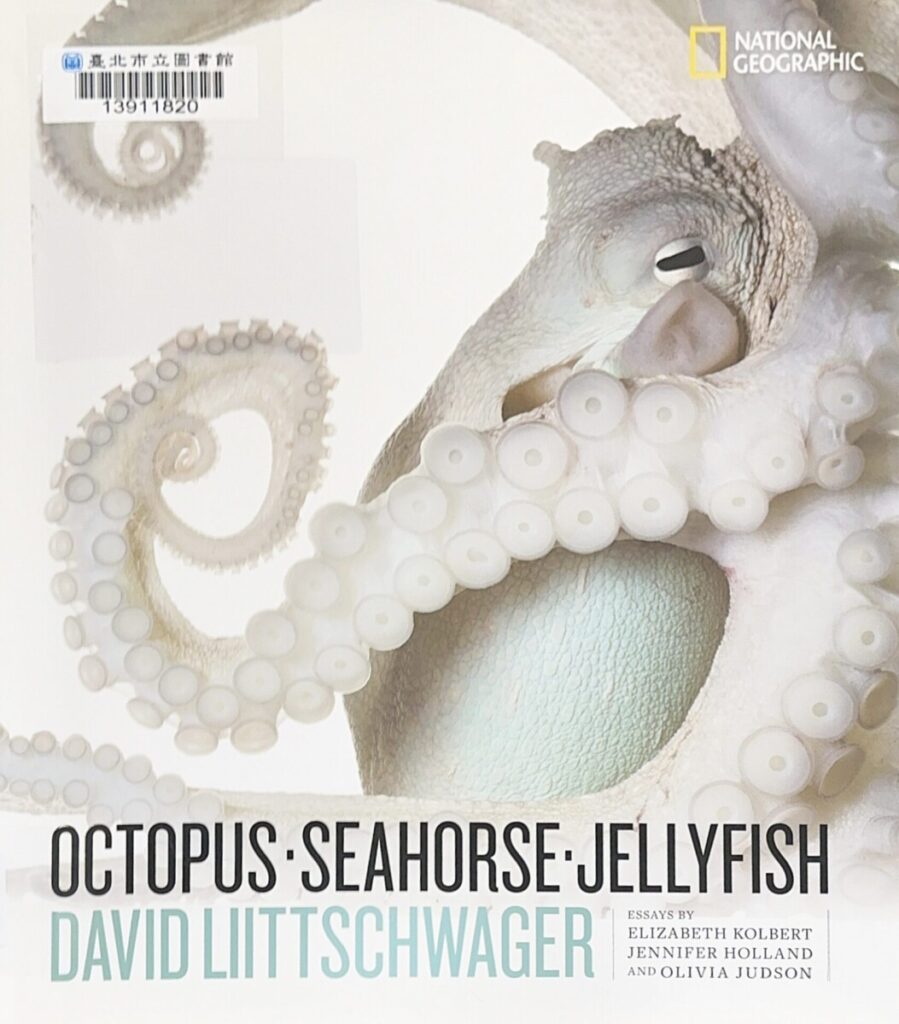
“Octopus, seahorse, jellyfish”,這本攝影集,是David Littschwager從135,000次500種海中生物的曝光中,精選出來關於章魚、海馬、水母的照片。
他說,在拍攝的時候,特意採用了聚光透鏡,以減少光線的擴散,以取得比較銳利的影像。照片看起來那種清晰的程度,真是令人驚艷。
David Littschwage海中生物攝影的哲學,就是希望能夠體現它們真正的樣子。期望大家透過他的攝影作品,認識到那些平常難得一窺堂奧的海中生物,以期提高大家對環境保育的意識。
書中內容除了章魚還有海馬和水母,我只記錄下我印象比較深刻的章魚的那個部分。
“When I remember that an octopus has a more efficient eye design than we humans have, I am persuaded that humans are maybe not the pinnacle of evolution, but an untidy work in progress.”
章魚的眼睛比人的更要厲害。我們身體很多部分,都不如其他生物,誰說不是呢?我們人類應該要更加謙卑才好。
“…Dangers to marine life include, but are not limited to, global warming, overfishing, ocean acidification, oil spills, and plastic wastage…the marvelous creatures in this book need — and deserve — our protection.”
全球暖化、過漁、海水酸化、油漬、塑料污染等等,都對海中生物的生存造成了威脅,它們需要我們的保護。
*: David Littschwager, “Octopus, seahorse, jellyfish,” National Geographic Partners, LLC.
2023/8/8 Octopus, seahorse, jellyfish Damakey
