
‘We estimated the total savanna elephant population for the Great Elephant Census at 352,271 … Botswana had 37% of this total, with Zimbabwe (23%) and Tanzania (12%) also having large populations… we also recorded 201 poacher camps…’
There are so many poaching camps! The scale of elephant killing is far beyond our imagination.
Carcass ratio is a index to monitor if the natural population growth rate of elephants has been impacted. Carcass ratio = the number of dead elephant / the sum of live plus dead elephants. In principle, carcass ratio should be maintained lower than 8%.
‘The all-carcass ratio for the entire GEC was 11.9%. Carcass ratio >8% generally indicate a declining population. Ratios varied greatly by country, with the highest ratios in Cameroon (83%), Mozambique (32%), Angola (39%) and Tanzania (26%), …’
‘Survey-wise, carcass ratios were 12% in protected areas and 13.2% in unprotected areas, indicating that poaching is serious in both protected and unprotected areas…’
‘By 2050, human populations are projected to double in 12 GEC countries,… A human populations growth, so the potential human-elephant conflict, leading to elephant deaths, loss of habitat to agriculture or fires, and potential extirpation of elephant populations.’
‘The dramatic declines are almost certain due to poaching for ivory. Elephant poaching has increased substantially over the past 5-10 years,…’
‘An elephant is poached somewhere in Africa every 15 to 20 minutes of every day, every week and every month.’
Why do elephants matter? Two reasons:
‘…the first is their role as a keynote species in the ecosystem in which we live and function. The second – in keeping with their place in the human psyche – is their symbolic significance, what they tell us about ourselves…’
Initially the ban on ivory trade had been secured in CITES meeting in 1989. However there was a one-off experimental approval of ivory sale to Japan in 1997 executed in 1999, and another one-off sale was followed and delivered in 2008. ‘…CITES’s decision to permit China to bid alongside Japan for ivory, meant that this second sale was a recipe for devastation and that a surge in the demand for ivory was sure to ensue.’ The ivory trade encouraged poaching and the Africa elephant numbers total fell 144,000 between 2007 and 2015.
‘Africa elephants are referred to as “ecosystem engineers,” able to modify their landscape, often drastically. They’re each capable of consuming 75 to 150 kilograms of browse a day and can live up to 70 years…’
‘… Our knowledge of elephant intelligence, cognition and psychology had greatly increased in the last decades. The more we realize how similar to human they are… They have a highly complex communication system, which we are only just beginning to understand. They have feelings and a strong sense of family; they show emotions and empathy and have a knowledge of self,… Elephants also have a sense of humor and can think complex thoughts and plan ahead. And they mourn their dead…’
‘Elephants are losing their “elephantness.” The gene responsible for large ivory is disappearing, rapidly replaced by small-tuskec gene and, in some areas, even more alarmingly, by tuskless gene.’ It’s mainly due to poaching. Long tusk elephants are selected and killed and have no chance to leave the related genes to the next generation.
‘Tusklessness in healthy elephant population lies in the range of 3 to 5%. But we are now seeing the percentage rise to 60% or higher.’
‘Elephants use their tusks for many essential life functions. They are used as tools to lift bark from trees, to dig for roots, lift babies trapped in mud, and dig for water. Their functions range from the essential to seeming mundane; from serious weapons of defence to simply a resting place for their trunk. And bull elephants also use their ivory to compete for females. While tuskless elephants can survive, they are essentially handicapped…’
Elephants are important players in (savanna Africa) ecosystem.
‘It’s estimated that each adult elephant excavates about a tonne of soil a year from the various licks and waterholes…This sealing process enables the pan to hold water for much of the dry season and benefits all forms of wildlife.’
‘Elephants are consummate herbivores. They’re not only browsers and grazers, but they also eat bark, fruits, pods, and root (from up to a meter below ground)…’ Elephants digest roughly only 22% of the food they eat. The bolus contains a lot of food and nutritions for other creatures, hornbill, insects, people, monkey, baboons, wild primates, butterflies, dung beetles, termites, the aquatic life, etc., living around in the same ecosystem.
‘Because of their size, longevity and intelligence, elephants are main highway builders of the bush. With their expansive knowledge of home ranges, garnered over millennia, they have created U-shaped highway linking feeding areas to waterholes and rivers – highway that other wild life uses…’
The elephant’s warm stomach helps accelerate tree seeds to germinate. ‘Germinated seeds, embedded in the bolus, are often dropped in the dung pile a good distance from where they were eaten.’ By carrying tree seeds to far away places, elephants plant trees.
‘Elephant pruning ensures that a tree is kept down at browse level for all leave eaters, from dik diks at the base to giraffes, which shape its canopy.’
‘Elephant survival ultimately depends on generating appropriate incentive among local communities and their government (at all levels) to value elephants holistically, the more so because, even if poaching were to be eradicated, the risk of elephant habitat loss and fragmentation would not disappear with it.’
……
To help preserve elephants, what we should not do:
1. Don’t support operations that offer elephant-back riding or other forms of animal exploitation using elephants in captivity.
2. Don’t visit zoos or so-call sanctuaries that keep elephants under poor conditions.
3. Do not buy any products that use ivory, elephant hair or any other body parts.
Poaching is one of the major reasons that every 15-20 minutes an elephant is killed in Africa. ‘To stop poacher, the trader must also be stopped. And to stop the trader, the final buyer must be convinced not to buy ivory…’
No buying, no killing. Say no to ivory.
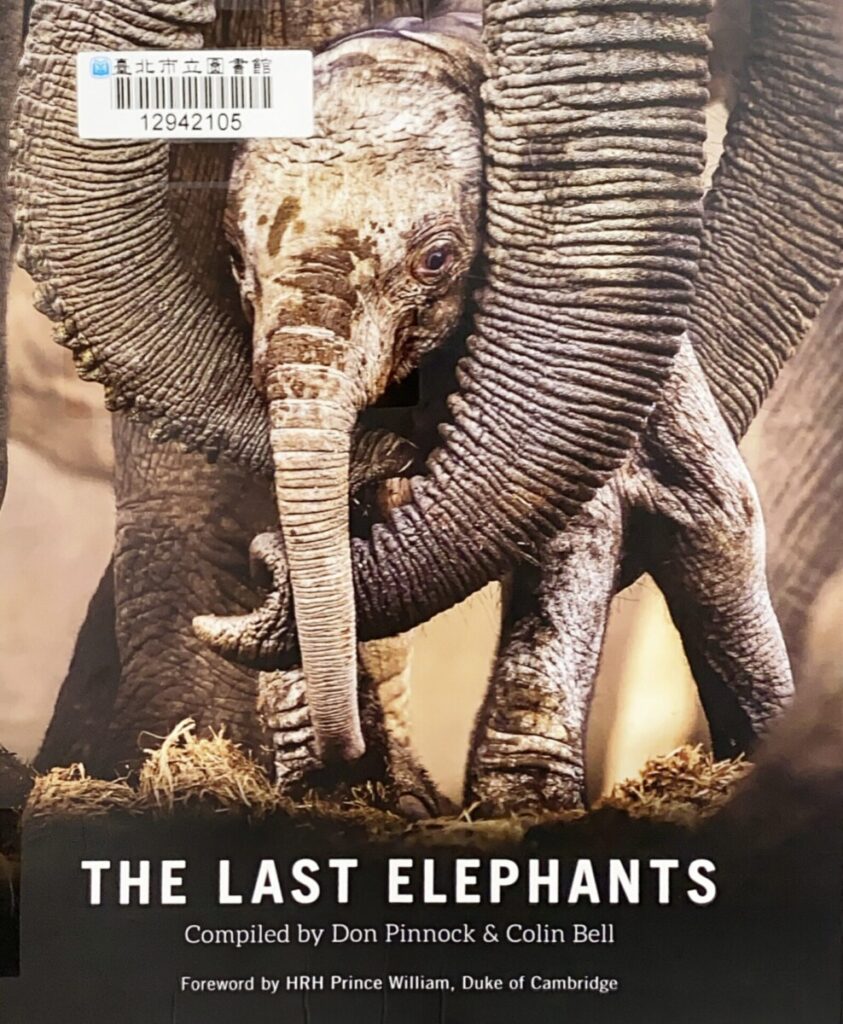
*:THE LAST ELEPHANTS, compiled by Don Pinnock & Colin Bell, Smithsonian Books, Washington DC.
2023/3/29 THE LAST ELEPHANTS Damakey
