
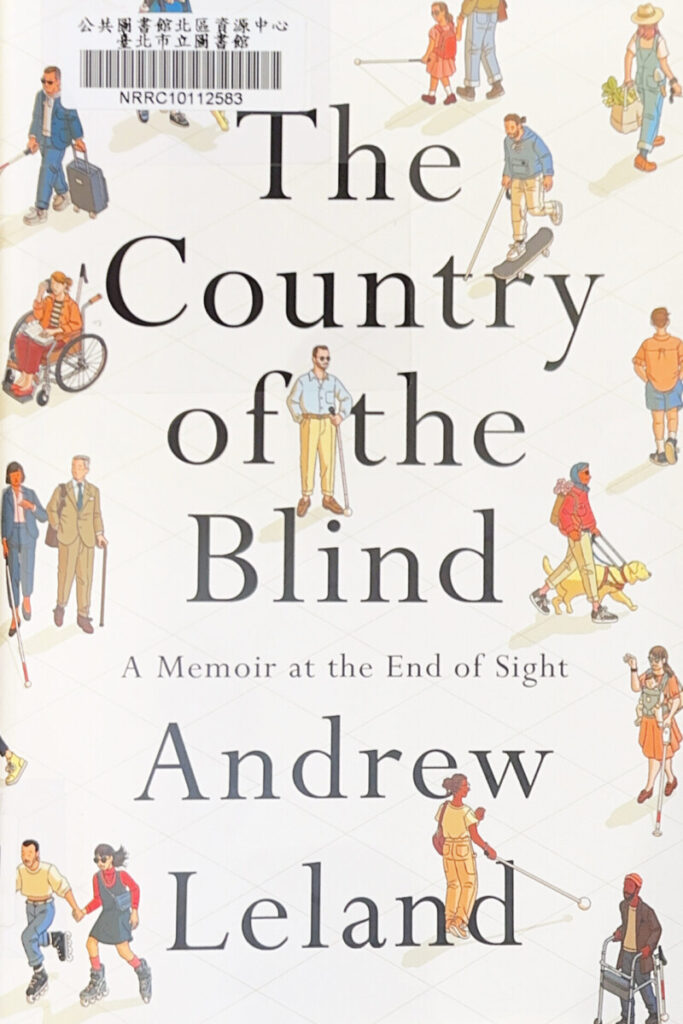
《The Country of the Bind》這本書的作者Andrew Leland在很小的時候,就被診斷出患有「色素性視網膜炎」又稱是「網膜色素變性」 (retinitis pigmentosa, RP)的眼睛罕見疾病。
當他自己發現視力變差的時候,父母並不以為意,畢竟他大致都還看得到。
Andrew對自己所患眼疾的了解,是透過Google在一個非常老舊的網站上找到的:
Your eyes,this ancient website told me, have two types of cells: rods and cones. These make up the retina. The cones allow you to see color and account for central vision. The rods give you peripheral vision and are more light-sensitive; they allow you to see in the dark. Retinitis pigmentosa encompasses a family of inherited eye diseases that gradually kill off the rods. As a result, RP usually appears early in life as mild blindness, before manifesting as slowly narrowing tunnel vision during the day…RP concludes, usually in middle age, with a flourish: complete functional blindness.*
大意是說,我們的視網膜(retina)是由桿狀細胞(rods)和錐狀細胞(cones)所組成。
錐狀細胞讓我們看得到顏色(color),影響中央位置的視力(vision)。
桿狀細胞則是對光線敏感(light-sensitive),影響我們可以看到周邊的視力。
「色素性視網膜炎」(RP)包含很多種類遺傳疾病,隨著桿狀細胞的逐漸死亡,視力會逐漸變差。
「色素性視網膜炎」(RP)的病程很長,視力劣化緩慢,在年輕的時候還有一些視力,一般是到了中年的時候,眼睛的功能才變得幾乎全盲的地步。
……
大部分眼盲的人,要嘛是天生如此,要嘛是因爲意外或疾病在短時間內導致眼睛看不見。他們被迫接受看不見的事實,開始學習用手杖(cane)探索走路,用點字(braille)閱讀等等,迅速安於盲人的世界。
「色素性視網膜炎」(RP)的特點是,它的病程進展得很緩慢,患者還一直有些視力,也就不急於調整去過盲人的生活。問題是到了中年,眼睛幾乎看不到了,不得不開始學習用手杖和點字,那對成年人就是一種挑戰。
Andrew 在這個過程中,由看得見的世界緩緩過渡到看不見的世界,他剛好可以既從看得見的人(the sighted)的角度,也可以從盲人(the blind)的角度,來觀察眼盲(blindness)這件事情。
他於是乎把他視力轉換的心路歷程,寫成了《The Country of the Bind》這本書。
一般人都認為盲人是很不同的人,是比較弱勢的,應該得到更多特別的社會照顧。
Andrew 在書中的最後結論中,則認為盲人只是視力比較差而已(其實只有15 %的盲人是完全看不見一絲光線的)。視力的差別,只是一種特質(characteristic),就像人和人之間老化程度不同而已(或種族、膚色、LGBTQ性別認同等等的差異),他們和看得見的人並沒有什麼差別,如果說是有,那是污名化(stigma)和誤解(misunderstanding)所造成的。
I begin this book with the idea that I existed with one foot in the sighted world, and the other foot in the blind one, and that I’d immerse myself in blindness, exploring all the radical, frustrating, innovative, weird, and wonderful things going on in this foreign land, to understand where I was headed. And, like H. G. Wells’s Nunez, I did discover a country of the blind, with blind ways of living, blind mode of thinking and perceiving, blind traditions and technologies and subcultures and habits. I found that the experience of blindness encompasses both tragedy and beauty, the apocalyptic and the commonplace, terror and calm. This is true of most of human experience: the same can be said of the process of aging, or dying. In the end, I found that the separation between the blind and the sighted worlds is largely superficial, constructed by stigma and misunderstanding rather than any inherence difference. If we could remove the misperceptions people have about blindness—the image of it as place of fear, claustrophobia, infantilization, and fundamental otherness—the landscape would begin to look very different. The two worlds would cease to feel so distinct, and their overlapping zones would grow. Ultimately, they’d have to yield and concede and share territory. The blind belong to our world, and we belong to theirs. It’s the same world.*
「色素性視網膜炎」(RP)隨著桿狀細胞的死亡,最後是連錐狀細胞也失去功能,令患者失去視力。目前沒有治療的方法。科學家正研究用幹細胞去重建視網膜,但在臨床上尚有長路要走。
關於盲人是不是應該用導盲犬,在不同盲人協會之間是一個基本理念的爭論。
以美國最大的盲人協會「國家盲人聯盟」(National Federation of the Blind,NFB)為例,他們就認為用手杖比用導盲犬還來得長期可靠,更可以讓盲人自立自強。在NFB的主頁上強調:
If we are going to be first-class citizens in our society, we must not mistake who is primarily responsible for our lives. We are.
(P.S. 導盲犬維護費用很高,當然也很難普及至每位盲人的)
……
Andrew 在過馬路的時候,也曾碰過父母叫孩童不要接近他的類似歧視的行為。
Andrew要告訴我們的是,盲人並不是弱勢,他們也沒有比較危險,他們只是有些不同,他們跟其他看得見的人一樣,為自己的生活負責,而且非常努力。
盲人固然無法用眼睛看到所有的花花世界,但是他們有其他的方式,如觸覺(tactile),也可以感知到這個世界。(傳說盲人聽力天生比較好,那是不正確的)
在比較看不到的世界,與其說缺乏視力,不如說盲人比其他看得見的人,多了一個看不見的維度來觀想這個世界
看不見,是一種特質(characteristic)。盲人要的並不是同情,而是要我們大家把他們當作人類群體中正常的一員來平等對待,並予以充分的尊重。
*: Andrew Leland, 《The Country of the Bind, A memoir at the end of Sight》, 2023, Penguin Press
2025/7/28 The Country of the Bind, A memoir at the end of Sight Damakey
