
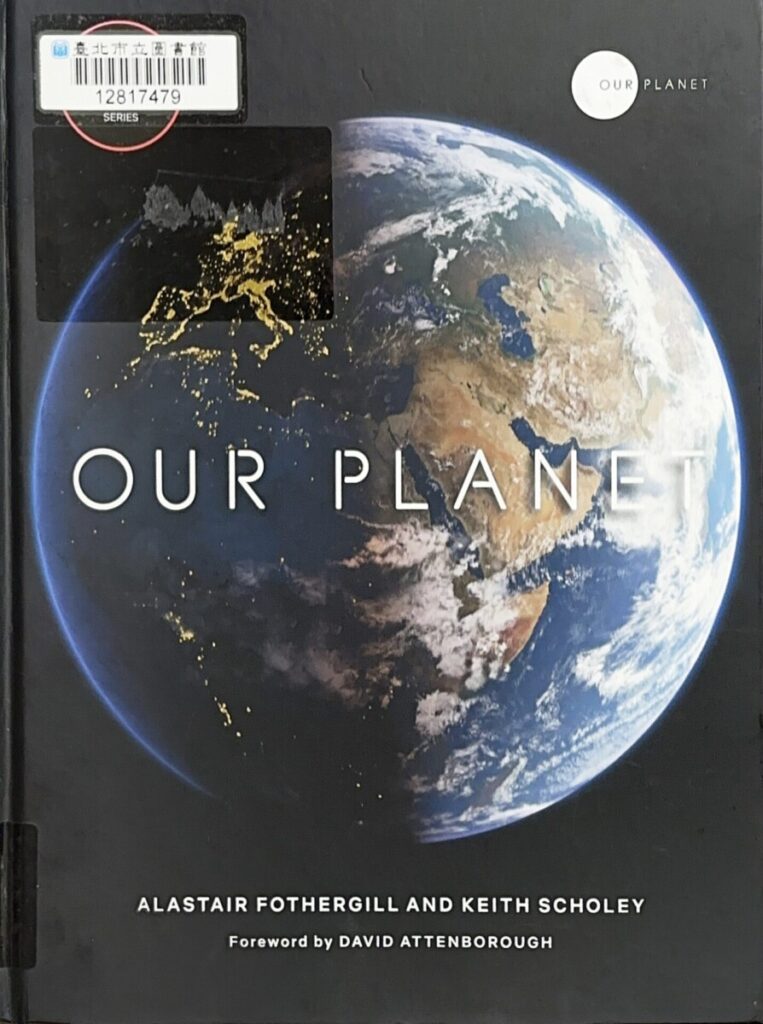
“We are damaging our own fundamental life-support systems. Burning fossil fuels causes climate change that floods coastal cities. Excessive chemical fertilizers on fields add little to crop yields but instead kill fish in our rivers and ocean. One region’s dam to capture water leaves millions downstream with empty taps. Cutting forests for timber lead to droughts hundreds of miles away. Plowing soils creates deserts. And hunters and fishers cause extinction that destabilize entire ecosystems…”
我們一直在破壞我們自己賴以生存的生態環境:用石化燃料,使得全球暖化,濱海城市變得容易淹水;用了太多的化學肥料,污染了水質,令其中的魚類無法生存;在上游築壩,造成下游無水可用;濫伐森林取用木材,導致氣候容易乾旱;深耕土壤,促進沙漠化;過度漁獵,滅絕了物種,破壞了生態的平衡。
And enlarge the scale of dead zone by “huge amounts of pollution, especially nitrogen runoff from fertilized fields and sewage from cities. The flush of nitrogen, added by phosphates, stimulates the growth of booms of algae and cyanobacteria(known as blue-green algae) that can cover large areas. They can be toxic. And even is not, as the algae dies, the rotting absorbs so much oxygen that there is none left in the water. Very little can live without oxygen. The outcome is dead zones—areas of oceans where everything had died.”
化學肥料中的氮,以及城市廢水中的磷化物,會造成水的優氧化,一方面可能有毒的藍綠藻會過度增生,另外一方面當藍綠藻腐敗死亡的時候,呼吸作用會耗去水中珍貴的氧。無氧的水中,很少生物能夠生存,就會變成了一潭的死水。
“The rising concentration of carbon dioxide in the air is resulting in more of the gas dissolving in the ocean…changes the chemistry in the oceans. They are on average 26 percent more acid than 200 years ago. This matters because many marine animals need calcium carbonate to make shells and skeleton in the water, and in acid conditions, less of this is available. Corals, clams, sea urchins, and many other species will find it harder to absorb enough calcium carbonate to grow and flourish…”
我們排放到空氣中的二氧化碳,(有大概三分之一)會溶解於水中,造成水質酸化,海水中的鈣質將減少,這會使得水中生物難以吸收到足夠的鈣,無法長成強健的骨骼或包覆在身外的硬殼。
“A growing concern is that more and more methane from rotting plants that has been trapped in the Arctic permafrost is now bubbling up. Methane is a greenhouse gas with even more warming potential than CO2…”
“Melting Siberian permafrost —soil that has been permanently frozen for more than 2 million years—collapses into a rivet valley. The melting of permafrost is releasing huge amount of carbon dioxide and methane, which will accelerate global warming…”
全球暖化時,北極和西伯利亞地區的永凍層的融解,將釋放出更多的二氧化碳及甲烷,會惡性循環地又更加加速了全球的暖化。
“…While the Antarctic is a continent surrounded by ocean, the Arctic is an ocean Siu rounded by land. While the deep ice on Antarctic has helped keep the South Pole region cool, warming in Arctic had so far been much greater, resulting in a dramatic loss of sea ice that is already proving extremely challenging for many species.”
南極是一塊陸地,北極則是一個大冰塊,這也是為什麼在全球暖化的影響之下,北極的冰層會比南極的融化得更快的原因。已經有很多物種的生存,都受到了極大的威脅。
“…The ice algae are the marine equivalent of terrestrial grassland. They are the main food for Antarctic krill—among our planet’s most abundant creature.
Krill are small, prawn-like crustaceans, no longer than two inches and with an average life of seven years, they spend most of their time in the depths, often in vast swarms that can cover hundreds of square miles. The krill swim to the surface under the cover of night, when they feed on phytoplankton(microalgae) in the open ocean or use their rake-like bristles to scrape algae from the ice.
The total world krill population is estimated at about 780 trillion—weighing more than the total human population. Almost everting in the Southern Ocean depends on krill…”
南冰洋的磷蝦數量非常驚人。
南冰洋的各種生物不是以吃磷蝦為生,不然就是以吃磷蝦為生的生物為生,可見磷蝦在南冰洋地區生態系的重要性。
磷蝦則以浮游生物(微藻類)為生,或用身上的鬃鬚挖冰上的藻類來吃。
(根據研究,全球暖化使得海水溫度上昇,磷蝦的分佈有往南極移動的趨勢。『科學家認為,磷蝦不會就此停止南遷,未來恐持續往南集中,若磷蝦族群越來越集中,許多以磷蝦為主食的動物如鯨魚、企鵝、海豹,就必須要在更小的區域內互相競爭,可能會對南極生態圈有不良的影響。』**)
“A looming threat is the loss of mountain glaciers. Currently, the summer melting of glaciers in many parts of the world provides reliable flows for river. Even without rainfall, the rivers keep flowing. But as the world warms, many glaciers loose more ice each summer than winter snowfall replaces.”
高山冰河的消融,將使得下游河水的水量在夏季無法得到充分的補充。
“…It is taking place in the radiative exclusion zone enforced around the Chernobyl nuclear power station after it brew up in 1986, scattering radiation across the land…
Forest are colonizing the formal atomic city of Pripyat…Forests now cover almost two-third of the exclusion zone. Under the cover of birch, oak, maple, and pine, wildlife is returning big-time…forests laced with isotope of strontium, plutonium, americium, and cesium are extremely healthy-looking lynx, gray wolves, Przewalski’s horses, moose, deer, wild boars, foxes, hares, and even a brown bear or two. Eagle soar in the air looking for prey…”
放射線對動植物基因的影響,可能在以後的子代中才慢慢看得出來,但以現在車諾比核災的禁區內動植物欣欣向榮的現象,就已經可以看出,生態系只要有機會,就可以迅速恢復過來,展現出驚人的靭性。
“Tropical rainforests are distinguished by their constant warmth and near-permanent rains. They have no seasons—no disruptive patterns such as dry-season fires or winter freezing—no part of the year when nature is dormant. So the constant cycles of growth, procreation, death, decomposition, and rebirth are in overdrive all year round. Many believe this is the key to their extraordinary biodiversity—the reason why rainforests are the most complex ecosystems on earth.
Another reason is the extraordinary range of different habitats,…”
至於雨林,它的特色就是長年的高溫多雨。雨林中的生物,總是生生不息,因此能維持最大限度的生物多樣性。而且雨林中有多種不同的棲地,可以讓不同生物適得其所。這是為什麼保育雨林是非常重要的原因。
“…The earth has entered the Anthropocene, a new geological epoch in which humans shape the planet. It is, for good or ill, our planet now.
The challenge is to make a good Anthropocene. Not a scary dystopian age of disaster, but a joyful Anthropocene where we humans rise to the change of managing our planet, of being good stewards of nature…”
地球的生態,已經被人類弄得殘破不堪了,有學者稱這樣的時期是「人類世」。
這個地球,人類既然已經是主宰,就不要再糟蹋這個星球了,而是要承擔起相關的責任,成就一個更好的「人類世」
那麼,可以怎麼做呢?
“The answers may surprise us. We are already changing. In rich countries, we are slowing losing our addition to ‘stuff.’ These days when people get richer, they often spend money on things that required people and skills…rather than possessions. Nature potentially takes fewer hits…Digital technologies replace a lot of gadgets…In rich countries, we are also discovering how to appreciate products that are well-made and long-lasting, how eating less meat and cycling can make us healthier while reduce our impact on the environment, how green spaces and access to nature can make us more contented…”
人類要降低自己的慾望,那樣對大自然的影響就可以更小。
在富裕的國家裏,大家慢慢要求的不再是數量和物質,而是經久耐用的品質。
數位化的結果,把更多的機件和器具都濃縮到手機、iPad和雲端上面。
現在大家知道不要吃太多肉對身體有好處,(可減少對環境的影響)。
大家也知道生態保育的重要性,多接觸大自然有益身心。
“As this book tells us, from every region of the world there are stories that reveal nature’s resilience and show how restoration is possible…”
在生態保育上的行動,永遠不遲,只要提供動植物足夠的保育空間,動植物自然就會恢復過來,這在全世界的保護區之中,不乏令人振奮的例子。
*:Keith Scholey and Alastair Fothergill, Our Planet, 2019, Ten Speed Press
**:自由時報網站,全球暖化新鐵證!海水太暖了 磷蝦逐漸移向南極,2019/01/22
2023/7/29 Our Planet Damakey
