
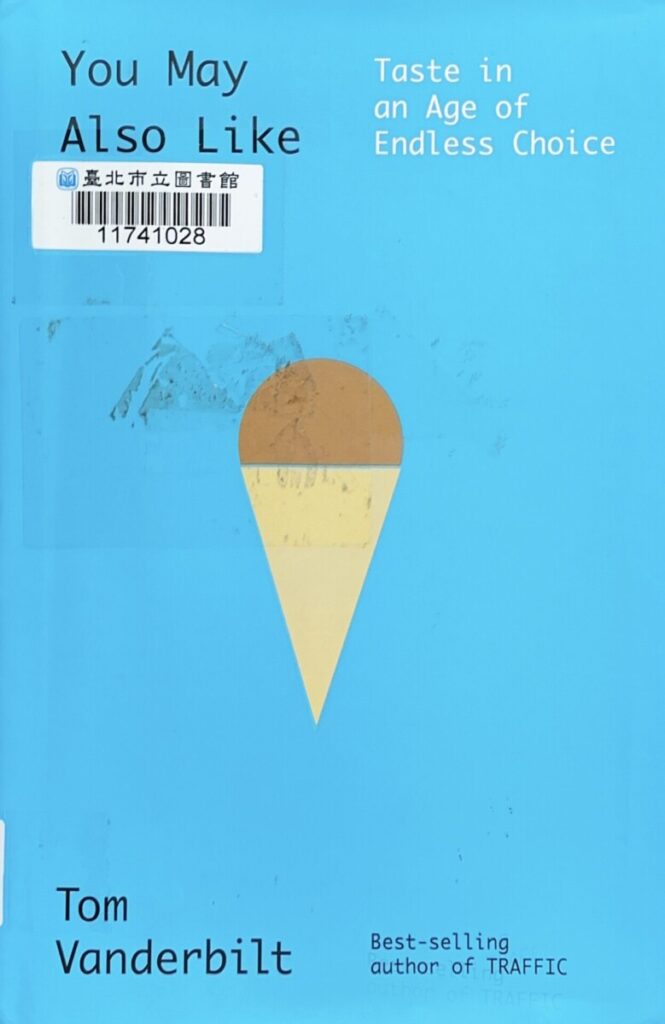
個人的「喜愛」(taste),是很難捉摸的。
“…We often do not seem to know what we like or why we like what we do. Our preferences are riddled with unconscious biases, easily swayed by contextual and social influences. There is less chance than we think that we will like tomorrow what we liked today and even less chance of remembering what led us to our previous likes. Even experts, …, are hardly infallible guides to knowing what is truly good, to knowing their own feelings. Nothing could be more essential to identity than one’s internal compass of liking — of food, of music, of art, of our brand of yogurt — and yet, throughout its almost constant operation, it sits largely outside reflection…”
我們似乎經常不知道自己所喜愛的是什麼,更遑論理解喜愛的原因和因此而表現出來的行為。我們偏好的喜愛,受到不自覺的偏誤的影響,尤其是非常容易受到敍述文本及社會文化的影響。我們既不容易知道今天自己喜愛的是什麼,更不容易記得到底過去是哪些喜愛導至當下的喜愛。縱使是專家建議的準則,要拿來了解他們自己的感受,也不是絕對可靠的。探索我們內心主要喜愛的方向,譬如對食物、音樂、藝術,甚或對優格的品牌等等,都必須不斷研究,但往往並不是思考反省就可以知道的……
經過爬梳專家的研究,結論和建議是:
1. You will know what you like or do not like before you know why.
我們往往是在了喜愛之後,才知道為什麼喜愛。
(結合超過N年,相知相惜的夫妻?)
2. Get beyond “like” and “dislike.”
「喜愛」或「不喜愛」不容易測度,而且會受到測度者主觀判斷的影響。但是,如果太輕易止步於「不喜歡」,可能過早判斷而失去了進一步獲得新奇經驗的機會。
(所以,先選校在低年級不分科,然後再慢慢選系?或者,在工作上碰到挑戰和困難,不要太早認為是自己「不喜歡」的志業,而放棄繼續努力?)
3. Do you know why you like what you like?
我們的「喜愛」,可能是因為某一種情境,或者是一種期待。我們的「喜愛」可能受到社會文化的影響,然後變成一種習以為常。
譬如,俄羅斯人喜歡喝vodka,市場開放之後,年輕人喝更多的啤酒,那些本來喝voka的年長的俄羅斯人,還是繼續喝voka,就是一個明顯的例子。
4. Talk about why you like something.
多描述、談論我們的「喜愛」,有助於了解我們自己的「喜愛」。
5. We like things more when they can be categorized.
能夠被清楚分門別類的人、事、物,我們比較能夠喜愛,。
6. Do not trust the easy like.
容易上手、簡單的東西,我們比較容易喜愛,但是這要格外留意小心。
以藝術品為例,往往是當下有爭議的作品,才能更久被人們喜愛(欣賞、收藏)呢!
太輕率的「喜愛」,可能會讓我們錯過更值得「喜愛」的。
7. You may like what you see, but you also see what you like.
我們或許會一見就喜愛(一見鍾情),但也要提醒自己,要進一步去了了解什麼會喜愛。
8. Liking is learning.
「喜愛」是透過學習而達成的。
沒有所謂天生的「喜愛」。如果有,那也是「喜愛」的內涵受到文化的影響,只是披著生物本能(衝動)的外衣而已。
「喜愛」如果是終身學習,那也是沒有什麼止境的。
9. We like what we expect to like; we like what we remember.
期待是快樂的泉源,它和快樂體驗的記憶,都會加深我們「喜愛」的程度。
(期待=》體驗 =》喜愛。這不就也是服務經濟成功的方程式?)
10. Novelty verse familiarity, conformity versus distinction, simplicity versus complexity.
新奇v.s. 熟悉;一致v.s. 獨特;簡單v.s. 複雜。這三種相對的特質,很可以用來凸顯我們的「喜愛」。
11. Dislikes are harder to spot but more powerful.
我們的社會鼓勵表達「喜愛」(點讚),不鼓勵表達我們的厭惡(不喜愛)。但是,不喜愛的情緒是強烈的,它除了表達我們的厭惡(不喜愛),更能忠實呈現我們是怎麼樣的人呢!
(更願意表達好惡的人,更容易交到知心的朋友?)
12. On accounting for taste.
要了解、解釋一個人的嗜好總是很難的。要知道我們「喜愛」什麼,不如去探究我們為什麼「喜愛」,那才真正是更有樂趣的人生。
所以呀,您「喜愛」什麼呢?
又您為什麼會「喜愛」呢?
That is the question.
*:Tom Vanderbilt, Tastes in an Age of Endless Choice, 2016, Alfred A. Knopf, a division of Penguin Random House, LLC., New York.
2023/8/4 Tastes in an Age of Endless Choice Damakey
