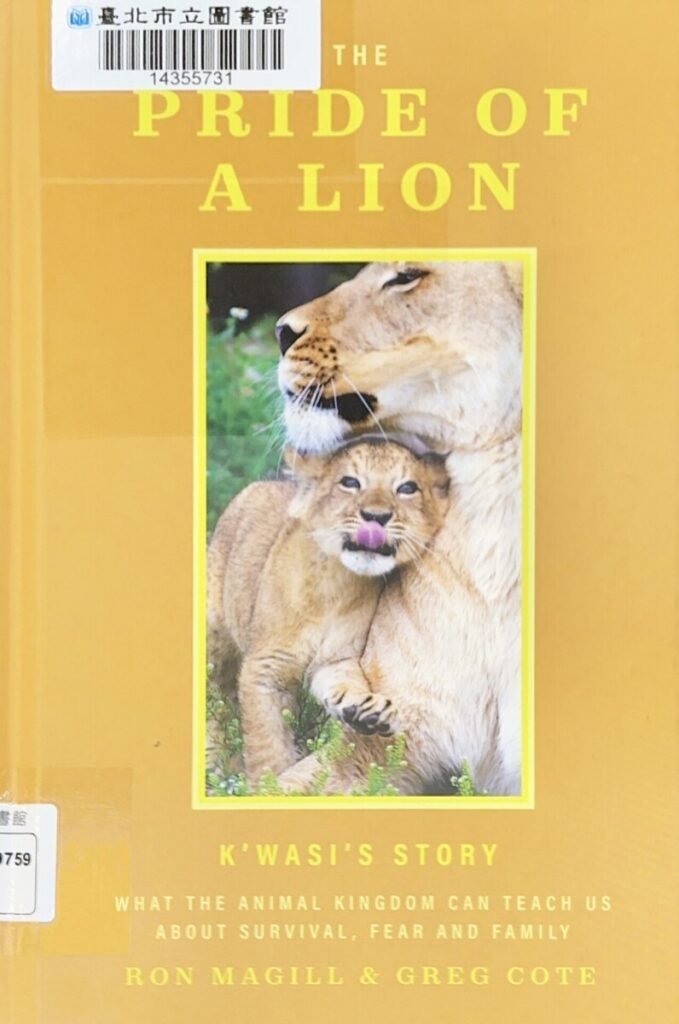
我們可以從動物界(animal kingdom)學到什麼呢?
Animals in the wild can be dangerous, deadly predators who hunt and kill for food, yes. It is just as true that, just like us humans, animals can feel and care, hurt and love. And grieve.*
動物在野外可能是危險的,致命的掠食者會獵殺取食。然而和人類一樣,動物也有感情,會表達關心,能感受傷害及愛,以及悲痛。
…as a herd of elephants came by the remains of one of their own that had died months, or perhaps even years, earlier. One by one, in what seemed a procession, gently, with their trunks they touched the carcass of large bones. Some of those paying respects would make a guttural sound, almost a moan.
當象群經過死去的同伴遺留下的骨骸的時候,縱使那是死於幾個月前,或幾年前(他們都還會記得),他們會列隊緩緩通過,用象鼻輕輕碰觸較大塊的骨骸。有些會發出粗嘎的喉音來致敬,幾乎可以說是在哀悼。
……
大象是母系社會(matriarchal society),最年長的母象就是象群的首領,它帶領象群遷徒,找到水草。象群中大象的求生技能,都是這隻母象手把手教出來的。而如果死的是這隻母象,那就真的是象群最悲傷的日子了。
大象有超級的記憶力,它們永遠記得親人在哪裡死去,每每經過,年長的大象就會領著小象去觸摸那些遺骨,好像是在傳𠄘對先人懷念的記憶。
……
有人曾看到黑猩猩(chimpanzee)媽媽,連續三天抱著哄著死產的小黑猩猩,拒絕𠄘認孩子已經走了。
無獨有偶,有一隻叫做Thahlequah的母虎鯨(科學家喜歡把觀察到的虎鯨取名字),帶著她已經死去的孩子,前後共17天,歷經超過1000英浬哀傷的旅程,成為虎鯨迷們錐心的話題。**
…..
Lions are the only social big cat. All the others tend to be solitary. When a female lion gets hurt or too old, the rest of the pride will take care of her and share with her. They’ll take care of the other cubs. On the flip side, if another male comes in and takes over, it’s a horrific scene. That male will kill every cub that isn’t his, to ensure his bloodline continues.
貓科動物中唯一會成群結隊一起生活的(social)是獅群(lion pride) ,其他的貓科動物則都是獨來獨往的(solitary)。當母獅受傷了或太老了,獅群會照顧它。它們也會照顧獅群中其他母獅生的小獅子。不利的一面是,當另外一隻新進的公獅掌握獅群的時候,恐怖的事情就會發生了。為了確保自己的血脈可以遺傳下去,新的公獅會把獅群中現存非親生的小獅子通通殺死。
“Animals can be really aggressive, but body language usually can solve everything before that,” says Magill. “They do that with posturing, with silent communication. Animals read each other’s signs. If a rhino lifts his tail up, he is not happy. ‘Whoa. Back off.’ Respect is something we can learn from animals.”
動物可以表現得非常有侵略性,它們透過肢體語言來避免誤會。透過肢體語言的無聲溝通,它們可以了解彼此的想法。以犀牛為例,揚起尾巴代表它不高興。如何互相尊重,我們可以向動物學習。
With any cat, lion, tiger, or feline house pet, if ears flatten, the animal is on guard. If the tip of the tail is twitching, that signals imminent danger.
貓、獅子、老虎或任何家中貓科的寵物,耳朵平展代表提高警戒。尾巴尖顫動,代表立即的危險。
In the company of a gorilla or other primates, humans should never present a toothy smile or wide eyes and lifted eyebrows. These things are seen as threatening to primates, and to be aware and not do those things is to show respect.
人類和大猩猩或其他靈長類動物在一起的時候,絕對不要露齒微笑或瞪大眼睛及揚起眉毛。這些動作靈長類會視為是一種威脅,注意不做這些動作,就是對它們的尊重。
Many birds-from birds of prey to storks, cranes, and swans— are monogamous for life, and raise their young together, yet another lesson for humans, whose divorce rate makes monogamy an iffy proposition. Birds have mastered the art of mating and relationships.
很多種鳥類,從掠食性的鳥類到鸛、鶴、天鵝,都是一輩子實行一夫一妻的,它們共同撫養幼雛,對高離婚率、不忠實一夫一妻制的人類來說,這是值得借鏡的。另外,鳥類也擅長於配對及關係管理的藝術。
The bonobo, or pygmy chimpanzee, is the least violent of all primates and settles every dispute with sex. (If this isn’t exactly a lesson humans can learn…perhaps it might be inspiration?) The sex of a partner does not matter to bonobos; sex is sex.
巴諾布猿(倭黑猩猩)在靈長類中是最平和、最沒有暴力傾向的,它們有任何的爭議都用性來解決。(當然這不必然是人類學得來的……但至少帶給我們一些啓示)。對巴諾布猿來說,伴侶的性別沒有什麼關係。性就是性。
Honeybees offer lessons in democracy, of all things. They depend on building a consensus with the group, with their decision-making involving spirited debate, whether the topic is relocating to a new hive or a change of queens. The hum of bees rising almost to the level of a roar indicates a colony in intense and perhaps heated discussion. But an agreed-upon consensus is respected, as in functioning democracies elsewhere.
我們可以向蜜蜂學習民主。它們往往透過哄鬧的爭吵來達成共識,議題諸如遷到新的蜂巢或更換女王蜂,嗡嗡聲很大的時候,代表整個蜂群正在激烈討論。一旦達成共識,蜂群就會尊重決議,這跟其他地方民主運作的方式,是一樣的。
Remember being fascinated by ant farms as a kid? You were watching tiny masters in the art of diligence and hard work. Resolve is in the ant’s DNA, and lack of size only seems to underline that attribute. Ants rely on strategy and planning. They are skilled at organization. They store food when it is plentiful so they will not be without when it is scarce. Mostly, perhaps, ants rely on teamwork…
螞蟻是勤奮苦幹的專家。剛毅就烙刻在它們的DNA裡,而它們的體型是多麼的小,又更顯得它們的堅強。螞蟻仰賴集體的策略和計劃。它們擅長於組織。它們在食物充裕的時候,就懂得積存食糧以備未來不時之需。螞蟻最驚人的,就是團隊合作……
The Indian political ethicist and philosopher Mahatma Gandhi once said, “A nation is best judged by how it treats its animals.”
印度聖雄甘地曾經說過:「評價一個國家,最好的方法是去看他們是如何對待動物。」
……
讀後
現存人類,在生物分類上,是現代人(Homo sapiens):動物界 Animalia, 脊索動物門 Chordata, 哺乳綱 Mammalia,靈長目 Primates,人科 Hominidae,人屬 Homo,現代人種 Homo sapiens。
我們本來就是動物。
依據核糖體核糖核酸的序列。全世界的生命指向一個共祖(last universal common ancestor, LUCA)。(維基百科)
從共祖LUCA開始(35-38億年前),分出了細菌(Bacteria)和古菌(Archaea),接著從古菌分出了真核生物(Eukaryota)。
動物(Animals)、植物(Plants)、真菌(Fungi)則是在真核生物這一分枝,最晚才又分出來的。
人類身體內的動力工廠,粒線體,則可以追溯到20億年前,一個細菌跑到一個古菌中,細菌轉變為粒線體,首創了有機體的共生(symbiosis)結構。
粒線體可以迅速轉換能量,讓我們可以動起來,所以成為動物。
植物則是透過葉綠素行光合作用(photosynthesis)把能量用醣類儲存起來,之後用呼吸作用燃燒釋放儲存在醣類的能量。以共生結構看,相對於動物的粒線體,在植物就是葉綠素了。
理解到我們和這個世界所有的生物,包括古菌、真菌、植物、動物等等,都始於一個細菌,我們是不是應該感到謙卑呢?
病毒由RNA或DNA,外面包覆蛋白質(有些有油膜)所構成的,是介於生物和非生物之間的物質,無法獨立生存,必須靠宿主才能生存、複製。病毒可能源自細菌,或者細胞中的質體(Plasmids, 環狀DNA)。由是觀之,病毒也非常可能出現在細菌之後。
植物源自細菌,行光合作用產生醣類。植物也可以在叫做根瘤菌這種細菌的協助下,把氮固定下來成為植物性蛋白質,成為動物所需要蛋白質的來源。雜食性的人類,既吃植物也吃動物,也就佔盡便捷吸收醣類和蛋白質的好處了。
人類的問題,是忘了自己本來就是動物,忘了本來就是脆弱地依存在一個複雜的生態系𥚃頭的一種生物,也忘了自己在35億年前是一顆細菌,「英雄」本來出身是那麼的「低」。
各種動物本來就有各種生存的智慧和技能,可以供我們人類學習。如果能真切了解到我們的初心,是一顆細菌,那麼當我們最後化成一抔麈土,也就是再自然也不過的事了。
P.S. ‘Pride’ 在英文中的意思是:滿意、自豪、得意、自尊、自尊(心)、感覺重要、自負、驕傲、驕傲慶典,而獅子、獅群也稱為Pride。(劍橋詞典)
*:Ron Magill & Greg Cote, The pride of a lion, 2023, Mango Publishing Group
**:Lynda V. Mapes, “ORCA, shared waters, shared home,” Braided River, a Co-publication with The Seattle Times
2025/2/7 The pride of a lion Damakey