“…From what I could tell at that point, autism was a really hard condition to describe because it varied so much form person to person. some would describe it as a grouping of three closely related developmental disabilities: impaired social interaction, impaired communication and restrictive, repetitive behavior, interests and activities. In the books there would be a diagram of a triangle around the three groups and in the middle, where all these overlapped, was the word ‘autism’. It affects how a person perceives the world and how they relate to it. When someone like Iris walks into a room their senses are sometimes overwhelmed with the visuals. They noticed tiny details, see it as a whore and everything in between, meaning that with added extras like people talking or sudden movements from other children they get upset and want to be alone. I was learning that Iris’s reactions to her senses were not uncommon and that much of her behavior was a reaction to her environment. For example, the way she flapped her hands quickly when she got excited by something or when she fell happy. There was a term for that: it was call ‘Stimming’, a release of energy with repetitive movements, allowing her to regulate her own system.”
Iris就是作者的女兒,是自閉症的患者(Autism),不擅長與他人互動,因此造成語言學習遲滯的問題。
Iris是典型的自閉症中,對環境超級敏感的孩子,很怕吵雜,一旦超過她可以忍受的臨界點,就會嚎淘大哭。
Iris怕陌生的環境,她看的書、玩的玩具,都必須放在她記得的固定位置才可以。
可是,Iris才二、三歳,就展示了繪畫的天份。顏色層層疊疊,手法粗曠深厚中帶有天使般的活潑和細緻。比起印象大師的抽象畫作,絕對是難分軒輊。
作者後來養了一隻貓,深獲Iris的喜愛。每當Iris開始不安的時候,這隻貓就會適時地轉移她的注意力,進而在崩潰前穩定她的情緒。
幾經嘗試,作者最後選擇了把Iris留在家裏自己教,實施一對一的自學方案。自閉症的家長要付出的心力和必須承受的挫折,令人很難想像。
自閉症的孩子,我們說他們是來自星星的孩子,腦袋和一般人想得不一樣,如此而已。他們因此不擅長人際的溝通,常常造成沒有必要的誤解。我們要了解他們,給他們足夠的空間,幫助他們,不要歧視他們。
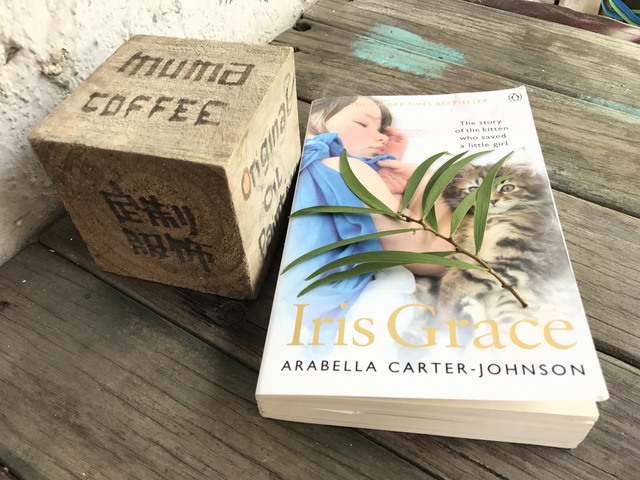
“Iris Grace”, by Arabella Carter-Johnson
2017/5/8 Iris Grace Damakey