
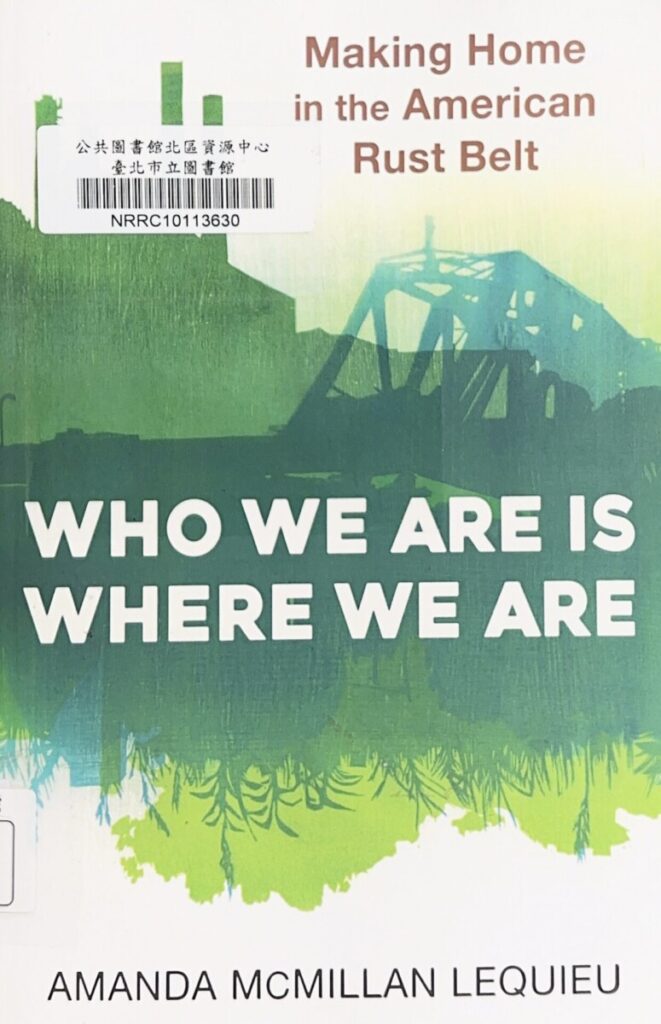
美國去工業化(deindustrialization)之後,在原來的工業區形成了所謂的鐵銹區(rust belt)。
工業化所帶來的繁榮,對在當地成家的人而言,主要提供三個主要的支柱:
- 區位,當然家就是在臨近工廠的地方(Geography)
- 社會,工業區及附近的人所形成的社交網絡(Community)
- 經濟,工廠提供穩定及較高的收入來支持日常生活(Economy)
一旦去工業化,隨著工廠的關閉,「經濟」支柱首先崩壞。
接著大量人口的外移,社交網絡產生巨大改變,「社會」這個支柱接著崩壞。
住的人大量減少,住在近工廠的「區位」支柱也崩壞,形成了所謂的鐵銹區。
根據Amanda McMillan Lequieu 在《Making home in the American rust belt》這本書的研究,鐵銹區人口會大量減少,但是很特別的是有些人卻留了下來。
這些人在經濟和社會的持續崩壞之下,在鐵銹區內繼續生存下來。
Interviewees explained how, in their pursuit of new employment, they moved within rather than away from familiar landscapes and community relations. As years became decades, income became less central to interviewees’ reasons for staying and, thus, less vital to their definitions of home. When asked why they still lived in their deindustrialized communities, interviewees spoke of worthwhile trade-offs and attachment to what remained. Homeownership offered both sunk costs and emotional stability; disconnected geographies limited economic productivity while also engendering affection for nature; and communities smaller, older, and poorer than generations before still offered communality and familiarity today. The place-based nature of financial, social, and symbolic investments both tied them down and enabled them to thrive. Like a prism held up to changing light, the idea and practice of home remains a clear, if shifting, beacon of hope for many long-term residents.
大意:選擇留下來的居民,會尋求不同的工作機會,也逐漸形成新的社會網絡來相互支持。居民的年齡層會偏高。所得固然比較低,但生活成本也比較低。他們從原先在工廠對生產力的追求,轉化為對大自然的愛好。
…Long-term residents are not only traditional-keepers; as every decision, large and small, further embedded them in place, they also become their homes’ advocates, seeking solutions to community-wide problems beyond individual-level resilience. Residential persistence maintained certain social networks, which in turn reduced the likelihood of neighborhood or village erasure through gentrification or abandonment…
大意:在鐵銹區留下來的長期居民,致力於解決社區的問題,並建立一個社會的網絡,防止社區被貴族化或棄置而消失。
讀後
美國的去工業化,使得那些受影響的地區大量人口的外移。
而很特別的是,有些人卻「選擇」留了下來,頂多只在區域內搬動。
這些居民,做了很多的努力,讓他們的家在去工業化之後在鐵銹區依舊可以生存下來。
這本書講的是美國的鐵銹區,但是如果拿來看日本或台灣比較鄉下的地方,是非常可以參照的。
日本或台灣比較鄉下的地方,隨著年輕人口的持續外移,主動或被動選擇留下來居住的人,他們面臨的挑戰,和美國鐵銹區的居民是很類似的。
當地人必須建立新的社會網絡,必須尋求新的在地經濟活動,譬如各種地方特色,古早味、老地方、大自然等等,以及觀光振興方案。而這個過程是好幾十年,並不容易。
有更多人(尤其是年輕人)選擇的是離開。
不管是離開或留下來,「我心安處是吾鄉」(Who we are is where we are)。
這使得「家」(或「家鄉」),成為一個流動的概念(fluid concept)。
區位、社會、經濟,是我們的「家」的三個主要支柱。
選擇接近這三個支柱比較強大的地方成家立業,譬如大城市,可以借力使力而比較不費力。
而如果在這三個支柱比較弱的地方居住,不是不可以,那就必須有過不同生活方式的心理準備,而且要有創意去活給地方的社會和經濟。這就有如美國鐵銹區或日本、台灣偏鄉的居民一樣。
*:Amanda McMillan Lequieu, Who we are is where we are, 2024, Columbia University Press
2026/8/9 Who we are is where we are Damakey
