
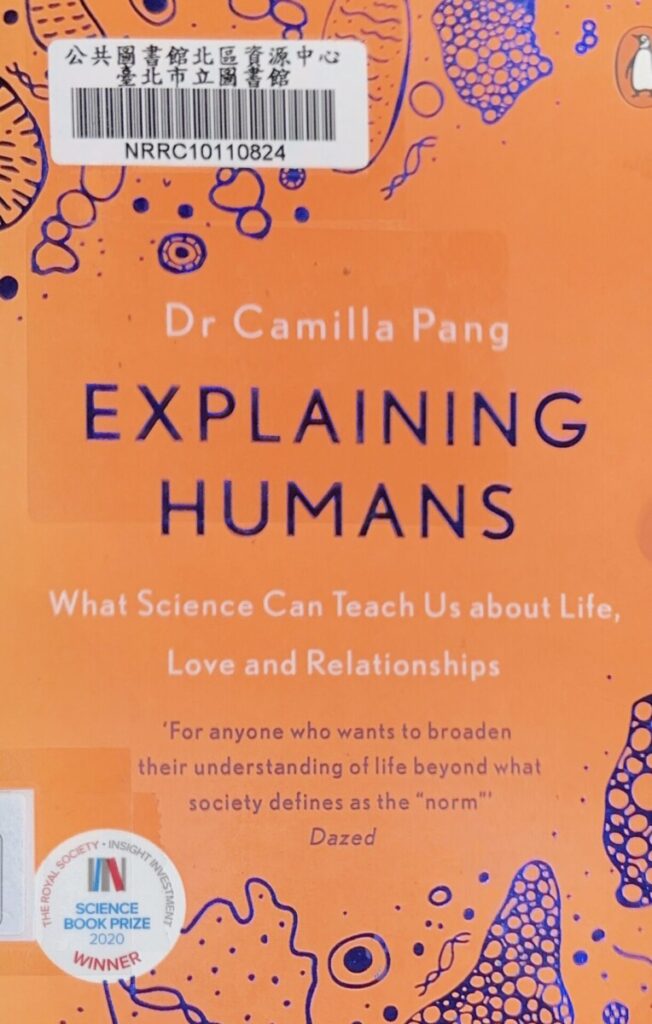
Camilla Pang 說,自她懂事開始,就覺深深懷疑,她是不是到錯了星球。
她既弄不懂周遭的人,周遭的人也不𢤦她。
以一般人的看法,她有三種重大的異常(disorder):
1. 自閉症(ASD, autism spectrum disorder)
2. 過動症(ADHD, attention deficit disorder)
3. 焦慮症(GAD, generalized anxiety disorder)
她說她的腦袋就像網球場上的球一樣,被拍打得來回快速運轉,愈轉愈快,只要有選手失手,球就失控亂飛,那就是她崩潰發作的時候(meltdown)。
她曾問她媽媽,人是這麼難以捉摸理解,有沒有一本人類的使用操作手冊,可供她作為參考呢?
她媽媽的答案可想而知。
她喜歡科學(science), 有事沒事就把自己關在書房𥚃,沈浸在科學的世界。
然後她發現,從科學的角度,她拿到了解人類的鑰匙。
And it’s provided the lens through which I now see the world, explaining many of the most mysterious aspects of human behaviour that I have encountered during my adventure on Planet Human. While science may seem abstruse and technical to many, it can also illuminate the most important things in our lives. Cancer cells can teach us more about effective collaboration than any team-building exercise; the proteins in our bodies offer a new perspective on human relationships and interaction; and machine learning can help us to make more organized decisions. Thermodynamics explains the struggle to create order in our lives; game theory provides a path through the maze of social etiquette; and evolution demonstrates why we have such strong differences in opinion. By understanding scientific principles, we can better understand our lives as they really are: the source of our fears, the basis of our relationships, the functioning of our memory, the cause of our disagreements, the instability of our feelings and the extent of our independence.
大意諸如:
癌細胞(cancer cells)可以教我們什麼是有效的協同合作(effective collaboration)。
蛋白質(proteins)在人際關係間扮演的重要角色。
電腦深度學習(machine learning)可以教我們如何做更好的決策。
熱力學(Thermodynamics)說明井然有序所需要的投入和努力。
博弈理論(game theory)可以用來一窺現有的社交禮儀。
演化論(evolution)說明了人和人之間為什麼想法會有那麼多差異。
從科學的角度,讓我們更了解日常生活中的方方面面,譬如:恐懼(fear)、人際關係(relationships)、記憶的運作方式(functioning of our memory)、異議的原因(cause of our disagreements)、情緒的波動 (instability of our feelings)、個人可以遺世獨立的程度(the extent of our independence)。
大家可以看看,Camilla Pang是怎麼從生命科學中學到尊重和耐心的。
‘As we age, the repetition of this process starts to take its toll on our bodies. Every time a cell undergoes mitosis, it loses a little of what is called the telomere, the protective surface on the chromosome, capping the end of DNA strand. In a process often likened to the gradually fraying of a shoelace, the telomere gets a little shorter with every division, until eventually it can no longer guard the DNA effectively, and the cell loses its ability to under go mitosis and becomes senescent (inert). The tangible effects of human ageing…’
大意:
人由幹細胞(stem cells)進行各種特化,長到一個嬰兒,要花上漫長的10個月。(這讓她學到耐心)
細胞每次進行分裂(mitosis)的時候,它保護DNA的端粒(telomere)就變得更加短一點。端粒變短,就是老化(ageing)的過程,細胞不斷分裂,直到端粒短到不能保護DNA,那就是生命的盡頭了。(分裂是大家變得不同的必要,但是生命則是必須付出老死的代價,這讓她學到要尊重彼此之間的不同)
讀後
這當中我覺得最有意思的是,她分享了容易不安的她,是如何面對恐懼(fear)。
她說,身為自閉症,她的恐懼不安和一般人不太一樣。
譬如,她就不怕她威權的校長,甚至開嗆:「你不可以看我的的信,那是要給我的父母的,跟你完全沒有關係(It’s none of your business)」。
但是,只要是體育課的體操安排稍微更改一下,她就可能崩潰。
她說,對自閉症者而言,恐𢣷就像一道刺眼的光芒,讓她完全受不了。
她說,忍受或想方設法避開恐懼,完全無濟於事。
她後來學會把自己變成一面稜鏡(prism),讓恐懼的那道光穿過,從折射出來的不同七彩光譜中,去分析了解恐懼,然後一切就變得比較容易面對了。
這很有意思。恐懼是引發杏仁核中最原始的戰與逃的反應。分析恐𢣷的各種成分,就是在原始反應發生之際,讓我們更理性更有底氣去面對,恐懼就相對容易處理了。
個人覺得,其實很多恐懼只是杯弓蛇影,庸人自擾的成分更多而已。
自閉症患者,比較無法掌握人類模稜兩可的行為'也讀不懂我們一般人的言外之意。
但是自閉症患者,作為人類演化多樣性的一部分,一定有存在的意義。
他們可以從不同的角度看其他的人,這正是我們這些其他人,非自閉症患者,應該尊重而且可以借重的地方。
‘…The mind and body are like an athlete that needs to be trained to improve perception, memory, processing and empathy…’
Camilla 在書的最後,用運動員需要不斷訓練來精進,說明我們一般人的身心也是如此。
‘It’s going to be wrong before it goes right. To get worse before it gets better…’
所以,不要怕嘗試,不要怕失敗。因為那是成為更好的自我,必經之路。
對自閉症患者,是如此;對非自閉症的患者,也是如此。
*:Camilla Pang, Explaining Humans, 2020, Penguin random house UK
2026/8/28 Explaining Humans Damakey
